A solar battery will power your house for its usable kWh divided by the kWh you use per hour during the outage. Cut the load to essentials and the same battery lasts many times longer. Add solar that can recharge it, and the clock resets every sunny day.
The short answer: it depends on what you leave on
A battery is a tank of energy measured in kilowatt-hours (kWh). Your house drains that tank at a rate set by what is running. The same battery can last a few hours with the AC, oven, and dryer going, or more than a day with only the fridge, lights, Wi-Fi, and fans.
So the real question is not how big the battery is. It is what you want running during an outage, and for how long. Once you answer that, the math takes five minutes.
Most online answers stop at one division: battery size over daily use. That number is a start, but it misses three things that decide whether your lights actually stay on: how much of the battery is really available, how much power it can deliver at once, and whether your panels can refill it during the outage.
How to estimate your backup time in 5 steps
- List what must stay on. Write down the essentials: fridge, freezer, lights, Wi-Fi, phone chargers, fans, a medical device, a well pump. Add the AC only if you plan to back it up.
- Find each load's watts. Check the label on the appliance or its manual. For a fridge or freezer, the yellow EnergyGuide label gives kWh per year, which you can divide by 365 to get kWh per day.
- Turn watts into kWh per day. Use the Department of Energy's formula: watts times hours used per day, divided by 1,000. A 100-watt load on for 10 hours uses 1 kWh.
- Find your real usable kWh. Start from the battery's usable capacity, then subtract what you will not have: the backup reserve setting if the outage hits mid-day, and a margin for inverter losses.
- Divide. Usable kWh divided by your essential kWh per day gives days of backup. Divide by kWh per hour instead if you are planning for a single night.
A worked example (example numbers, not a real home)
Say a home in DeSoto has one battery with 13.5 kWh of usable energy, the capacity Tesla lists for the Powerwall 3 datasheet. The outage starts at night and the battery is nearly full.
For this example, the essentials are a fridge and a chest freezer, LED lights, Wi-Fi, phone chargers, two ceiling fans, and a TV for a few hours. Add them up with the formula above and say the total lands near 5 kWh per day. That battery would cover roughly two and a half days, before any solar recharge.
Now say the same family also wants the central AC on through a hot night. In this example, the AC adds 2 to 3 kWh for every hour it runs. The battery that lasted two days on essentials could be empty before morning. Your own numbers will differ, which is the whole point of doing the math with your bill and your appliances.
The limits most battery guides skip
- Energy is not power: kWh is how long the battery lasts. kW is how much it can push at one time. Tesla's install manual lists the Powerwall 3 at 11.5 kW of output. If everything you turn on at once asks for more than that, the system can shut down even with a full battery.
- Smaller modules, smaller power: Modular batteries trade size for flexibility. Enphase's datasheet lists the IQ Battery 5P at 5.0 kWh usable and 3.84 kVA continuous. How many units you have sets both how long and how much you can run.
- The AC startup surge: A compressor pulls a short burst of current when it starts, listed as LRA on the outdoor unit's nameplate. Tesla's datasheet lists Powerwall 3 load start capability at 185 A LRA. If your unit's LRA is higher, it may need a soft starter or a second battery.
- You may not start at 100 percent: In self-powered modes the battery cycles every day and only keeps a reserve for outages. Tesla's app lets you set that backup reserve. An outage at 6 p.m. may find the battery well below full.
Why the AC decides almost everything in Texas
Cooling is the single biggest swing load in most homes here. Nationally, the EIA says air conditioning was about 19 percent of home electricity use in 2020, and that share runs higher in hot states.
That leaves you three honest options. Back up only essentials and ride out the outage with fans. Back up the AC and size the battery bank for it, with enough power for the startup surge. Or back up the AC but raise the thermostat a few degrees during the outage so it runs less.
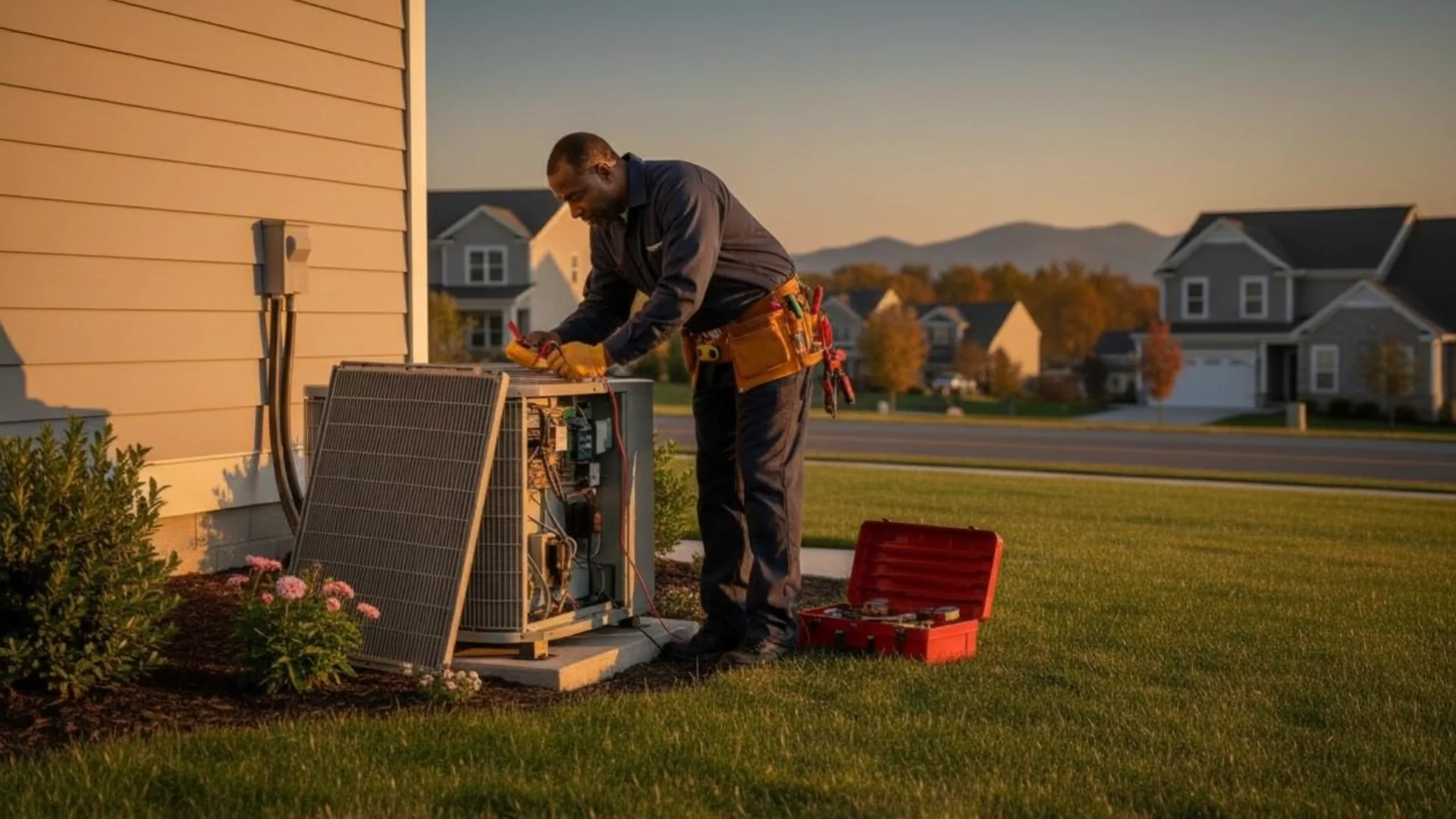
An older or struggling AC unit makes this harder, because it runs longer for the same comfort. If your system is already short-cycling or not keeping up, have it checked before you size a battery around it. Our HVAC repair team can look at both on the same visit.
Will my solar panels recharge the battery during an outage?
Only if the system was designed to. A standard grid-tied solar system with no battery shuts off when the grid goes down, by design, so it does not send power onto lines crews are working on.
With a battery and the right backup equipment, the system can isolate your home from the grid and keep the panels producing. Then sunny days refill the battery and a multi-day outage becomes manageable if you stay on essentials.
If you added a battery to older panels, check how they were connected. Some setups charge the battery from solar during an outage and some do not. Our guide to adding a battery to an existing solar system in Texas covers what to ask about.
What to check today
- Open your battery app and note the backup reserve setting. Consider raising it before a storm; Tesla's backup reserve page explains how the setting works.
- Find out if your battery backs up the whole home or a separate critical-loads panel. Look for a backup panel near your main panel.
- Read the LRA on your outdoor AC unit's nameplate and compare it with your battery's load start rating.
- Look at your monitoring app after a cloudy day and a sunny day to see real solar recharge. Our post on how to read your solar monitoring app shows where to look.
- Write your essentials list and run the five-step math above. Keep it on the fridge for the next outage.
When to get a professional load assessment
The math gives you a solid estimate. A licensed technician can confirm it against your panel, your AC's nameplate, and how your battery and solar are wired, and tell you whether a soft starter, a second battery, or a smaller backup panel is the better fix.
If you are still choosing equipment, our guide to solar battery installation in Texas walks through the main options. When you are ready, our batteries and energy storage team works with Tesla and Enphase and can size a system to the outage you actually want to ride out.
Frequently Asked Questions
It depends on what is running. On essentials like the fridge, lights, Wi-Fi, and fans, a battery that size can often last more than a day. With central AC running, it may last only a few hours. Divide the usable kWh by the kWh your chosen loads use per day or per hour to get your own number.
Often yes, if the battery can deliver both the running power and the startup surge. Check the LRA on the outdoor unit's nameplate and compare it with the battery's load start rating. If the margin is thin, a soft starter or a second battery can help. A technician should confirm it.
A grid-tied system without a battery shuts off during an outage for safety. A system with a battery and backup equipment can isolate the home from the grid and keep the panels charging the battery while the sun is up.
Enough kWh to cover your outage hours and enough kW to cover everything that can run at once, including the AC startup surge. Whole-home backup with central AC often takes more than one battery. A load assessment based on your bill and your panel gives the real answer.