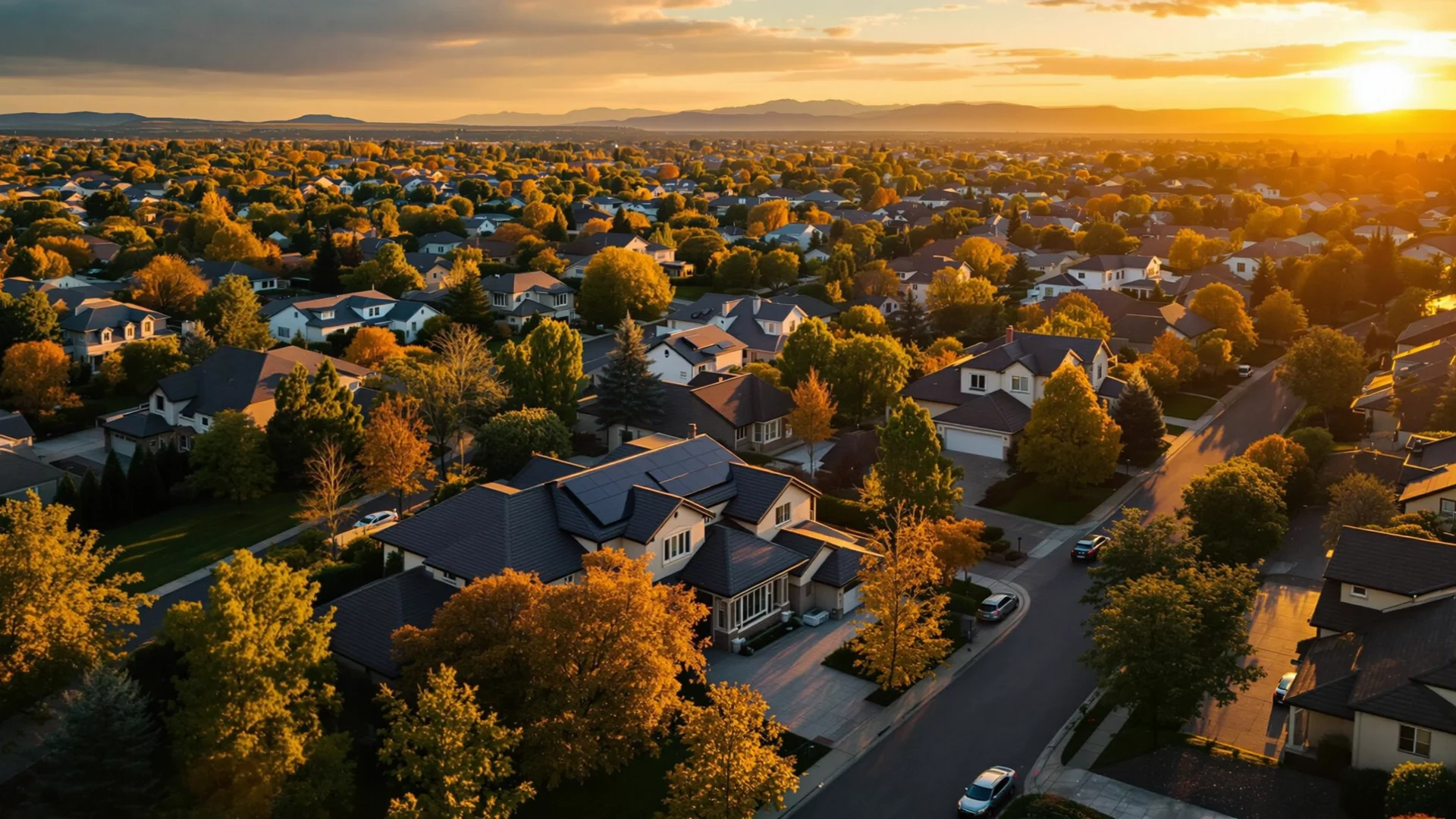
Solar Panel Installation in Haines City, FL
America’s #1 Choice for Energy Independence
Custom-designed systems that lower your bills, increase your home value, and give you full energy control.
By submitting or calling, you consent to receive calls and SMS from The Light Group USA at the number provided, including via auto-dialer or pre-recorded messages. Consent is not required for purchase. Msg/data rates may apply. Reply STOP to opt out. See our Privacy Policy.

Start saving on your energy bills today
Get a custom solar plan designed for your home.
By submitting or calling, you consent to receive calls and SMS from The Light Group USA at the number provided, including via auto-dialer or pre-recorded messages. Consent is not required for purchase. Msg/data rates may apply. Reply STOP to opt out. See our Privacy Policy.
Going solar in Haines City
Haines City sits inland in Polk County where US 27 meets US 17-92, with Lake Eva Park near the center of town, and it has been adding subdivisions quickly. A large share of the roofs here are recent, which is the strongest possible starting point for solar, because the array and the roof then age on the same schedule instead of one outliving the other. What shapes production in this part of Florida is heat, not coastal weather.
Panels lose output as they warm, and an inland Polk County roof in August runs far hotter than the number on the forecast. That loss gets designed around rather than eliminated. Mounting height that lets air move under the modules, inverter sizing that accounts for hot-day behavior, and conductor and breaker sizing done at real ambient temperatures instead of a generic default all matter more here than they would further north.
Central Florida is the most lightning-prone region in the country, and this is the middle of it. Surge protection at the array and at the service panel is inexpensive during installation and awkward to retrofit afterward. Grounding and bonding are inspected for a reason, and the difference between adequate and sloppy shows up years later as failures with no error code attached to them.
Duke Energy Florida serves Haines City and credits exported energy at the retail rate, one for one. The interconnection application goes to Duke, and the system cannot be energized until permission to operate is issued. Permits run through the city or the county depending on the address. In newer deed-restricted subdivisions, the association review is requested and documented before hardware is ordered.
What we settle before a Haines City install
Common questions about solar service in Haines City
Duke Energy Florida serves Haines City. As a state-regulated investor-owned utility, Duke credits exported energy at the retail rate, one for one. Confirm the provider on your bill, since territory follows the address and neighboring Polk communities are served by municipal utilities with different credit rules of their own.
Usage history for the address can usually be obtained from the utility even if you have not lived there twelve months, and that data is the starting point. It is combined with occupancy, pool and air conditioning details to build a defensible estimate. Square footage alone is a poor proxy for consumption.
It depends on the roofing manufacturer and the installer's terms, which is why it gets checked before anything is drilled. Flashing methods are matched to the specific roof system and the work is documented. Sorting this out in advance is straightforward; sorting it out after a leak claim is not.
Yes, measurably. Photovoltaic modules produce less as they heat up, and roof surfaces here run far above air temperature in summer. Good design compensates with airflow under the array, appropriate inverter sizing and conductors rated for real conditions. It also means a production estimate should reflect local temperatures, not laboratory ones.
It depends on whether your address is inside Haines City limits or in unincorporated Polk County. The two have separate submittal requirements and inspection schedules. That gets confirmed before plans are drawn, since filing with the wrong office costs weeks and changes nothing technical about the system itself.
Other solar work we do here
Solar Installation near Haines City
Crews based in Orlando and Tampa, covering 112 cities statewide.
Tampa Bay
- Apollo Beach
- Auburndale
- Bartow
- Bayonet Point
- Bayshore Gardens
- Bloomingdale
- Bradenton
- Brandon
- Carrollwood
- Citrus Park
- Clearwater
- Davenport
- Dunedin
- East Lake
- East Lake-Orient Park
- Egypt Lake-Leto
- Elfers
- Englewood
- Fish Hawk
- Four Corners
- Fruitville
- Gibsonton
- Haines City
- Holiday
- Jasmine Estates
- Keystone
- Lake Magdalene
- Lake Wales
- Lakeland
- Lakewood Ranch
- Land O' Lakes
- Largo
- Lealman
- Lutz
- New Port Richey
- North Port
- Northdale
- Palm Harbor
- Palm River-Clair Mel
- Palmer Ranch
- Pinellas Park
- Plant City
- Poinciana
- Riverview
- Ruskin
- Safety Harbor
- Sarasota
- Seminole
- South Bradenton
- South Venice
- St. Petersburg
- Sun City Center
- Tampa
- Tarpon Springs
- Temple Terrace
- Thonotosassa
- Town 'n' Country
- Trinity
- University
- Valrico
- Venice
- Wesley Chapel
- Westchase
- Wimauma
- Winter Haven
- Zephyrhills
We also cover Central Florida, Space Coast. See every Florida city we service.