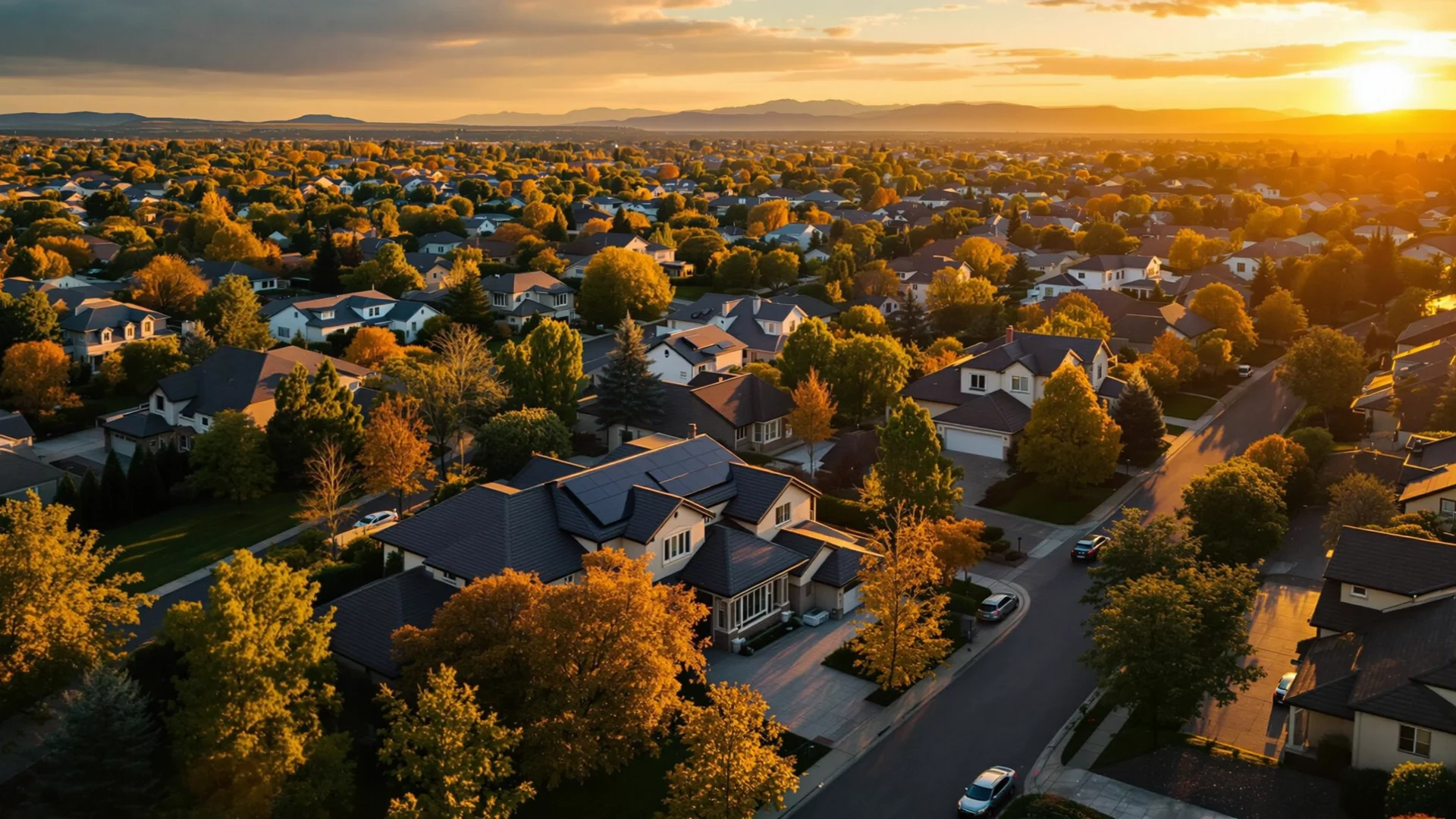
Solar Panel Installation in Maitland, FL
America’s #1 Choice for Energy Independence
Custom-designed systems that lower your bills, increase your home value, and give you full energy control.
By submitting or calling, you consent to receive calls and SMS from The Light Group USA at the number provided, including via auto-dialer or pre-recorded messages. Consent is not required for purchase. Msg/data rates may apply. Reply STOP to opt out. See our Privacy Policy.

Start saving on your energy bills today
Get a custom solar plan designed for your home.
By submitting or calling, you consent to receive calls and SMS from The Light Group USA at the number provided, including via auto-dialer or pre-recorded messages. Consent is not required for purchase. Msg/data rates may apply. Reply STOP to opt out. See our Privacy Policy.
Going solar in Maitland
Maitland's tree canopy is the first thing a solar designer has to reckon with. The streets around Lake Lily Park and the residential blocks off US 17-92 carry mature hardwoods that shade rooftops for large parts of the day, and that canopy is precisely what makes the neighborhoods desirable. A design produced from an aerial image alone will overstate what your roof receives, because a satellite view flattens the difference between dappled shade and clear sky.
Shade also moves. Oaks that clear a ridge line today will not clear it a decade from now, and equipment installed for a twenty-five year life should be modeled against the canopy it will actually face, not the canopy standing at signing. Honest options are limited and worth naming: trim, relocate the array to a different plane, accept a smaller system, or conclude that this particular roof is not the right host.
The utility side is uncomplicated. Duke Energy Florida serves Maitland addresses, and Duke credits exported energy at the retail rate you pay, one for one. Florida's electricity market is regulated, so the provider comes with the address. The interconnection application goes to Duke with the design and equipment documentation, and the array legally stays off until Duke issues permission to operate, regardless of when installation finishes.
Two more items sit above panel selection. Roof age comes first, because mounting over a covering near the end of its life guarantees a second removal and reinstall bill. And central Florida records the densest lightning activity in the country, which makes grounding, bonding and surge protection part of the base specification rather than an accessory. Maitland sits inside the working radius of our Orlando crew.
What we settle before a Maitland install
Common questions about solar service in Maitland
Not necessarily, and the shade study gives a specific answer rather than a general one. Some roof planes lose meaningful production hours while others barely notice the canopy. Selective trimming often resolves it. When heavy canopy sits over the only viable plane, we say so plainly instead of designing around the problem.
Because the equipment is installed for decades and the trees keep growing. A design modeled only on today's canopy can look strong at year one and disappoint at year twelve. We project how the shade line is likely to move over the system's working life and put that in front of you before signing.
Duke Energy Florida. Duke is an investor-owned utility, and it credits energy your array exports at the same retail rate you pay, one for one. Because Florida's market is regulated, the provider is determined by the address rather than chosen. We confirm it from your meter and a recent bill before modeling anything.
It is a real design consideration. Central Florida records the country's highest lightning density, so the response is proper grounding and bonding of all metal components plus surge protective devices at the inverter and the main service panel. Those are written into the installation scope, not sold separately after the fact.
Less than you would guess from looking at it. Setbacks along ridges and eaves, firefighter access pathways, plumbing vents, skylights and chimneys all subtract usable area, and shaded planes come off the list too. We measure the remaining space during the assessment and build the estimate from that number.
Solar Installation near Maitland
Crews based in Orlando and Tampa, covering 112 cities statewide.
Central Florida
- Altamonte Springs
- Apopka
- Casselberry
- Clermont
- Daytona Beach
- DeBary
- DeLand
- Deltona
- Edgewater
- Eustis
- Groveland
- Holly Hill
- Kissimmee
- Lady Lake
- Lake Mary
- Leesburg
- Liberty Triangle
- Longwood
- Maitland
- Marion Oaks
- Minneola
- Mount Dora
- New Smyrna Beach
- Ocala
- Ocoee
- Orange City
- Orlando
- Ormond Beach
- Oviedo
- Port Orange
- Sanford
- Silver Springs Shores
- South Daytona
- St. Cloud
- Tavares
- The Villages
- Wildwood
- Winter Garden
- Winter Park
- Winter Springs
We also cover Space Coast, Tampa Bay. See every Florida city we service.