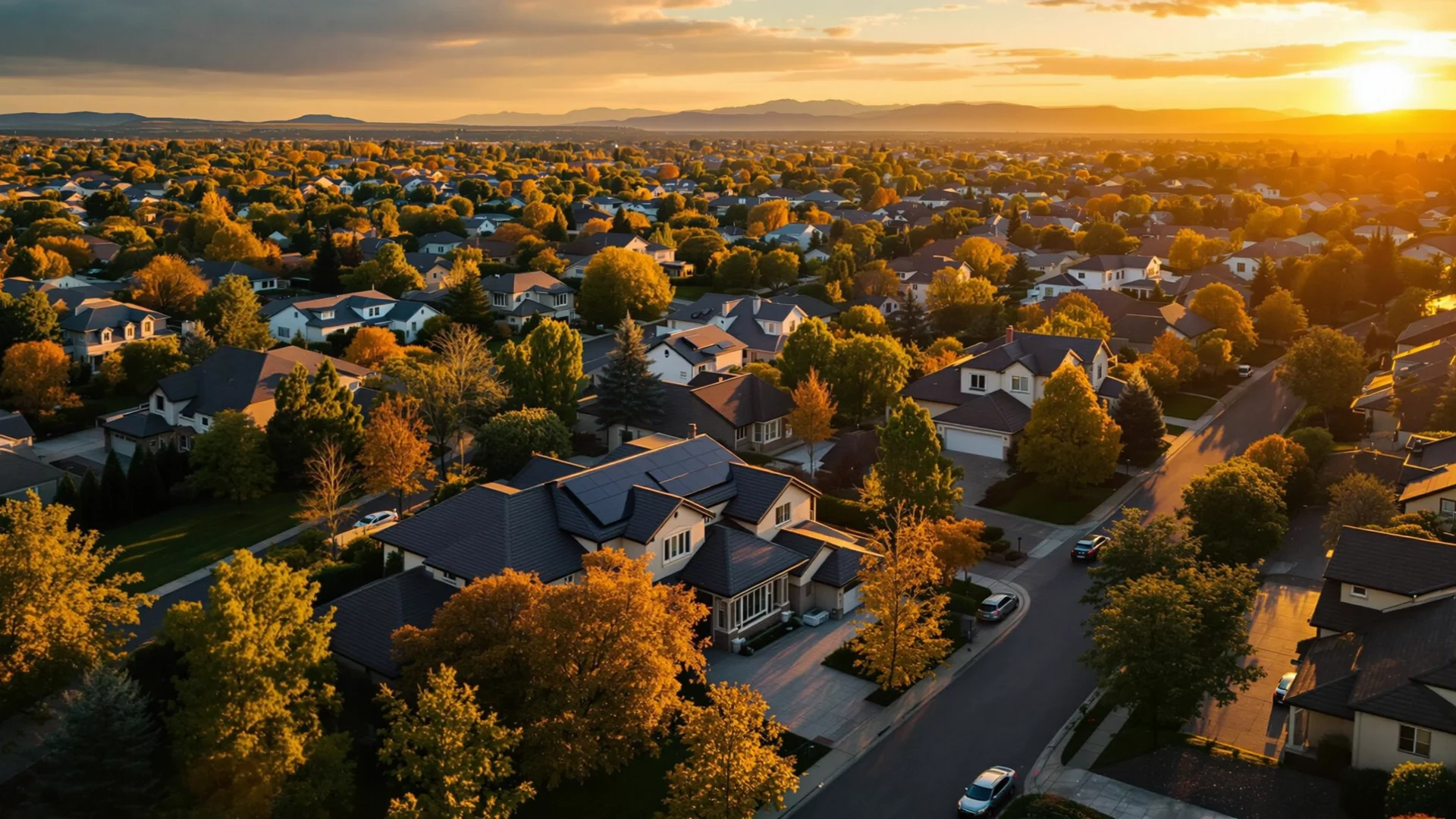
Solar Panel Installation in Mount Dora, FL
America’s #1 Choice for Energy Independence
Custom-designed systems that lower your bills, increase your home value, and give you full energy control.
By submitting or calling, you consent to receive calls and SMS from The Light Group USA at the number provided, including via auto-dialer or pre-recorded messages. Consent is not required for purchase. Msg/data rates may apply. Reply STOP to opt out. See our Privacy Policy.

Start saving on your energy bills today
Get a custom solar plan designed for your home.
By submitting or calling, you consent to receive calls and SMS from The Light Group USA at the number provided, including via auto-dialer or pre-recorded messages. Consent is not required for purchase. Msg/data rates may apply. Reply STOP to opt out. See our Privacy Policy.
Going solar in Mount Dora
Mount Dora is an address-by-address city when it comes to electricity. The city runs its own municipal electric utility with roughly 6,144 customers and buys power wholesale from Duke, while SECO Energy and Duke Energy Florida serve other parts of town. The city publishes an official service boundary map, Exhibit C, and states that those two maintain street lighting in the areas they cover. Which one serves your house decides your solar math.
That is not a footnote. A municipal utility writes its own interconnection requirements and its own terms for crediting exported energy, and so does a cooperative like SECO. Duke, as a state-regulated investor-owned utility, credits exports at the retail rate one for one. Three sets of rules inside one city means the first step is reading the meter and the bill rather than sketching an array on a satellite view.
The historic downtown along Donnelly Street above Lake Dora is the city's calling card, and the older housing nearby comes with older roofs and, in places, more attention to how a house reads from the street. Florida law sharply limits what a homeowners association can forbid on solar, though placement on a visible slope can still draw comment. Either way, roof condition governs: panels over a roof with a few years left is money spent twice.
Mount Dora sits well inland in Lake County, so the site issues are heat, pollen and dust rather than salt. Hot roofs cut module output, and a film of pollen across a low-slope array costs production quietly, with no error code anywhere. Permits run through the city or Lake County depending on the address, and the mounting design carries an engineered uplift calculation for the permit set.
What we settle before a Mount Dora install
Common questions about solar service in Mount Dora
It depends on the address. The city operates a municipal electric utility serving roughly 6,144 customers and buying power wholesale from Duke, while SECO Energy and Duke Energy Florida serve other parts of the city. Mount Dora publishes an official boundary map called Exhibit C, and the meter and bill confirm which applies.
Not automatically. Municipal utilities and cooperatives set their own interconnection requirements and their own terms for crediting exported energy. The one-for-one retail credit applies to state-regulated investor-owned utilities such as Duke, FPL and Tampa Electric. For a municipal or co-op address, the calculation is built on that provider's current published terms.
Start with your bill and your meter, which name the provider directly. The city also publishes the Exhibit C electric utility service boundary map, and it notes that SECO or Duke maintain street lighting in the areas they cover. Territory here is divided within city limits, so neighborhood name is not a reliable guide.
Florida law sharply limits what a homeowners association can prohibit regarding residential solar, though it can still weigh in on placement that is visible from the street. Where any review process exists, the design is submitted, the response is obtained in writing, and it is filed with the permit before equipment is ordered.
If it is close to the end of its service life, yes. Removing and reinstalling an array to reroof later costs real money and produces nothing extra. Condition matters more than age: shingle wear, decking, ventilation and previous repairs are inspected before a system is priced so the sequence is decided honestly.
Other solar work we do here
Solar Installation near Mount Dora
Crews based in Orlando and Tampa, covering 112 cities statewide.
Central Florida
- Altamonte Springs
- Apopka
- Casselberry
- Clermont
- Daytona Beach
- DeBary
- DeLand
- Deltona
- Edgewater
- Eustis
- Groveland
- Holly Hill
- Kissimmee
- Lady Lake
- Lake Mary
- Leesburg
- Liberty Triangle
- Longwood
- Maitland
- Marion Oaks
- Minneola
- Mount Dora
- New Smyrna Beach
- Ocala
- Ocoee
- Orange City
- Orlando
- Ormond Beach
- Oviedo
- Port Orange
- Sanford
- Silver Springs Shores
- South Daytona
- St. Cloud
- Tavares
- The Villages
- Wildwood
- Winter Garden
- Winter Park
- Winter Springs
We also cover Space Coast, Tampa Bay. See every Florida city we service.