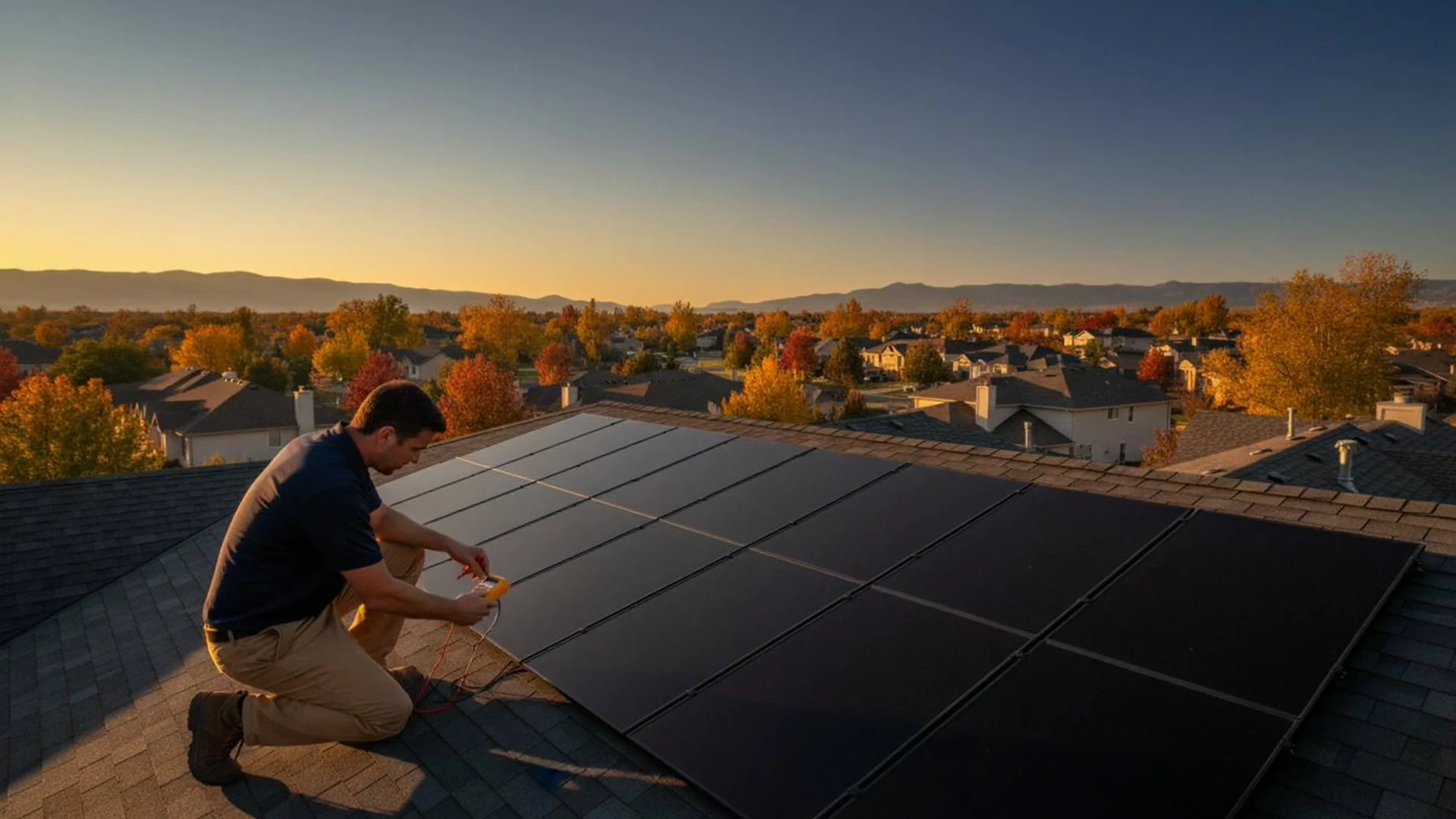
Solar Panel Repair & Maintenance in Apollo Beach, FL
America’s #1 Choice for Energy Independence
Crews in Orlando and Tampa covering Hillsborough County. Free inspection, no obligation.
By submitting or calling, you consent to receive calls and SMS from The Light Group USA at the number provided, including via auto-dialer or pre-recorded messages. Consent is not required for purchase. Msg/data rates may apply. Reply STOP to opt out. See our Privacy Policy.
Solar service in Apollo Beach
Apollo Beach is built on water. The canal network that gives so many homes a dock behind the house also puts salt-laden air in permanent contact with every piece of metal on the roof. Visitors know the community for the Manatee Viewing Center at the Big Bend power station, but homeowners here know it for what the air does to hardware: hinges, hose bibs, screens, and the racking holding a solar array in place.
Salt does not attack panels first. It goes after the aluminum rails, the stainless and coated fasteners, the grounding lugs, and the MC4 connectors on the DC wiring. The damaging part is where it happens. Corrosion forms inside connector housings and under lug hardware, out of sight, and the first symptom a homeowner notices is a production drop with no error code attached to it.
Tampa Electric serves this address, and in Florida's regulated market that is set by geography rather than by shopping around. TECO credits exported energy at retail one-for-one for systems up to 10 kW under state law. That matters here because canal homes often add loads later: a lift, a dock outlet, a pool heater. Knowing your export position before adding capacity keeps the economics honest.
Then there is the season. Hurricane season runs June 1 through November 30, and a coastal array should be inspected on both ends of it. We look at attachment torque and flashing before, and at connector integrity and grounding after. Apollo Beach is covered from our Tampa base, which keeps post-storm response times short when the whole coast is calling at once.
On a Apollo Beach system we look at these
We keep your solar system running at peak performance
From expert repairs to proactive maintenance, our team helps keep your solar system efficient, protected, and hassle-free. Whether you need a quick fix or ongoing support, we make it easy to restore performance and prevent future issues.

Simple, stress-free service process
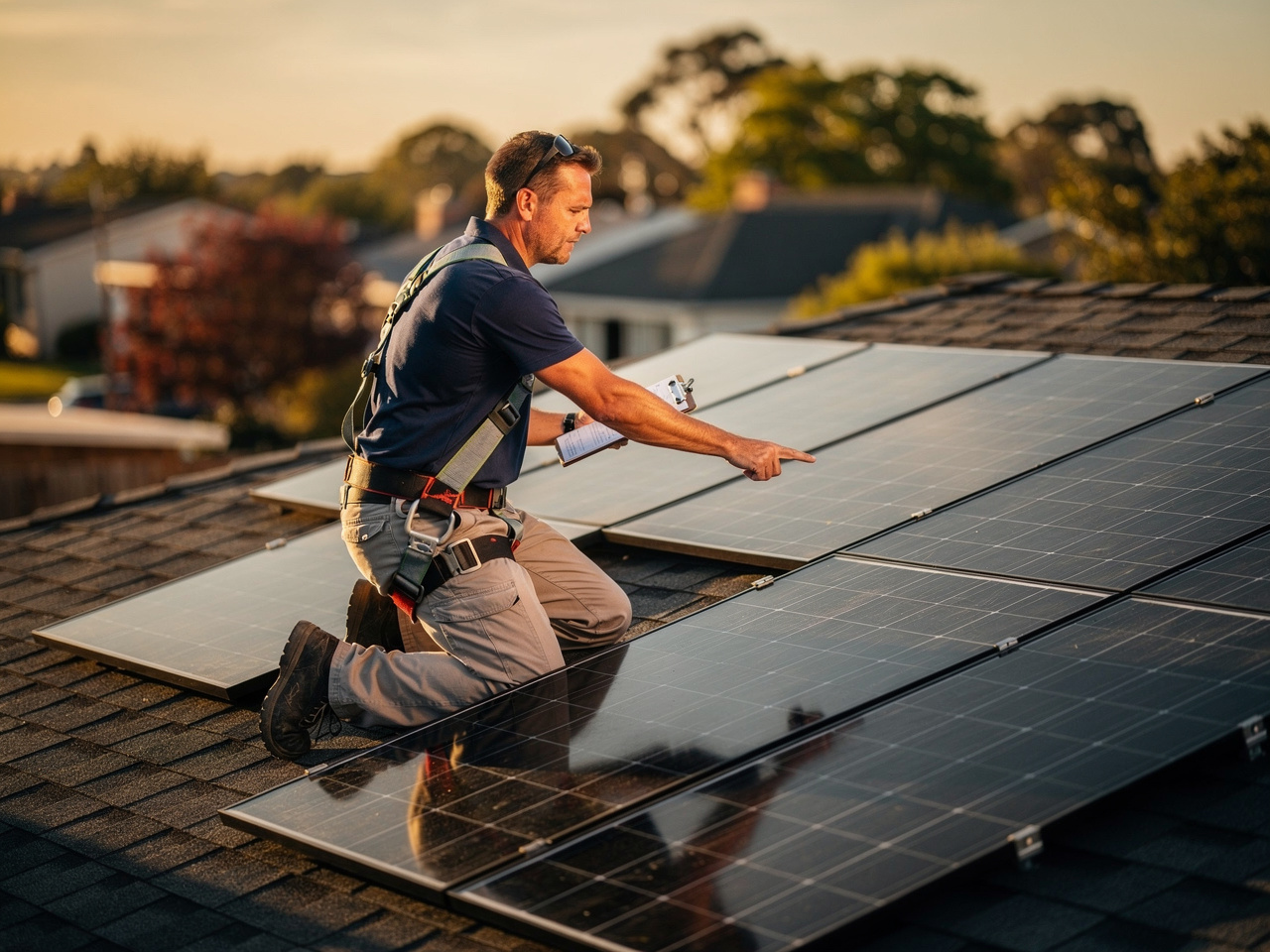
Free Inspection
We assess your system, identify issues, and check overall performance.

Clear Recommendations
You get a simple action plan with clear next steps and no confusion.
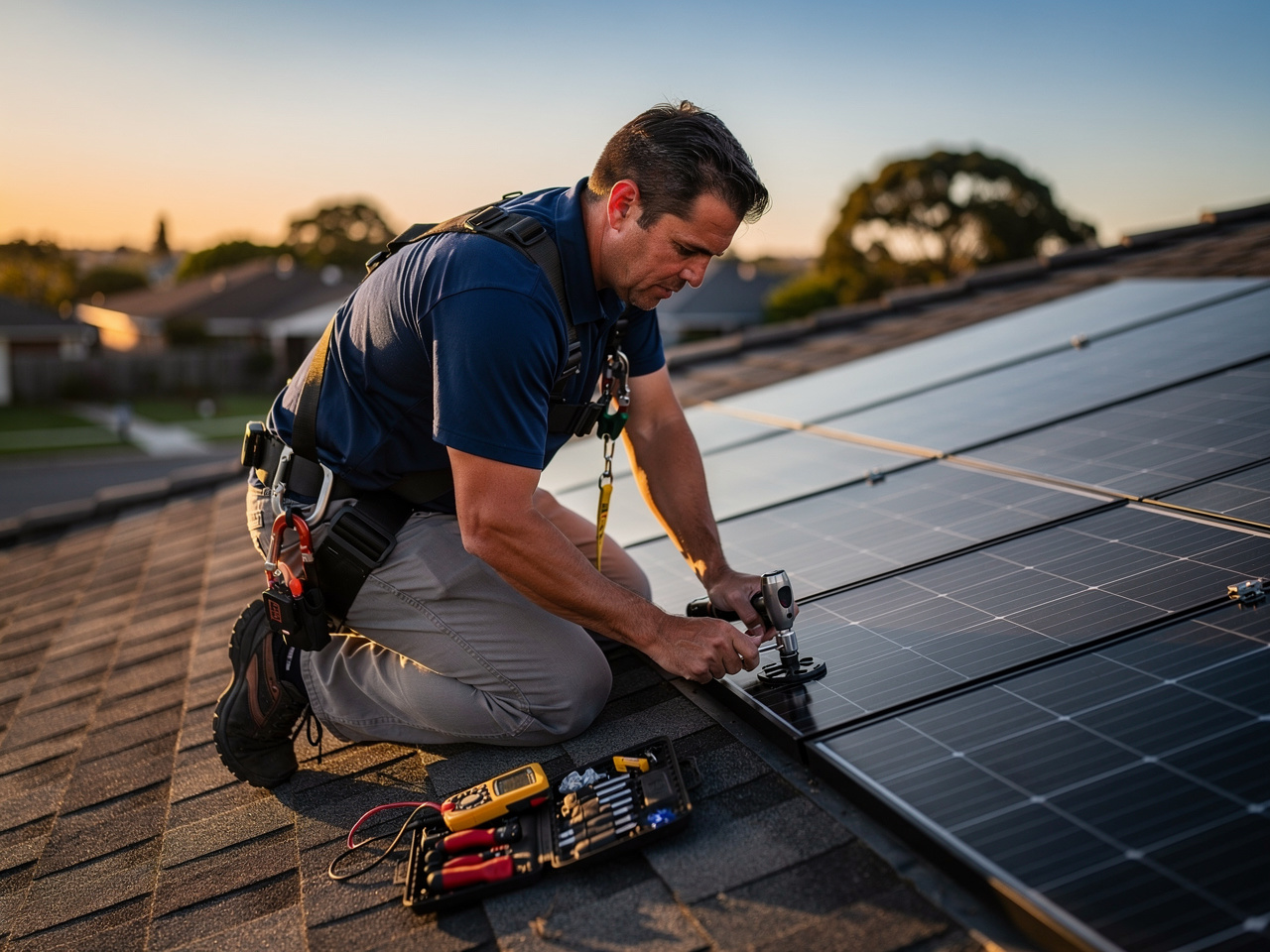
Expert Repair or Maintenance
Our technicians complete the work needed to restore and optimize your system.

Ongoing Performance
We help you keep everything running efficiently with continued support and monitoring options.
Common questions about solar service in Apollo Beach
Because salt corrosion happens inside connectors, under lug hardware, and behind clamps, where nothing is visible from the ground and no sensor is watching. Systems commonly lose output gradually rather than failing outright. An inspection catches the resistance problem while it is still a cleaning and a re-termination.
More often than an inland one. Proximity to salt air is the variable that drives the schedule, and homes on the water sit at the aggressive end of it. A practical rhythm for this area is a check before hurricane season and another after it, with connector and grounding hardware as the priority items.
No. Removing a properly attached array creates open penetrations and leaves loose components around your property, which is worse than leaving it in place. The useful work happens beforehand: verifying that mounts are anchored into structure, that torque is correct, and that flashing is intact.
Coastal placement can affect what a manufacturer covers, and some warranties treat corrosion differently from electrical failure. We document the condition we find and the parts we replace so you have a clear record. Keeping hardware maintained also removes the neglect argument if a claim ever becomes necessary.
Adding storage changes how much you export rather than the rate you are credited at, and it also adds equipment that must be interconnected correctly. The 10 kW threshold that Florida law protects applies to the system size, so we walk through where your existing array sits before anything gets added.

Get your solar system back to full performance
Don't let hidden issues cost you money. Let's fix it fast.
By submitting or calling, you consent to receive calls and SMS from The Light Group USA at the number provided, including via auto-dialer or pre-recorded messages. Consent is not required for purchase. Msg/data rates may apply. Reply STOP to opt out. See our Privacy Policy.
Solar Service & Repair near Apollo Beach
Crews based in Orlando and Tampa, covering 217 cities statewide.
Tampa Bay
- Apollo Beach
- Auburndale
- Bartow
- Bayonet Point
- Bayshore Gardens
- Bloomingdale
- Bradenton
- Brandon
- Carrollwood
- Citrus Park
- Clearwater
- Davenport
- Dunedin
- East Lake
- East Lake-Orient Park
- Egypt Lake-Leto
- Elfers
- Englewood
- Fish Hawk
- Four Corners
- Fruitville
- Gibsonton
- Haines City
- Holiday
- Jasmine Estates
- Keystone
- Lake Magdalene
- Lake Wales
- Lakeland
- Lakewood Ranch
- Land O' Lakes
- Largo
- Lealman
- Lutz
- New Port Richey
- North Port
- Northdale
- Palm Harbor
- Palm River-Clair Mel
- Palmer Ranch
- Pinellas Park
- Plant City
- Poinciana
- Riverview
- Ruskin
- Safety Harbor
- Sarasota
- Seminole
- South Bradenton
- South Venice
- St. Petersburg
- Sun City Center
- Tampa
- Tarpon Springs
- Temple Terrace
- Thonotosassa
- Town 'n' Country
- Trinity
- University
- Valrico
- Venice
- Wesley Chapel
- Westchase
- Wimauma
- Winter Haven
- Zephyrhills
We also cover Florida Panhandle, North Florida, Northeast Florida, Central Florida, Space Coast, Southwest Florida, Treasure Coast, South Florida. See every Florida city we service.