Solar Panel Repair & Maintenance in Bayonet Point, FL
America’s #1 Choice for Energy Independence
Crews in Orlando and Tampa covering Pasco County. Free inspection, no obligation.
By submitting or calling, you consent to receive calls and SMS from The Light Group USA at the number provided, including via auto-dialer or pre-recorded messages. Consent is not required for purchase. Msg/data rates may apply. Reply STOP to opt out. See our Privacy Policy.
Solar service in Bayonet Point
Bayonet Point is built around the intersection of US 19 and State Road 52, with the hospital campus as the landmark everyone navigates by. Homes spread west from that junction toward the Gulf in low, flat neighborhoods where the water table is never far down. Our Tampa crew covers west Pasco along the US 19 corridor, which keeps travel predictable even when a diagnostic turns into a same-week repair visit.
Your electric service here is listed with Withlacoochee River Electric Cooperative, and that matters more than most homeowners expect. A cooperative is member-owned and sets its own solar credit terms. It is not bound to the one-to-one retail arrangement that FPL, Duke and TECO customers rely on. Before anyone sizes a system or promises you a payback figure, the co-op's current interconnection and credit policy should be in front of you in writing.
There is a second reason to confirm before assuming. Bayonet Point sits close to the seam where cooperative territory meets Duke Energy Florida in west Pasco, and the boundary does not follow neighborhood lines neatly. Two houses on the same street can answer to different utilities with different rules. We verify the provider by service address, not by ZIP code, and we would rather check twice than plan around the wrong rulebook.
Then there is the Gulf, roughly a quarter mile out. Salt air here reaches rails, fasteners, grounding lugs and MC4 connectors long before it touches the glass, corroding inside housings where nothing is visible from the ground. Hurricane season runs June 1 through November 30, and this stretch of coast also sits in the most lightning-prone region in North America. Those three forces set the whole inspection agenda.
On a Bayonet Point system we look at these
We keep your solar system running at peak performance
From expert repairs to proactive maintenance, our team helps keep your solar system efficient, protected, and hassle-free. Whether you need a quick fix or ongoing support, we make it easy to restore performance and prevent future issues.

Simple, stress-free service process
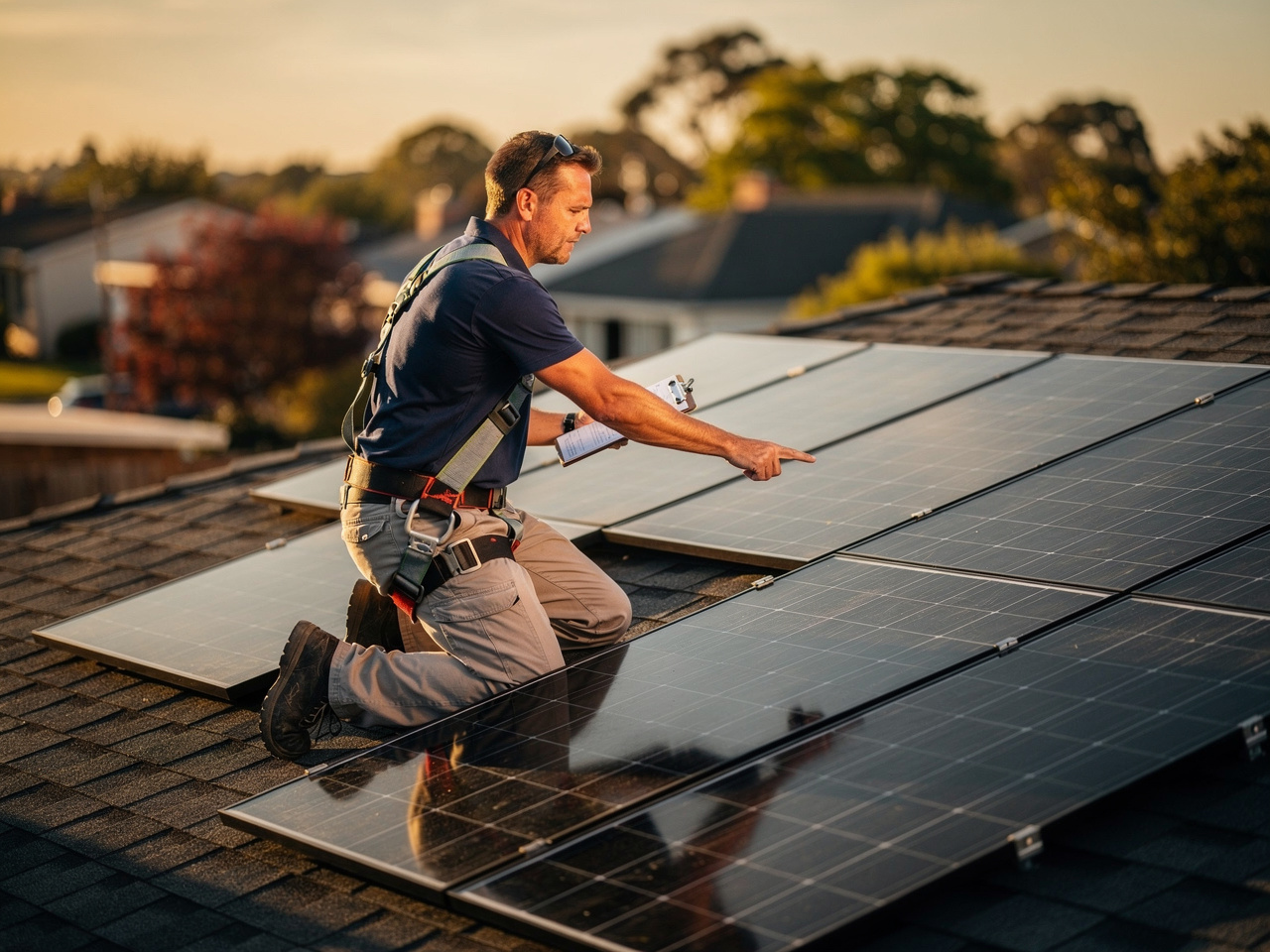
Free Inspection
We assess your system, identify issues, and check overall performance.

Clear Recommendations
You get a simple action plan with clear next steps and no confusion.
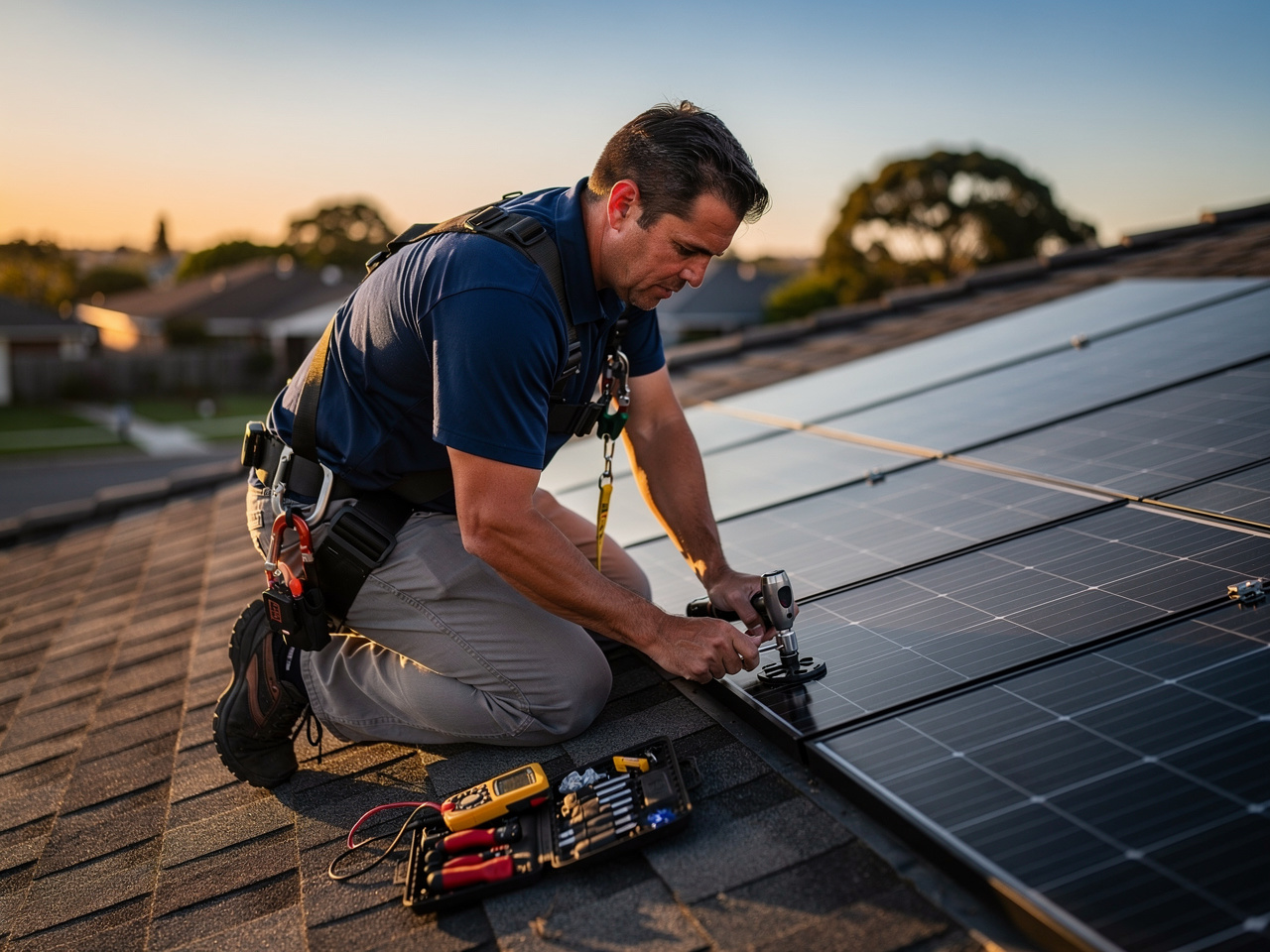
Expert Repair or Maintenance
Our technicians complete the work needed to restore and optimize your system.
Ongoing Performance
We help you keep everything running efficiently with continued support and monitoring options.
Common questions about solar service in Bayonet Point
That depends on your exact address. Bayonet Point sits near the boundary between Withlacoochee River Electric Cooperative and Duke Energy Florida in west Pasco, and the line does not follow subdivisions cleanly. We confirm it from your service address and your bill before we plan anything, because the credit rules on each side are not the same.
No. The one-to-one retail credit that FPL, Duke and TECO customers get is not automatically what a member-owned cooperative offers. Co-ops set their own solar policies and can revise them. We pull your current terms rather than repeating what applies elsewhere in Florida, since it directly changes what your system is worth.
Faster than most people expect, and invisibly. The glass and frames usually look fine for years while corrosion works inside connector housings, on grounding lugs and at rail splices. By the time something visibly fails, the resistance has often been climbing for a season or two and quietly costing you production.
Get the array inspected before June 1. That means re-torqued attachments, sealant checked at every penetration, rapid shutdown tested and the whole system photographed in known-good condition. Storm season here runs through November 30, and once it starts, the schedule fills with damage calls rather than preventive visits.
Because coastal failures do not start on the glass. They start on metal you cannot see from the driveway: pins inside connectors, lugs behind the panel, splices under the modules. A system can look showroom-clean and still be losing output to resistance that a meter finds in twenty minutes.
Get your solar system back to full performance
Don't let hidden issues cost you money. Let's fix it fast.
By submitting or calling, you consent to receive calls and SMS from The Light Group USA at the number provided, including via auto-dialer or pre-recorded messages. Consent is not required for purchase. Msg/data rates may apply. Reply STOP to opt out. See our Privacy Policy.
Solar Service & Repair near Bayonet Point
Crews based in Orlando and Tampa, covering 217 cities statewide.
Tampa Bay
- Apollo Beach
- Auburndale
- Bartow
- Bayonet Point
- Bayshore Gardens
- Bloomingdale
- Bradenton
- Brandon
- Carrollwood
- Citrus Park
- Clearwater
- Davenport
- Dunedin
- East Lake
- East Lake-Orient Park
- Egypt Lake-Leto
- Elfers
- Englewood
- Fish Hawk
- Four Corners
- Fruitville
- Gibsonton
- Haines City
- Holiday
- Jasmine Estates
- Keystone
- Lake Magdalene
- Lake Wales
- Lakeland
- Lakewood Ranch
- Land O' Lakes
- Largo
- Lealman
- Lutz
- New Port Richey
- North Port
- Northdale
- Palm Harbor
- Palm River-Clair Mel
- Palmer Ranch
- Pinellas Park
- Plant City
- Poinciana
- Riverview
- Ruskin
- Safety Harbor
- Sarasota
- Seminole
- South Bradenton
- South Venice
- St. Petersburg
- Sun City Center
- Tampa
- Tarpon Springs
- Temple Terrace
- Thonotosassa
- Town 'n' Country
- Trinity
- University
- Valrico
- Venice
- Wesley Chapel
- Westchase
- Wimauma
- Winter Haven
- Zephyrhills
We also cover Florida Panhandle, North Florida, Northeast Florida, Central Florida, Space Coast, Southwest Florida, Treasure Coast, South Florida. See every Florida city we service.