Solar Panel Repair & Maintenance in Palm River-Clair Mel, FL
America’s #1 Choice for Energy Independence
Crews in Orlando and Tampa covering Hillsborough County. Free inspection, no obligation.
By submitting or calling, you consent to receive calls and SMS from The Light Group USA at the number provided, including via auto-dialer or pre-recorded messages. Consent is not required for purchase. Msg/data rates may apply. Reply STOP to opt out. See our Privacy Policy.
Solar service in Palm River-Clair Mel
Palm River-Clair Mel sits on the edge of McKay Bay, where Causeway Boulevard crosses toward the port district. This is tidal water, not beach: a shallow working bay ringed by terminals and truck routes rather than sand. For a rooftop array the distinction changes nothing about the chemistry. Salt still rides inland on the afternoon breeze and settles on every metal part of the system, day after day.
What makes this corner of Hillsborough County unusual is the second ingredient. Rail spurs, yard traffic and industrial activity keep fine dust in the air year-round, and that dust binds with salt film into a gritty layer that holds moisture against aluminum. Glass sheds most of it in a hard rain. The rails, grounding lugs and connector housings underneath the panels never see that rain at all.
The housing stock here is mixed, postwar blocks alongside newer infill, so service equipment varies from one street to the next. On an older main panel, a solar backfeed breaker may be sitting right at the limit of what the busbar allows. We verify that before anything else, because an interconnection that was perfectly legal at install can be quietly undone by a later panel swap or a service upgrade.
Tampa Electric serves the area, and exported energy earns a one-for-one retail credit, backed by state law for systems up to 10 kW. Florida is a regulated market, so the provider comes with the address rather than being chosen. What a homeowner can control is uptime, and in the most lightning-struck region of North America, grounding and surge protection are what decide whether an inverter lasts ten years or two.
On a Palm River-Clair Mel system we look at these
We keep your solar system running at peak performance
From expert repairs to proactive maintenance, our team helps keep your solar system efficient, protected, and hassle-free. Whether you need a quick fix or ongoing support, we make it easy to restore performance and prevent future issues.

Simple, stress-free service process
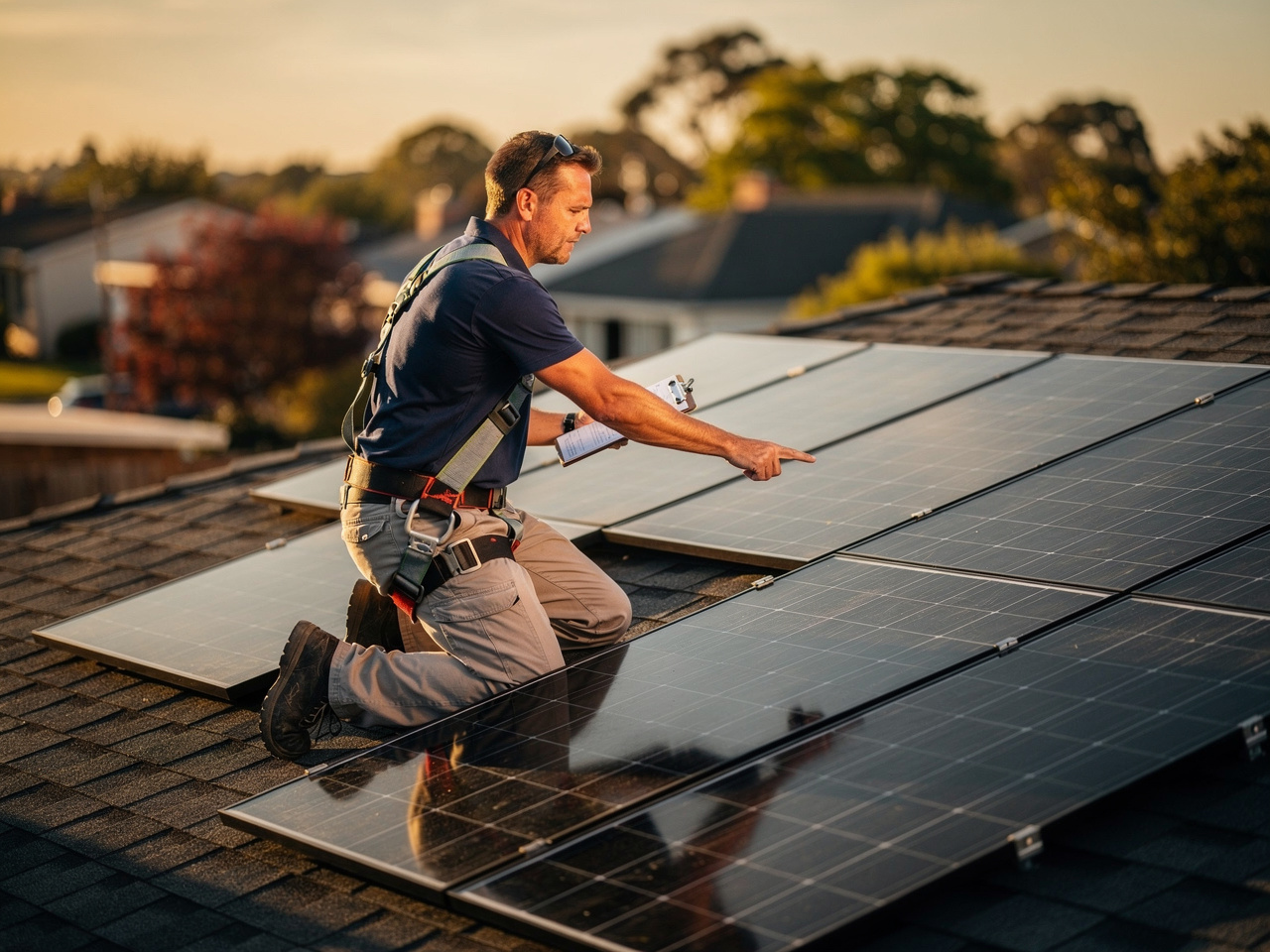
Free Inspection
We assess your system, identify issues, and check overall performance.

Clear Recommendations
You get a simple action plan with clear next steps and no confusion.
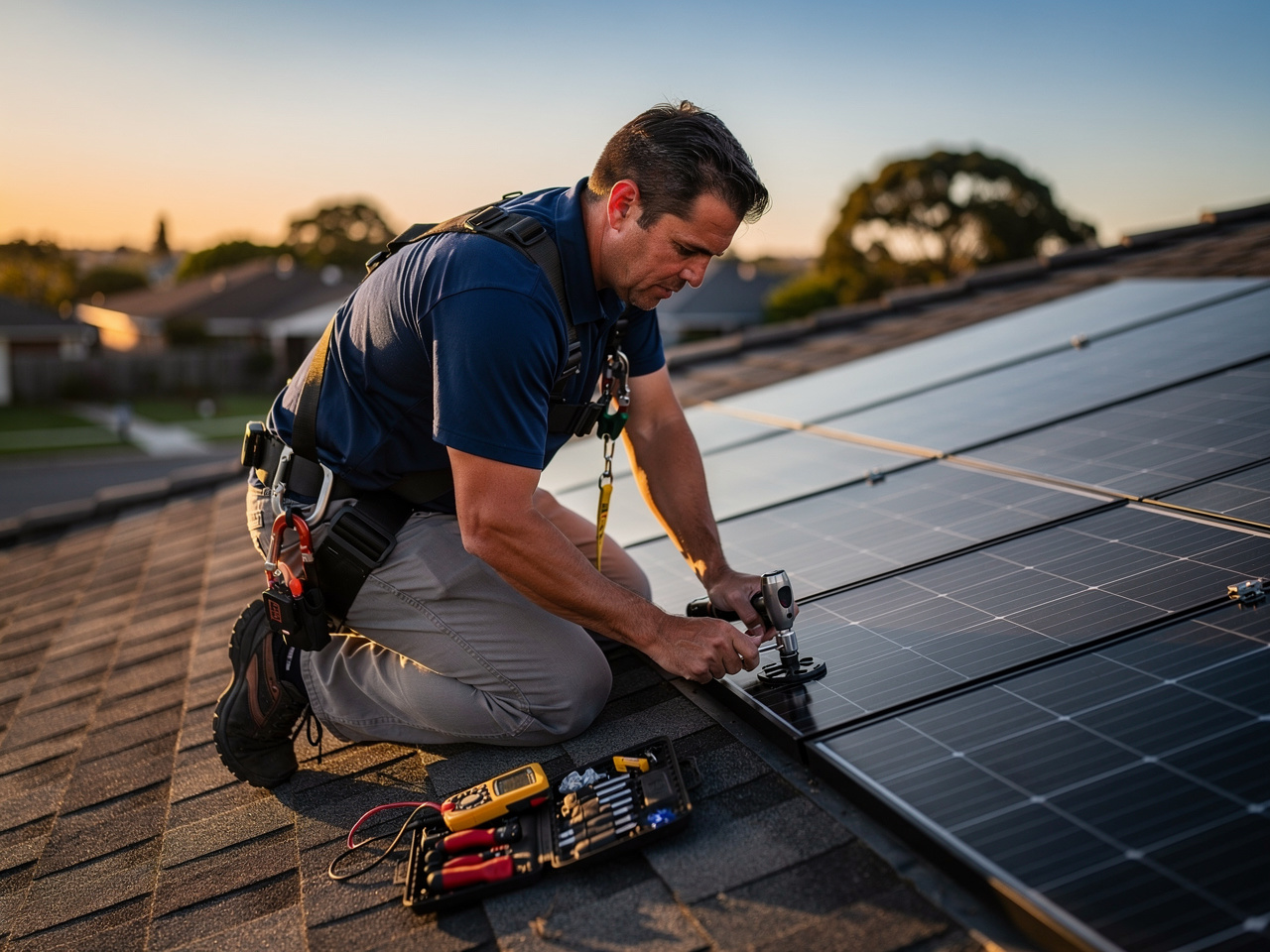
Expert Repair or Maintenance
Our technicians complete the work needed to restore and optimize your system.

Ongoing Performance
We help you keep everything running efficiently with continued support and monitoring options.
Common questions about solar service in Palm River-Clair Mel
The modules themselves handle it well. What fails is everything holding them up: aluminum rails, stainless-to-aluminum joints, grounding lugs and MC4 connectors, where salt film keeps moisture trapped inside the fitting. The corrosion advances out of sight, so a system can look spotless from the driveway while its bonding path is already compromised.
TECO credits exported energy at the retail rate, one kilowatt-hour for one, and Florida law protects that treatment for systems up to 10 kW. Credits offset what you pull from the grid later in the billing cycle. Because Florida is a regulated market, the utility is determined by your address and cannot be switched.
The two are handled differently by most warranties, and the difference is settled by inspection rather than assumption. We document what we actually find, including spent surge devices, damaged string inputs and evidence at the grounding connections, so any claim you file rests on written observation instead of a guess about the weather.
Once a year is a sensible baseline here, ideally before June 1 when hurricane season opens. Bay salt combined with port-area dust works faster than an inland schedule assumes. Torque checks, connector inspection and surge device status all cost far less on a planned visit than they do after something has already failed.
Because most solar faults reduce output instead of stopping it. A corroded connector adding resistance, a dead optimizer, a string running at partial current: none of these raise an alarm on the app's main screen. The electric bill creeps back up and the cause stays invisible. An inspection puts an actual number on what is missing.

Get your solar system back to full performance
Don't let hidden issues cost you money. Let's fix it fast.
By submitting or calling, you consent to receive calls and SMS from The Light Group USA at the number provided, including via auto-dialer or pre-recorded messages. Consent is not required for purchase. Msg/data rates may apply. Reply STOP to opt out. See our Privacy Policy.
Solar Service & Repair near Palm River-Clair Mel
Crews based in Orlando and Tampa, covering 217 cities statewide.
Tampa Bay
- Apollo Beach
- Auburndale
- Bartow
- Bayonet Point
- Bayshore Gardens
- Bloomingdale
- Bradenton
- Brandon
- Carrollwood
- Citrus Park
- Clearwater
- Davenport
- Dunedin
- East Lake
- East Lake-Orient Park
- Egypt Lake-Leto
- Elfers
- Englewood
- Fish Hawk
- Four Corners
- Fruitville
- Gibsonton
- Haines City
- Holiday
- Jasmine Estates
- Keystone
- Lake Magdalene
- Lake Wales
- Lakeland
- Lakewood Ranch
- Land O' Lakes
- Largo
- Lealman
- Lutz
- New Port Richey
- North Port
- Northdale
- Palm Harbor
- Palm River-Clair Mel
- Palmer Ranch
- Pinellas Park
- Plant City
- Poinciana
- Riverview
- Ruskin
- Safety Harbor
- Sarasota
- Seminole
- South Bradenton
- South Venice
- St. Petersburg
- Sun City Center
- Tampa
- Tarpon Springs
- Temple Terrace
- Thonotosassa
- Town 'n' Country
- Trinity
- University
- Valrico
- Venice
- Wesley Chapel
- Westchase
- Wimauma
- Winter Haven
- Zephyrhills
We also cover Florida Panhandle, North Florida, Northeast Florida, Central Florida, Space Coast, Southwest Florida, Treasure Coast, South Florida. See every Florida city we service.