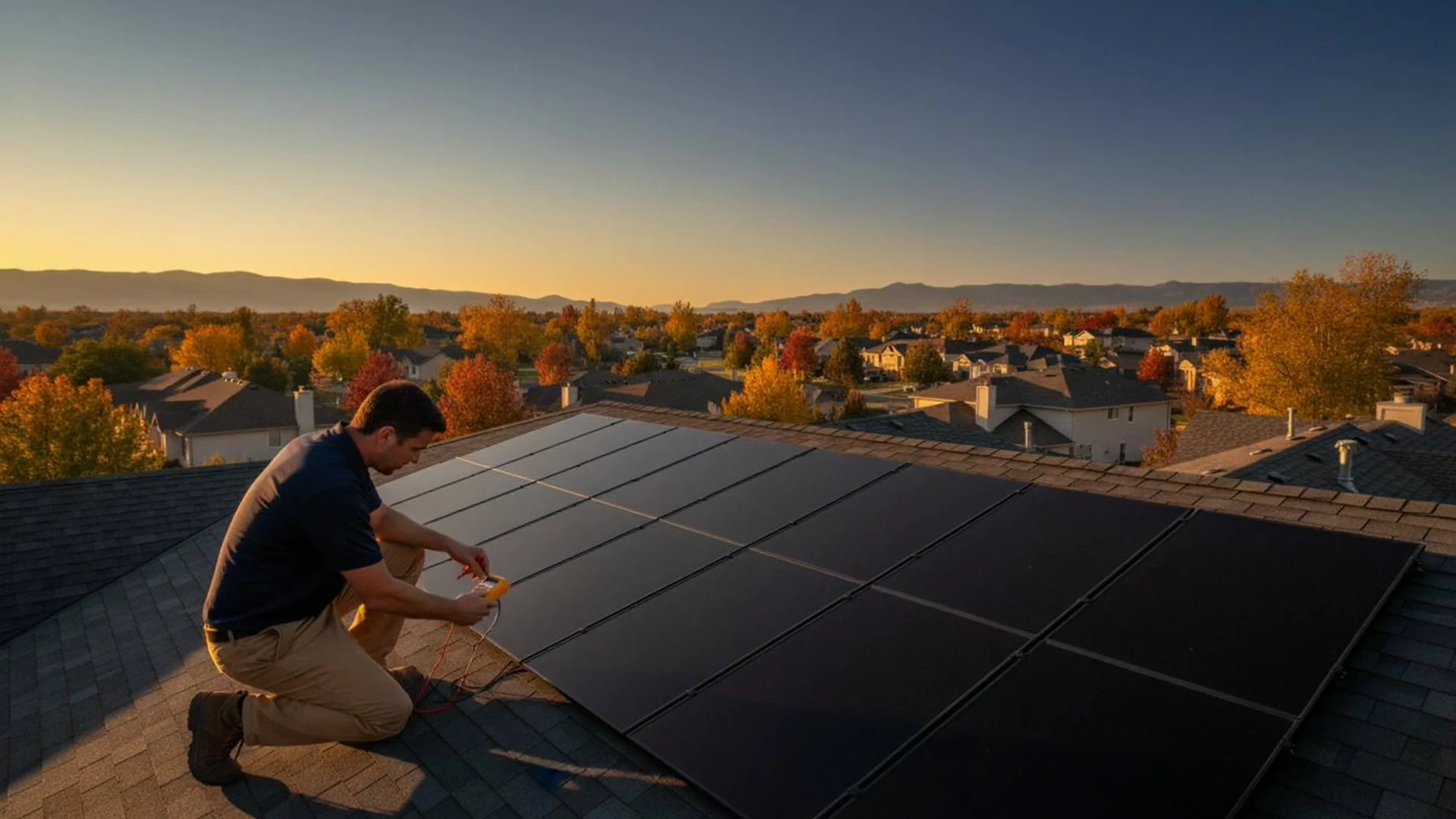
Solar Panel Repair & Maintenance in St. Petersburg, FL
America’s #1 Choice for Energy Independence
Crews in Orlando and Tampa covering Pinellas County. Free inspection, no obligation.
By submitting or calling, you consent to receive calls and SMS from The Light Group USA at the number provided, including via auto-dialer or pre-recorded messages. Consent is not required for purchase. Msg/data rates may apply. Reply STOP to opt out. See our Privacy Policy.
Solar service in St. Petersburg
St. Petersburg occupies a peninsula with the Gulf on one side and Tampa Bay on the other, which means salt air from two directions and essentially nowhere in the city that escapes it. On the utility side, St. Pete is Duke Energy Florida territory, a different company from the one serving the far side of the bay. Duke credits exported energy at the retail rate, one kilowatt-hour for one kilowatt-hour.
Salt is the defining maintenance issue here. It does not attack the panels. It attacks everything holding them up and everything conducting current through them. Aluminum rails pit, stainless fasteners seize, grounding lugs bloom white, and MC4 connectors corrode on the contact surface inside the housing. A connector that looks perfect from the ladder can be running warm and slowly cooking itself for a year before anyone notices.
Central Avenue runs through neighborhoods of bungalows and mid-century homes, and the 33705, 33712, and 33713 areas hold much of the city's older housing stock. Small footprints, low-pitch hip roofs, and decks re-covered several times over the decades. That combination limits usable array area and makes attachment quality far more consequential than it would be on a large, simple, modern roof.
We do not keep a crew in St. Petersburg, but our Tampa installation team works Pinellas County regularly, so this is close to home for us. We still start with data: monitoring access, inverter model, error text, and a recent Duke statement. In a marine environment most problems trace back to a connection rather than a component, and knowing which one before the visit is what keeps it to a single trip.
On a St. Petersburg system we look at these
We keep your solar system running at peak performance
From expert repairs to proactive maintenance, our team helps keep your solar system efficient, protected, and hassle-free. Whether you need a quick fix or ongoing support, we make it easy to restore performance and prevent future issues.

Simple, stress-free service process
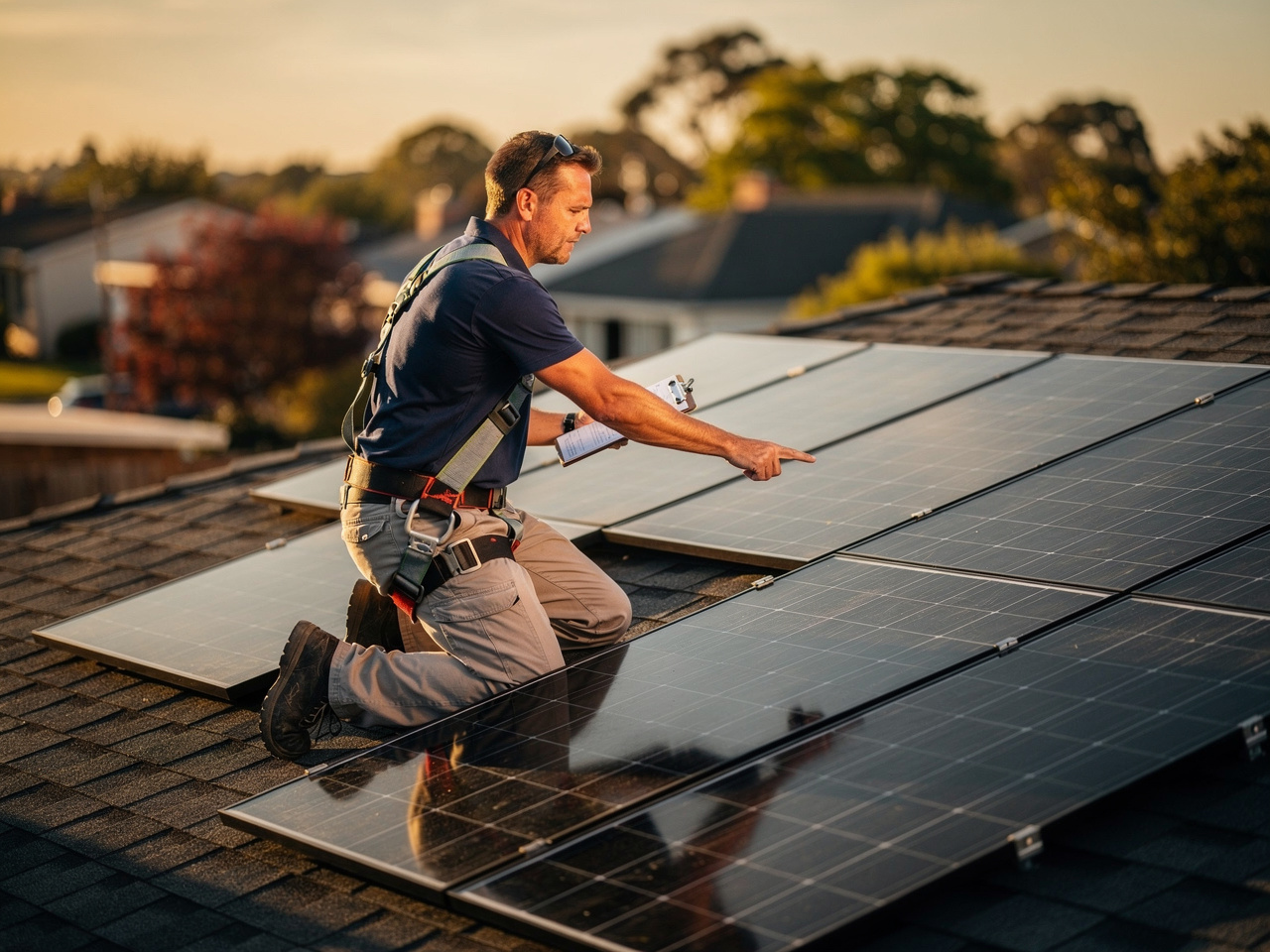
Free Inspection
We assess your system, identify issues, and check overall performance.

Clear Recommendations
You get a simple action plan with clear next steps and no confusion.
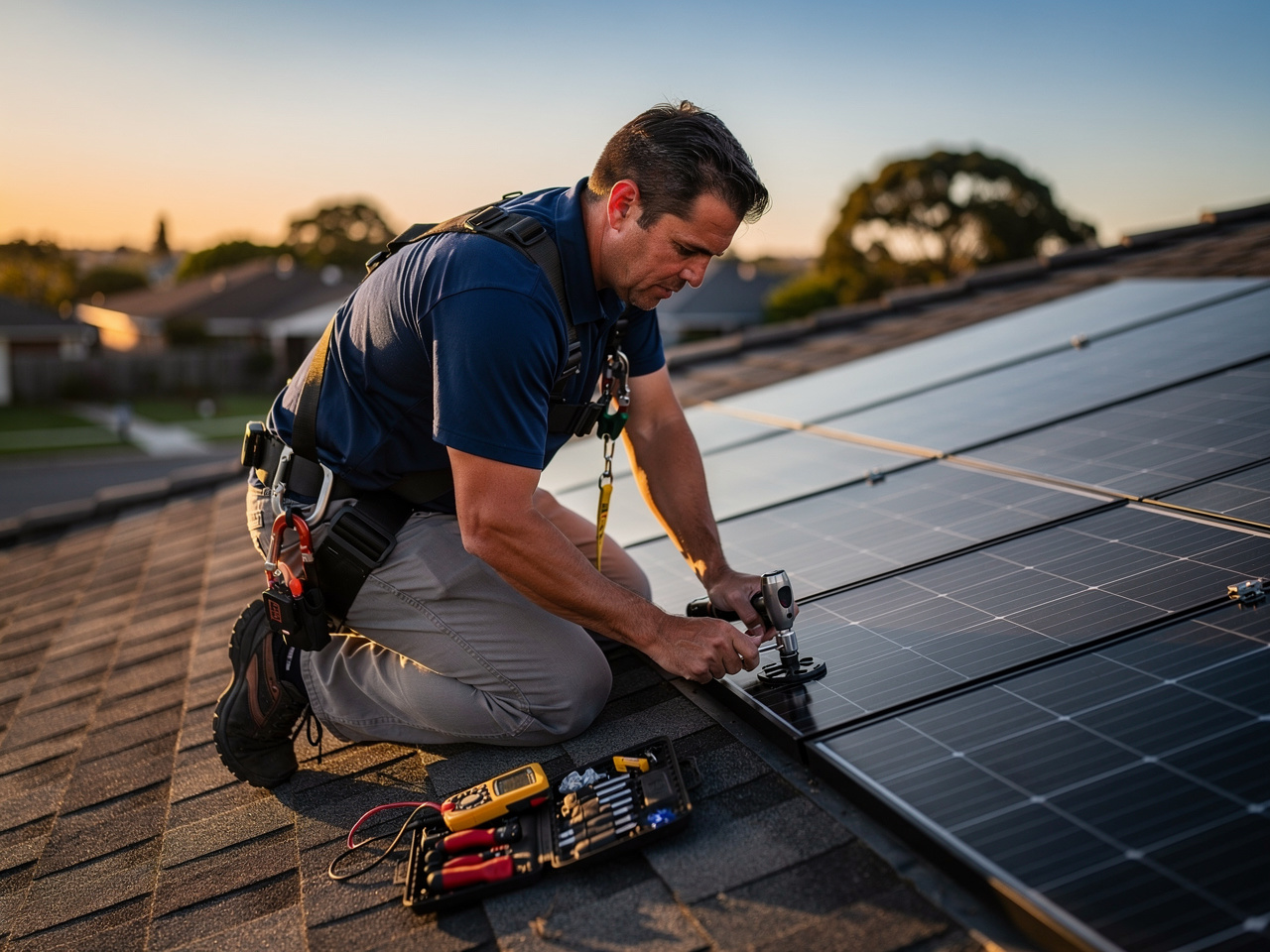
Expert Repair or Maintenance
Our technicians complete the work needed to restore and optimize your system.
Ongoing Performance
We help you keep everything running efficiently with continued support and monitoring options.
Common questions about solar service in St. Petersburg
In St. Petersburg there is not much away from the water. The city sits on a peninsula with the Gulf on one side and Tampa Bay on the other, and salt-laden air crosses all of it. Distance changes how fast corrosion develops, not whether it does. Assume your hardware lives in a marine environment.
No. St. Petersburg is served by Duke Energy Florida, while the far side of Tampa Bay is a different utility. Florida is a regulated market, so the provider is set by your address and cannot be switched. Duke credits exported solar at the retail rate, one for one, the same treatment under a different company.
Because glass and frames are the last things salt affects. Failures start on the metal that conducts current: connector contacts, grounding lugs, rail splices, terminal screws. All of that sits inside housings or under the array where you cannot see it, and the first symptom is a slow production drop, not a visible one.
It changes them. Low-pitch roofs drain slowly, so flashing quality at every penetration matters more, and debris sits longer instead of washing away. Panels also self-clean less effectively. On older St. Pete homes we pay particular attention to how the mounts were flashed and whether the deck beneath them is still sound.
More often than an inland one. In a marine environment the sensible rhythm is an annual look at connections, grounding, and torque, plus a check before hurricane season opens on June 1. Corrosion is progressive and cheap to catch early. A connector cleaned this year costs a fraction of an inverter next year.
Get your solar system back to full performance
Don't let hidden issues cost you money. Let's fix it fast.
By submitting or calling, you consent to receive calls and SMS from The Light Group USA at the number provided, including via auto-dialer or pre-recorded messages. Consent is not required for purchase. Msg/data rates may apply. Reply STOP to opt out. See our Privacy Policy.
Solar Service & Repair near St. Petersburg
Crews based in Orlando and Tampa, covering 217 cities statewide.
Tampa Bay
- Apollo Beach
- Auburndale
- Bartow
- Bayonet Point
- Bayshore Gardens
- Bloomingdale
- Bradenton
- Brandon
- Carrollwood
- Citrus Park
- Clearwater
- Davenport
- Dunedin
- East Lake
- East Lake-Orient Park
- Egypt Lake-Leto
- Elfers
- Englewood
- Fish Hawk
- Four Corners
- Fruitville
- Gibsonton
- Haines City
- Holiday
- Jasmine Estates
- Keystone
- Lake Magdalene
- Lake Wales
- Lakeland
- Lakewood Ranch
- Land O' Lakes
- Largo
- Lealman
- Lutz
- New Port Richey
- North Port
- Northdale
- Palm Harbor
- Palm River-Clair Mel
- Palmer Ranch
- Pinellas Park
- Plant City
- Poinciana
- Riverview
- Ruskin
- Safety Harbor
- Sarasota
- Seminole
- South Bradenton
- South Venice
- St. Petersburg
- Sun City Center
- Tampa
- Tarpon Springs
- Temple Terrace
- Thonotosassa
- Town 'n' Country
- Trinity
- University
- Valrico
- Venice
- Wesley Chapel
- Westchase
- Wimauma
- Winter Haven
- Zephyrhills
We also cover Florida Panhandle, North Florida, Northeast Florida, Central Florida, Space Coast, Southwest Florida, Treasure Coast, South Florida. See every Florida city we service.