Solar Panel Repair & Maintenance in Holiday, FL
America’s #1 Choice for Energy Independence
Crews in Orlando and Tampa covering Pasco County. Free inspection, no obligation.
By submitting or calling, you consent to receive calls and SMS from The Light Group USA at the number provided, including via auto-dialer or pre-recorded messages. Consent is not required for purchase. Msg/data rates may apply. Reply STOP to opt out. See our Privacy Policy.
Solar service in Holiday
Holiday sits about as close to the water as a Florida neighborhood can get. The community runs along US 19 near Anclote River Park, where the river meets the Gulf, and for practical purposes the salt line is at your door rather than a drive away. That single fact reorders everything about how a solar array should be specified, mounted and maintained here, and it is where our Tampa crew starts every visit.
Duke Energy Florida is the provider for this address, set by geography the way all Florida utility territories are. Duke credits what you export at the full retail rate, one kilowatt-hour for one kilowatt-hour, so the value of a working system is straightforward to calculate. The flip side is equally straightforward: production you lose to corroded connections is money you are handing back at full retail price, month after month.
Salt is the dominant variable in Holiday. It does not attack the modules first. It goes after rails, clamps, fasteners, grounding lugs and the pins inside MC4 connectors, corroding within the housing where no visual inspection from the driveway will ever find it. Plated hardware that would last a decade twenty miles inland can start blooming rust here in a couple of seasons, and rising resistance shows up as lost output long before anything breaks.
Exposure is the other half of it. There is very little between these roofs and open water, so wind arrives unbroken and hurricane season runs June 1 through November 30. This is also the most lightning-prone region in North America. Attachment torque, sealed penetrations, a clean ground path and a live surge device are not optional refinements in Holiday. They are the difference between a system that survives a season and one that does not.
On a Holiday system we look at these
We keep your solar system running at peak performance
From expert repairs to proactive maintenance, our team helps keep your solar system efficient, protected, and hassle-free. Whether you need a quick fix or ongoing support, we make it easy to restore performance and prevent future issues.

Simple, stress-free service process
Free Inspection
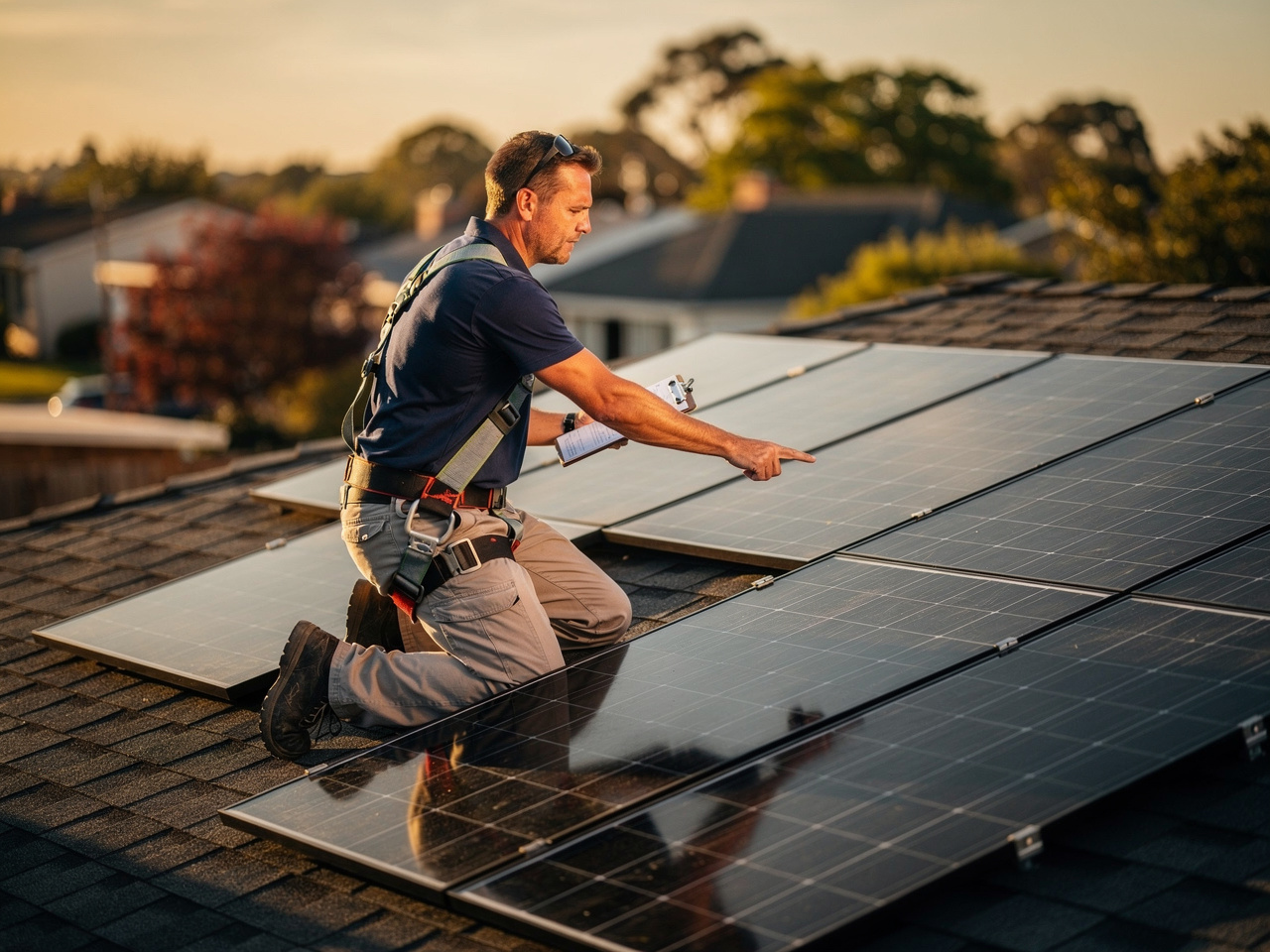
We assess your system, identify issues, and check overall performance.

Clear Recommendations
You get a simple action plan with clear next steps and no confusion.
Expert Repair or Maintenance
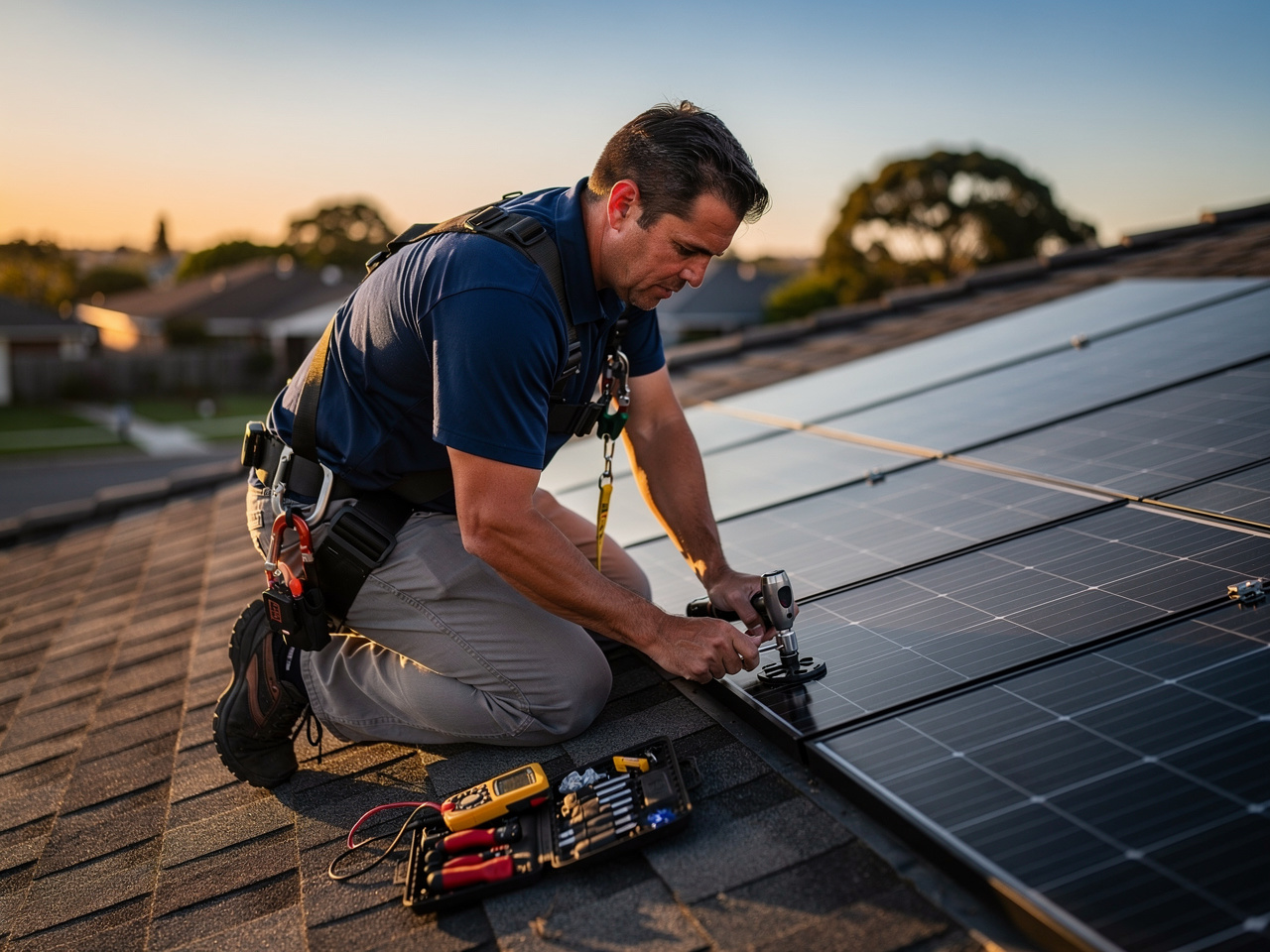
Our technicians complete the work needed to restore and optimize your system.
Ongoing Performance
We help you keep everything running efficiently with continued support and monitoring options.
Common questions about solar service in Holiday
It shortens the life of the metal, not usually the panels. Rails, clamps, fasteners, lugs and connector pins all corrode faster in salt air, and they are what hold the system together electrically and structurally. With the right hardware and regular inspection, a Holiday array performs fine. Neglected, it degrades much faster than an inland one.
Duke Energy Florida credits exported solar at the full retail rate, one kilowatt-hour for one kilowatt-hour. Florida is a regulated market, so Duke serves this address by geography and you cannot switch providers. The practical takeaway is that every kilowatt-hour your system fails to produce costs you at full retail value.
It is worth looking at. An outdoor inverter this close to the Gulf pulls salt-laden air across its heat sink and vents continuously, which accelerates internal corrosion and makes heat harder to shed. We assess the enclosure rating and the exposure, and sometimes recommend relocating or shielding it rather than waiting for a failure.
More often. An inland array in Pasco or Polk can go longer between hands-on checks, but at a few hundred feet from open water the corrosion clock runs faster. We generally recommend an annual hands-on inspection here, timed before hurricane season so any repairs happen with parts available and no storm pressure.
Rarely dramatic. You get a green or white tinge on copper contacts, pitting on aluminum rail, rust weeping from a fastener thread, and a grounding lug that has lost its bite. None of it is visible from the ground. What you notice instead is a system producing a little less each year with no error code to explain it.
Get your solar system back to full performance
Don't let hidden issues cost you money. Let's fix it fast.
By submitting or calling, you consent to receive calls and SMS from The Light Group USA at the number provided, including via auto-dialer or pre-recorded messages. Consent is not required for purchase. Msg/data rates may apply. Reply STOP to opt out. See our Privacy Policy.
Solar Service & Repair near Holiday
Crews based in Orlando and Tampa, covering 217 cities statewide.
Tampa Bay
- Apollo Beach
- Auburndale
- Bartow
- Bayonet Point
- Bayshore Gardens
- Bloomingdale
- Bradenton
- Brandon
- Carrollwood
- Citrus Park
- Clearwater
- Davenport
- Dunedin
- East Lake
- East Lake-Orient Park
- Egypt Lake-Leto
- Elfers
- Englewood
- Fish Hawk
- Four Corners
- Fruitville
- Gibsonton
- Haines City
- Holiday
- Jasmine Estates
- Keystone
- Lake Magdalene
- Lake Wales
- Lakeland
- Lakewood Ranch
- Land O' Lakes
- Largo
- Lealman
- Lutz
- New Port Richey
- North Port
- Northdale
- Palm Harbor
- Palm River-Clair Mel
- Palmer Ranch
- Pinellas Park
- Plant City
- Poinciana
- Riverview
- Ruskin
- Safety Harbor
- Sarasota
- Seminole
- South Bradenton
- South Venice
- St. Petersburg
- Sun City Center
- Tampa
- Tarpon Springs
- Temple Terrace
- Thonotosassa
- Town 'n' Country
- Trinity
- University
- Valrico
- Venice
- Wesley Chapel
- Westchase
- Wimauma
- Winter Haven
- Zephyrhills
We also cover Florida Panhandle, North Florida, Northeast Florida, Central Florida, Space Coast, Southwest Florida, Treasure Coast, South Florida. See every Florida city we service.