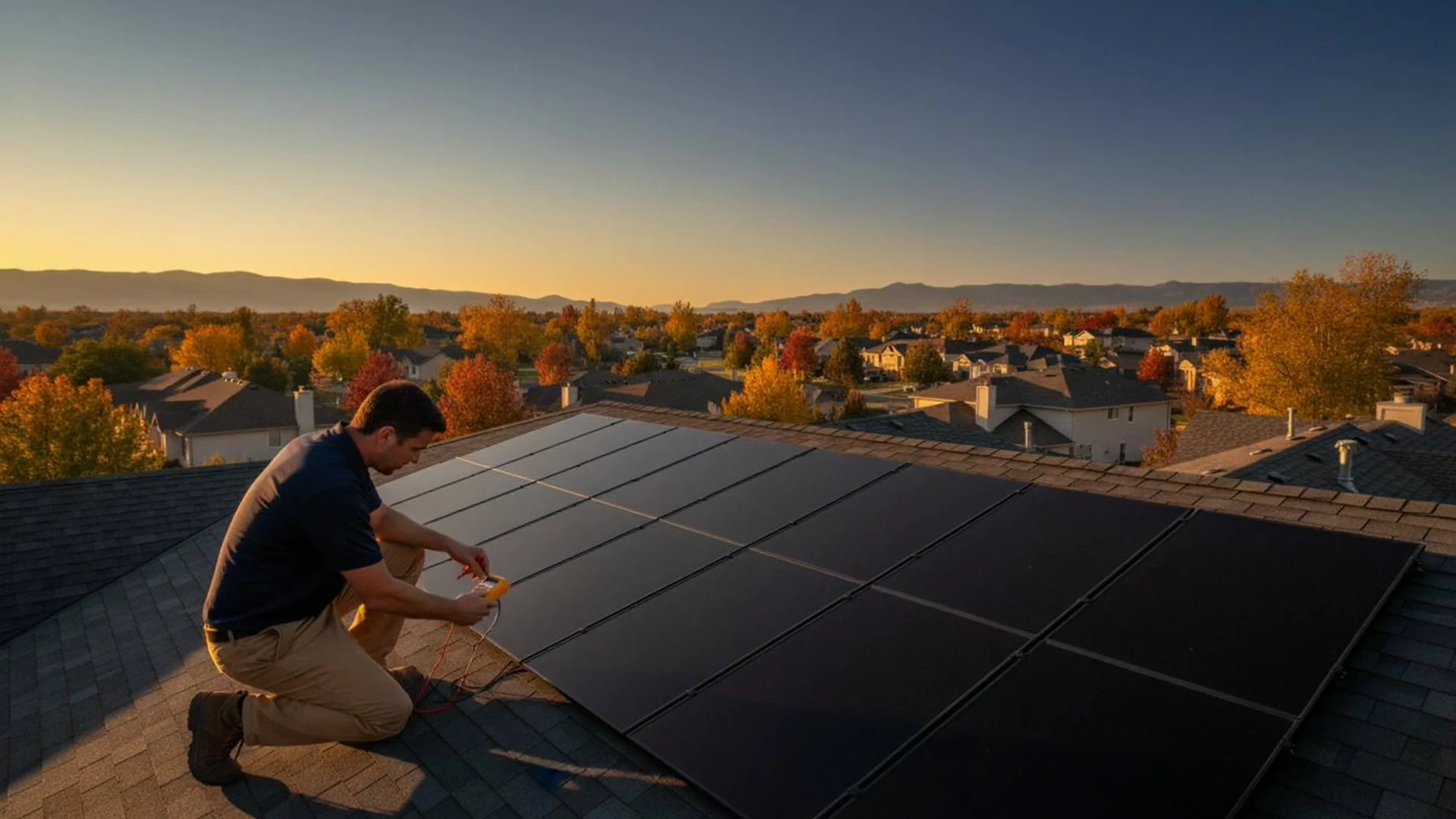
Solar Panel Repair & Maintenance in Gibsonton, FL
America’s #1 Choice for Energy Independence
Crews in Orlando and Tampa covering Hillsborough County. Free inspection, no obligation.
By submitting or calling, you consent to receive calls and SMS from The Light Group USA at the number provided, including via auto-dialer or pre-recorded messages. Consent is not required for purchase. Msg/data rates may apply. Reply STOP to opt out. See our Privacy Policy.
Solar service in Gibsonton
Gibsonton sits where the Alafia River meets Tampa Bay, and US 41 runs straight through it at Symmes Road. That geography gives the town two conditions at once: brackish tidal air off the river and bay, and a working industrial corridor moving dust and particulate through the neighborhoods beside it. Rooftop solar here deals with corrosion and soiling in the same year.
Tampa Electric serves Gibsonton addresses. TECO credits exported solar at the full retail rate, one to one, for systems up to 10 kW, a treatment protected under Florida state law rather than left to utility discretion. If your array sits at or near that threshold, its exact size matters, and it is worth confirming what your interconnection agreement actually records.
Then there is lightning. The Tampa Bay area sees more lightning than anywhere else in North America, and that is not a colorful statistic when you own rooftop electronics. It is the most common reason inverters die early here. Surge protection is a consumable component: it absorbs an event, degrades, and keeps sitting in the enclosure looking exactly like a working device.
We reach Gibsonton on scheduled routes from Tampa. On a first visit we work from the roof down, starting with modules and mounts, then DC wiring and connectors, then the inverter and its protection, then the grounding path, then the data. The order matters, because most of what fails in this town fails silently and only appears when you compare what the system should do with what it does.
On a Gibsonton system we look at these
We keep your solar system running at peak performance
From expert repairs to proactive maintenance, our team helps keep your solar system efficient, protected, and hassle-free. Whether you need a quick fix or ongoing support, we make it easy to restore performance and prevent future issues.

Simple, stress-free service process
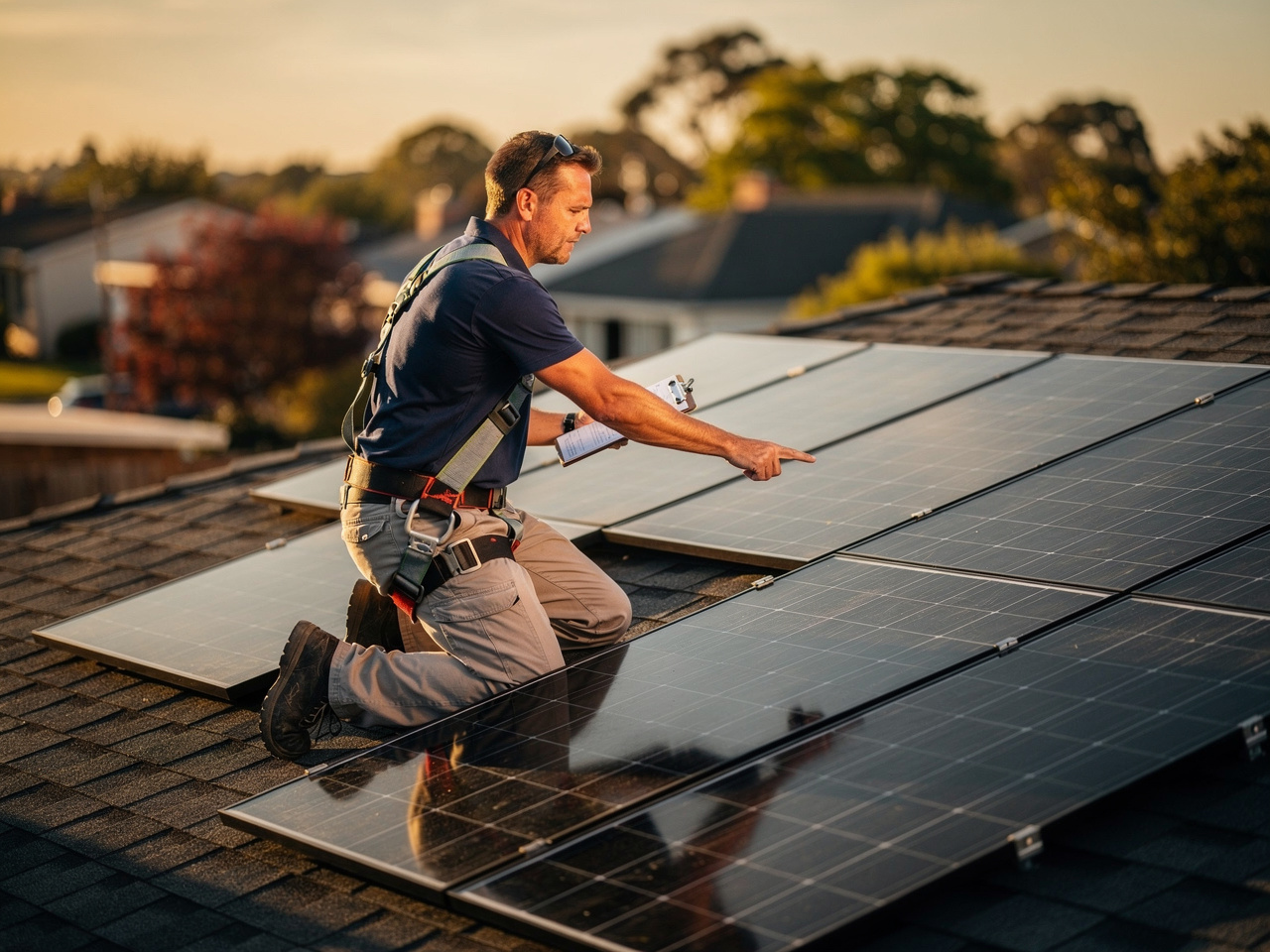
Free Inspection
We assess your system, identify issues, and check overall performance.

Clear Recommendations
You get a simple action plan with clear next steps and no confusion.
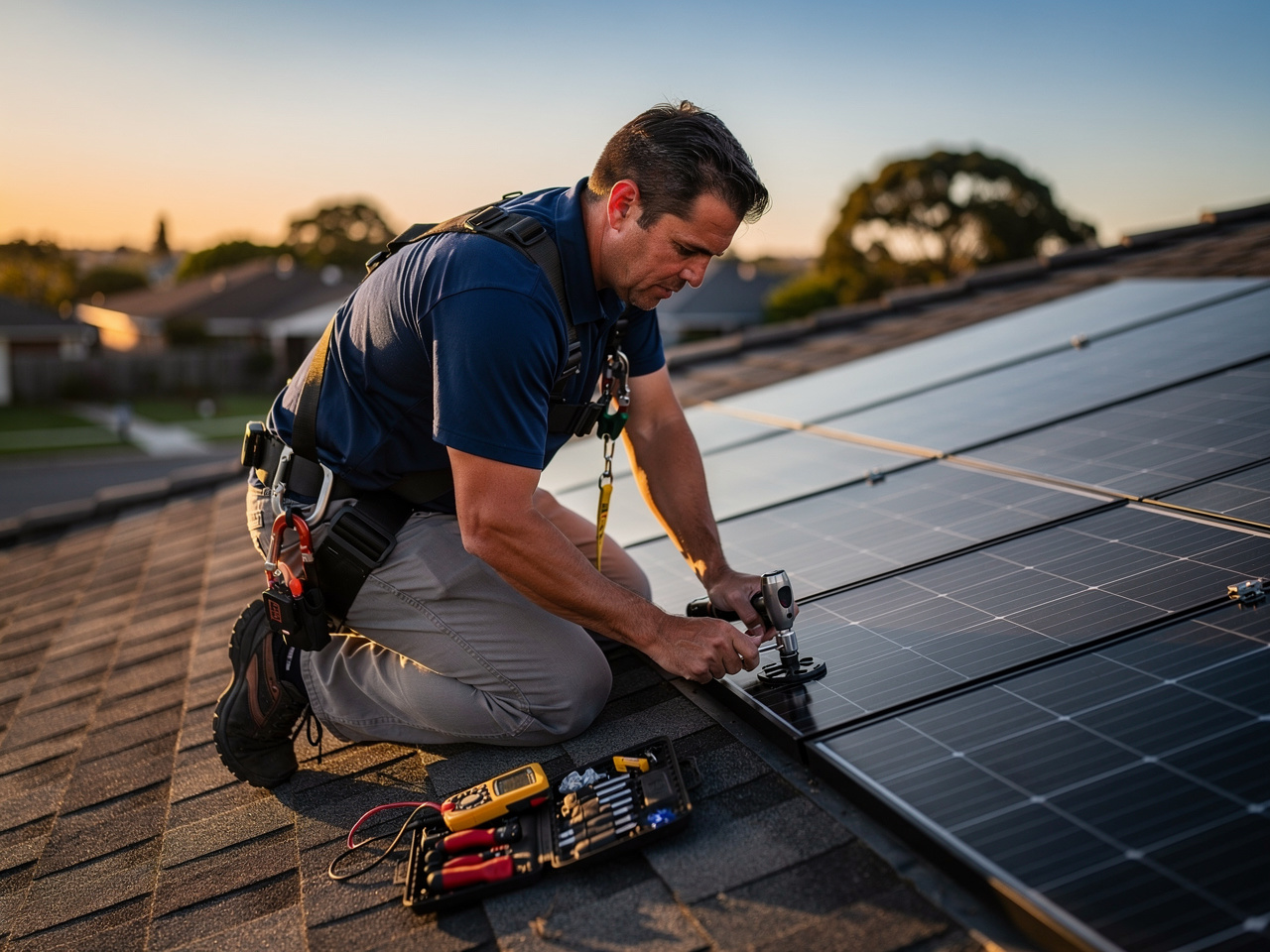
Expert Repair or Maintenance
Our technicians complete the work needed to restore and optimize your system.
Ongoing Performance
We help you keep everything running efficiently with continued support and monitoring options.
Common questions about solar service in Gibsonton
For systems up to 10 kW, Tampa Electric credits exports at the full retail rate on a one-to-one basis, and that treatment is grounded in Florida state law rather than utility policy alone. Larger systems are handled differently, so the size recorded on your interconnection agreement is worth confirming.
No. Florida's electricity market is regulated and the provider follows the address, which here means Tampa Electric. Since the rate is not negotiable, the practical way to lower a bill is to make sure the system you already own produces everything it is actually capable of producing.
Enough that we treat it as the primary hardware risk here. The Tampa Bay area sees more lightning than anywhere else in North America. A direct strike is rare, but nearby strikes that induce surges through wiring are not, and those are what take out inverters, optimizers, and communications gear.
Yes. The Alafia is tidal where it passes Gibsonton, so the air carries salt well beyond the shoreline. It attacks metal parts first, meaning lugs, clamps, and connector pins, long before it touches glass or cells, and it does most of that work inside housings nobody opens.
Annually is a reasonable rhythm, ideally before hurricane season starts on June 1. Between salt, dust, and lightning, this town stacks three degradation mechanisms that all progress quietly. A yearly look catches connector corrosion and spent surge devices while they are still inexpensive problems to solve.
Get your solar system back to full performance
Don't let hidden issues cost you money. Let's fix it fast.
By submitting or calling, you consent to receive calls and SMS from The Light Group USA at the number provided, including via auto-dialer or pre-recorded messages. Consent is not required for purchase. Msg/data rates may apply. Reply STOP to opt out. See our Privacy Policy.
Solar Service & Repair near Gibsonton
Crews based in Orlando and Tampa, covering 217 cities statewide.
Tampa Bay
- Apollo Beach
- Auburndale
- Bartow
- Bayonet Point
- Bayshore Gardens
- Bloomingdale
- Bradenton
- Brandon
- Carrollwood
- Citrus Park
- Clearwater
- Davenport
- Dunedin
- East Lake
- East Lake-Orient Park
- Egypt Lake-Leto
- Elfers
- Englewood
- Fish Hawk
- Four Corners
- Fruitville
- Gibsonton
- Haines City
- Holiday
- Jasmine Estates
- Keystone
- Lake Magdalene
- Lake Wales
- Lakeland
- Lakewood Ranch
- Land O' Lakes
- Largo
- Lealman
- Lutz
- New Port Richey
- North Port
- Northdale
- Palm Harbor
- Palm River-Clair Mel
- Palmer Ranch
- Pinellas Park
- Plant City
- Poinciana
- Riverview
- Ruskin
- Safety Harbor
- Sarasota
- Seminole
- South Bradenton
- South Venice
- St. Petersburg
- Sun City Center
- Tampa
- Tarpon Springs
- Temple Terrace
- Thonotosassa
- Town 'n' Country
- Trinity
- University
- Valrico
- Venice
- Wesley Chapel
- Westchase
- Wimauma
- Winter Haven
- Zephyrhills
We also cover Florida Panhandle, North Florida, Northeast Florida, Central Florida, Space Coast, Southwest Florida, Treasure Coast, South Florida. See every Florida city we service.