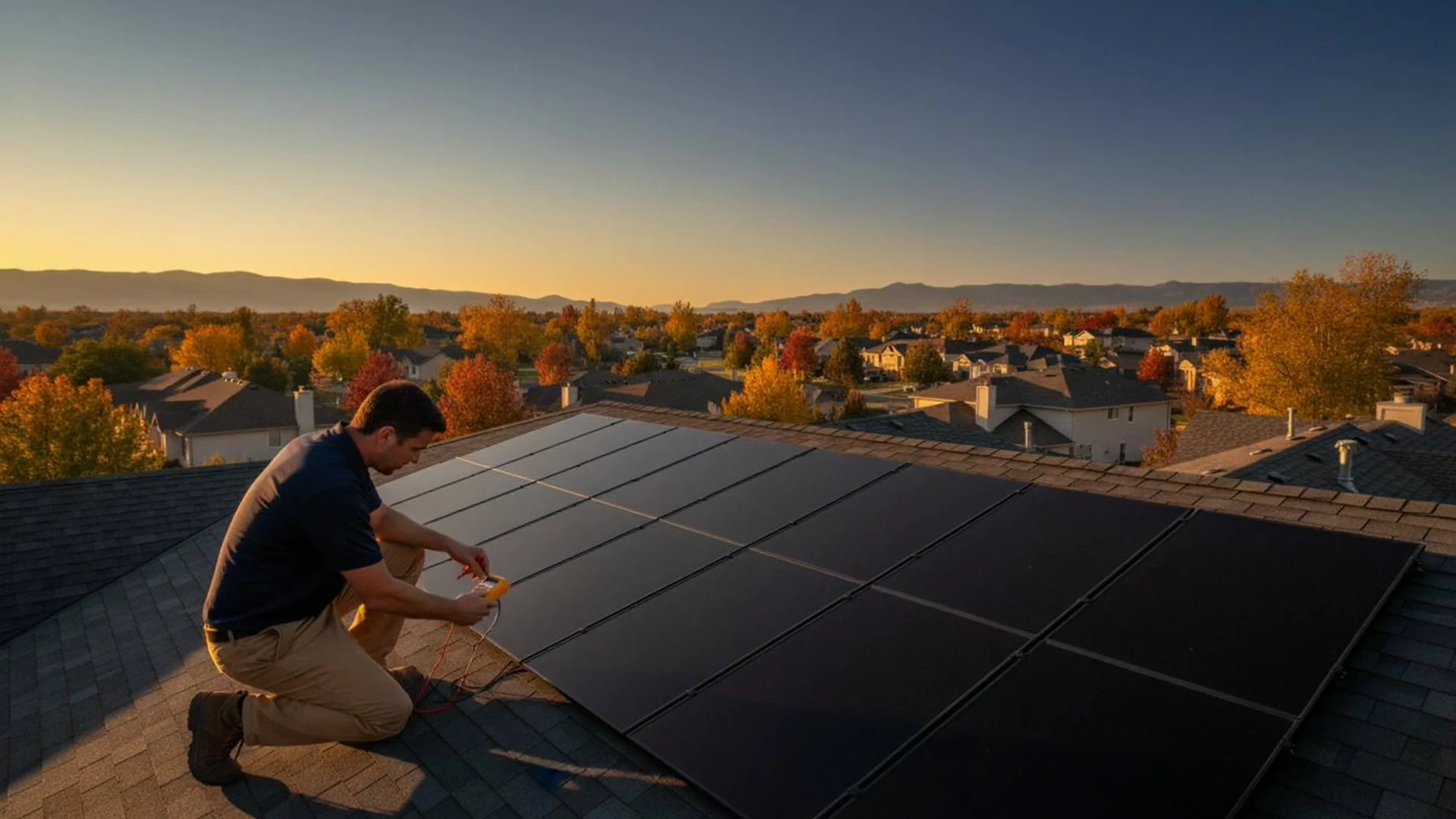
Solar Panel Repair & Maintenance in Coral Springs, FL
America’s #1 Choice for Energy Independence
Crews in Orlando and Tampa covering Broward County. Free inspection, no obligation.
By submitting or calling, you consent to receive calls and SMS from The Light Group USA at the number provided, including via auto-dialer or pre-recorded messages. Consent is not required for purchase. Msg/data rates may apply. Reply STOP to opt out. See our Privacy Policy.
Solar service in Coral Springs
Coral Springs sits about twelve kilometers back from the Atlantic, the furthest inland of the cities we cover in this part of Broward, and it is also one of the greenest. The mature canopy that makes the streets around Mullins Park bearable in August is the same canopy that drags a moving shadow across a roof every afternoon. Trees grow. An array that was sited in full sun in 2016 may not be in full sun today.
Shade is not proportional to the area it covers. On a string inverter, a single shaded module can pull down the entire string it belongs to, and even with optimizers or microinverters a shadow crossing the array at four in the afternoon costs more than its size suggests. We map it by measuring output through the day rather than by looking up at branches, because the shadow that matters is the one landing during peak production hours.
Then there is what falls off those trees. Leaf litter, seed pods and pollen collect in the gap between panel and roof and stay there, since an inland array never gets the wind scour a coastal one does. That layer holds moisture against the deck and gives squirrels and nesting birds a ready-made cavity. Chewed conductor insulation under an array is a ground fault and fire question long before it becomes a production question.
FPL serves the city and credits exported energy at the retail rate, one kilowatt-hour for one, so production recovered from shade or debris comes back at full value on the bill. Trimming, critter guard and a clear-out under the array are best scheduled in spring, before hurricane season opens on June 1 and before the summer peak when the roof should be earning most. Our teams reach Coral Springs from Orlando and Tampa on route days.
On a Coral Springs system we look at these
We keep your solar system running at peak performance
From expert repairs to proactive maintenance, our team helps keep your solar system efficient, protected, and hassle-free. Whether you need a quick fix or ongoing support, we make it easy to restore performance and prevent future issues.

Simple, stress-free service process
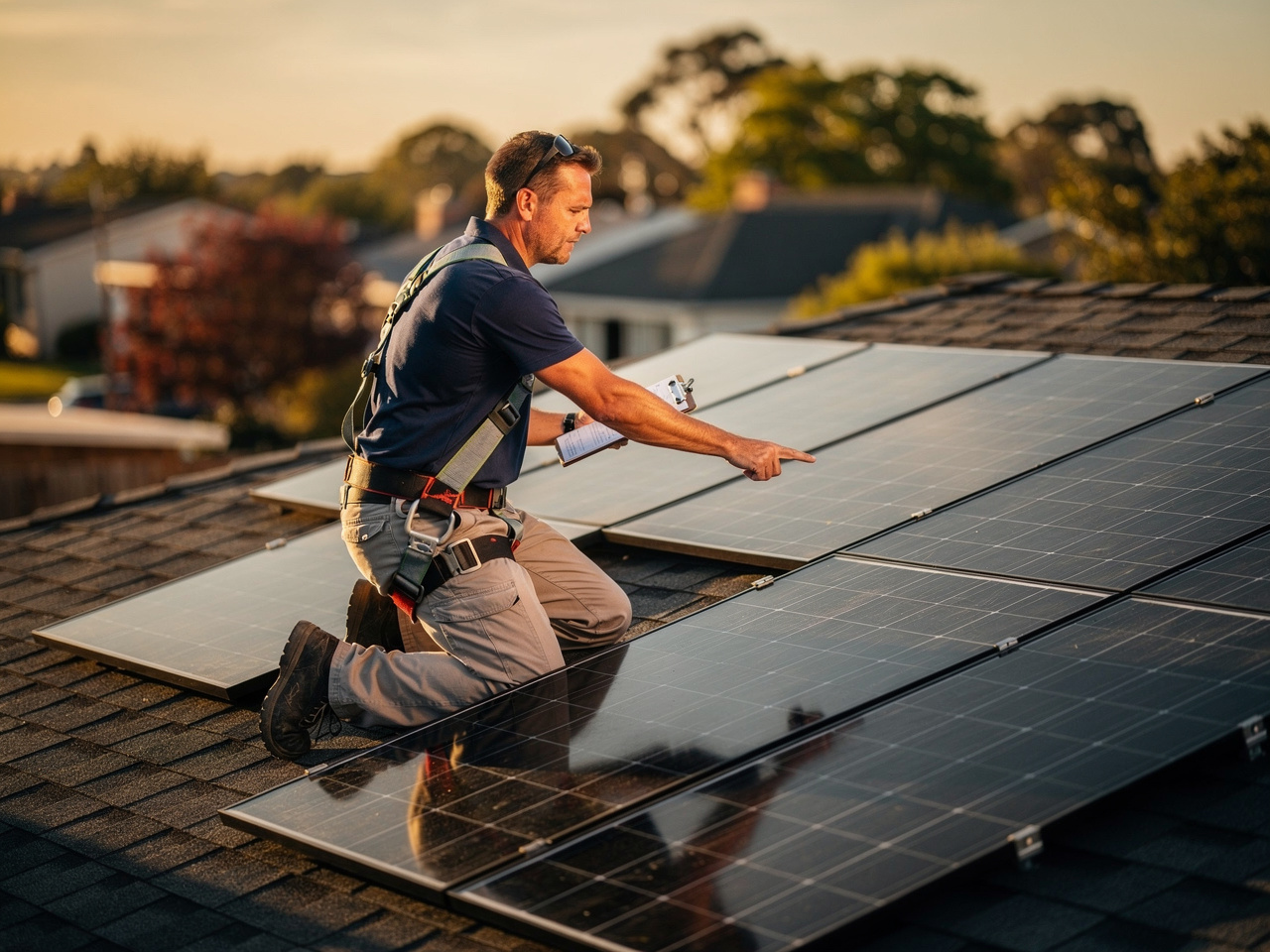
Free Inspection
We assess your system, identify issues, and check overall performance.

Clear Recommendations
You get a simple action plan with clear next steps and no confusion.
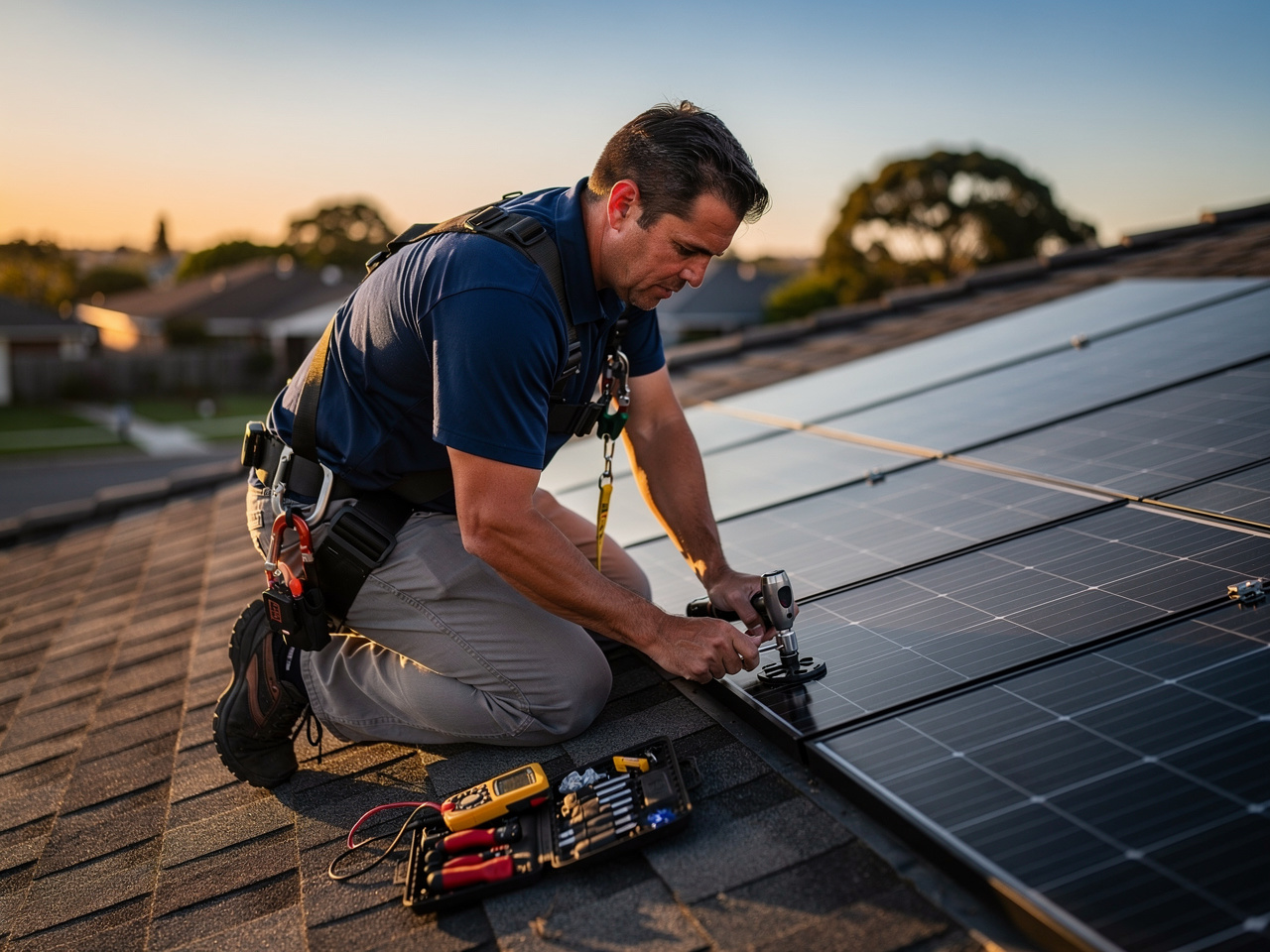
Expert Repair or Maintenance
Our technicians complete the work needed to restore and optimize your system.
Ongoing Performance
We help you keep everything running efficiently with continued support and monitoring options.
Common questions about solar service in Coral Springs
Technically there are three: reconfigure the affected strings so a shaded module stops dragging its neighbors, add module-level electronics if the system does not already have them, or resolve the tree itself. The first two we can quantify for you with measured data. The third is a conversation with your neighbor, and measured numbers make that conversation much easier to have.
It limits the damage rather than eliminating it. With module-level electronics a shaded panel stops dragging the rest of the string down, which is a real improvement, but the shaded panel itself still produces very little while it is covered. If a shadow crosses half the array during peak hours, you are still losing roughly that share of the afternoon.
It varies with how much has built up, and it works through two mechanisms rather than one. Trapped material blocks the airflow that keeps cell temperature down, which reduces output directly, and it holds moisture against the roof, which is a separate and more expensive problem. We measure before and after clearing so you see the production side as a number.
It is the least of your concerns here, though not entirely absent, since Florida humidity corrodes weak connections without any help from the ocean. We still check grounding lugs and a sample of connectors as a matter of course. The time on a Coral Springs roof is better spent on shade, organic debris and wildlife damage, which is where the losses actually are.
Different problem, different schedule. A coastal roof deals with salt film and gets regular wind and rain scour. An inland array under trees deals with pollen, sap and leaf litter that settles and stays. On a heavily shaded lot the cleaning that pays for itself is usually the clear-out underneath rather than the wash on top.
Get your solar system back to full performance
Don't let hidden issues cost you money. Let's fix it fast.
By submitting or calling, you consent to receive calls and SMS from The Light Group USA at the number provided, including via auto-dialer or pre-recorded messages. Consent is not required for purchase. Msg/data rates may apply. Reply STOP to opt out. See our Privacy Policy.
Solar Service & Repair near Coral Springs
Crews based in Orlando and Tampa, covering 217 cities statewide.
South Florida
- Aventura
- Belle Glade
- Boca Raton
- Boynton Beach
- Coconut Creek
- Cooper City
- Coral Gables
- Coral Springs
- Cutler Bay
- Dania Beach
- Davie
- Deerfield Beach
- Delray Beach
- Doral
- Fort Lauderdale
- Greenacres
- Hallandale Beach
- Hialeah
- Hialeah Gardens
- Hollywood
- Homestead
- Jupiter
- Lake Worth Beach
- Lauderdale Lakes
- Lauderhill
- Margate
- Miami
- Miami Beach
- Miami Gardens
- Miami Lakes
- Miramar
- North Lauderdale
- North Miami
- North Miami Beach
- Oakland Park
- Opa-locka
- Palm Beach Gardens
- Palm Springs
- Palmetto Bay
- Parkland
- Pembroke Pines
- Pinecrest
- Plantation
- Pompano Beach
- Riviera Beach
- Royal Palm Beach
- Sunny Isles Beach
- Sunrise
- Sweetwater
- Tamarac
- Wellington
- West Palm Beach
- West Park
- Weston
We also cover Florida Panhandle, North Florida, Northeast Florida, Central Florida, Space Coast, Tampa Bay, Southwest Florida, Treasure Coast. See every Florida city we service.