Solar Panel Repair & Maintenance in Wellington, FL
America’s #1 Choice for Energy Independence
Crews in Orlando and Tampa covering Palm Beach County. Free inspection, no obligation.
By submitting or calling, you consent to receive calls and SMS from The Light Group USA at the number provided, including via auto-dialer or pre-recorded messages. Consent is not required for purchase. Msg/data rates may apply. Reply STOP to opt out. See our Privacy Policy.
Solar service in Wellington
Wellington sits roughly eight and a half miles from the coast, which effectively removes salt from the conversation. What replaces it is particulate. Open ground, arena footing, agricultural land to the west, and long dry-season stretches when nothing rinses the glass. Dust is a less dramatic problem than corrosion and, over a year, it can cost a comparable number of kilowatt-hours. It just never announces itself.
Irrigation makes it worse rather than better. Sprinkler overspray reaching a low array or a ground mount leaves mineral deposits as it evaporates, and those deposits do not wash off in the next rain. Over seasons they build into a hard film that scatters light before it reaches the cells. Homeowners often assume the sprinklers are keeping the panels clean. Usually they are doing the opposite.
Then there is heat, which inland Palm Beach County gets more of than the coast does. Without a sea breeze moderating the afternoon, roof surfaces run hotter and modules derate further below their rated output. Inverters mounted in the sun add their own thermal fold-back on top of that, and the two together take their largest bite during the exact hours the array should be at peak.
None of this produces a fault code. FPL serves 33414, 33470 and 33449 and credits exports at retail, one for one, so the losses are billed back at full price while the monitoring app reports a healthy system. Finding them means building an expected output curve for this array, on this site, in this season, and then measuring the difference.
On a Wellington system we look at these
We keep your solar system running at peak performance
From expert repairs to proactive maintenance, our team helps keep your solar system efficient, protected, and hassle-free. Whether you need a quick fix or ongoing support, we make it easy to restore performance and prevent future issues.

Simple, stress-free service process
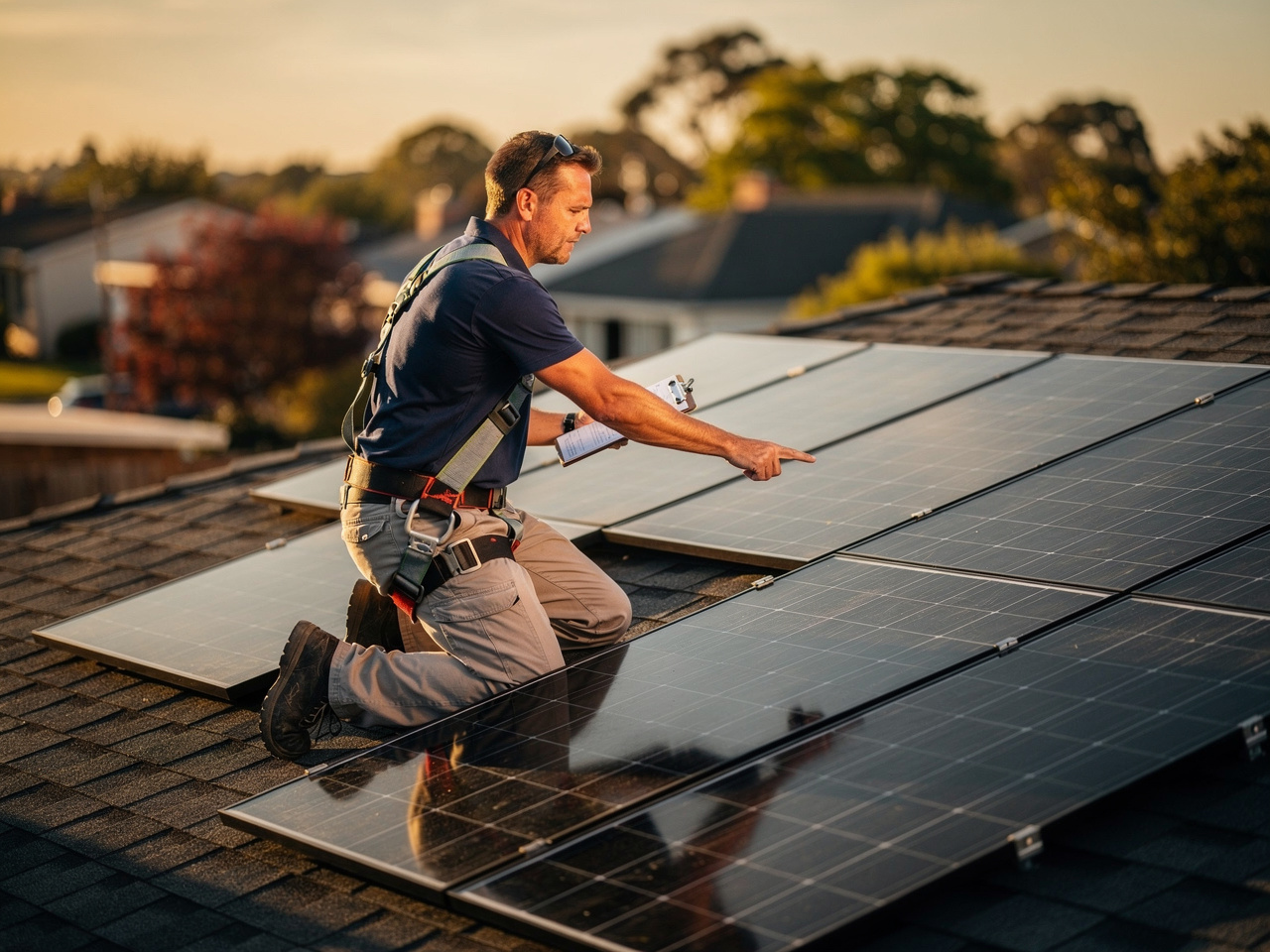
Free Inspection
We assess your system, identify issues, and check overall performance.

Clear Recommendations
You get a simple action plan with clear next steps and no confusion.
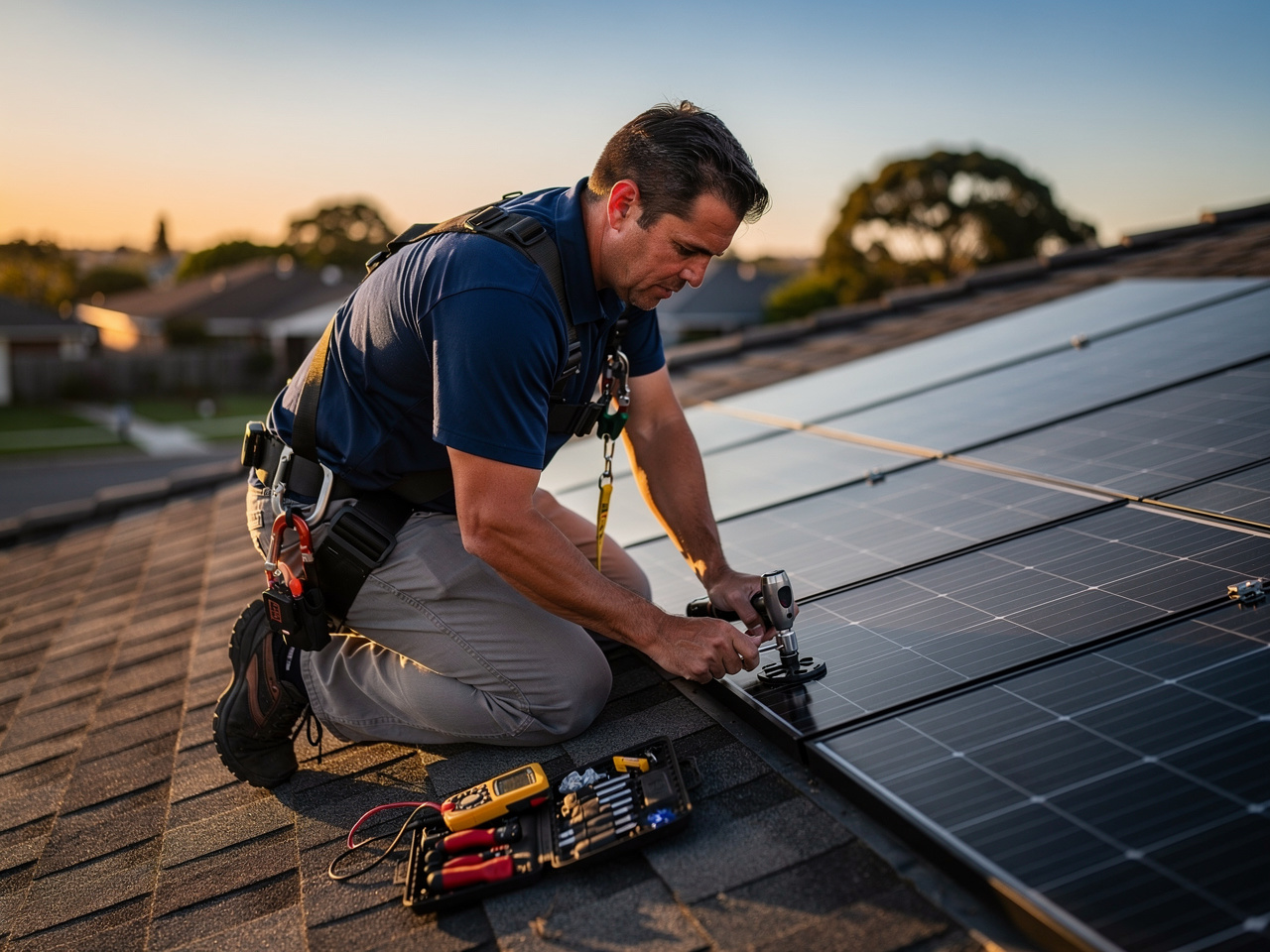
Expert Repair or Maintenance
Our technicians complete the work needed to restore and optimize your system.
Ongoing Performance
We help you keep everything running efficiently with continued support and monitoring options.
Common questions about solar service in Wellington
Over a dry season it adds up, particularly near open ground where the loading is heavier than in a dense neighborhood. The loss is gradual and steady rather than sudden, which is why it goes unnoticed. The way to know your number is measuring output before and after a cleaning rather than guessing at percentages.
It is the opposite. Irrigation water carries dissolved minerals, and when it dries on glass it leaves deposits that rain will not remove. Over several seasons that builds into a hard film. Redirecting the affected heads costs almost nothing and prevents a problem that becomes progressively harder to reverse.
Because module output falls as cell temperature rises, and inland afternoons here run hotter than coastal ones without a sea breeze. If the inverter is also in direct sun it can fold back its own output to protect itself. Both are normal behavior; the question is whether the degree of loss is normal for your setup.
Yes, at the retail rate, one kilowatt-hour for one. FPL is an investor-owned utility and Florida's market is regulated, so your address determines your provider. That retail credit is exactly why chasing quiet inland losses like soiling and thermal derate is worth the effort rather than something to shrug off.
Yes. The season runs June first through November thirtieth for the entire state, and wind loads do not stop at the coastline. Being inland reduces storm surge exposure, not uplift on a roof array. Attachment torque and rail integrity should be verified before the season regardless of distance from the water.
Get your solar system back to full performance
Don't let hidden issues cost you money. Let's fix it fast.
By submitting or calling, you consent to receive calls and SMS from The Light Group USA at the number provided, including via auto-dialer or pre-recorded messages. Consent is not required for purchase. Msg/data rates may apply. Reply STOP to opt out. See our Privacy Policy.
Solar Service & Repair near Wellington
Crews based in Orlando and Tampa, covering 217 cities statewide.
South Florida
- Aventura
- Belle Glade
- Boca Raton
- Boynton Beach
- Coconut Creek
- Cooper City
- Coral Gables
- Coral Springs
- Cutler Bay
- Dania Beach
- Davie
- Deerfield Beach
- Delray Beach
- Doral
- Fort Lauderdale
- Greenacres
- Hallandale Beach
- Hialeah
- Hialeah Gardens
- Hollywood
- Homestead
- Jupiter
- Lake Worth Beach
- Lauderdale Lakes
- Lauderhill
- Margate
- Miami
- Miami Beach
- Miami Gardens
- Miami Lakes
- Miramar
- North Lauderdale
- North Miami
- North Miami Beach
- Oakland Park
- Opa-locka
- Palm Beach Gardens
- Palm Springs
- Palmetto Bay
- Parkland
- Pembroke Pines
- Pinecrest
- Plantation
- Pompano Beach
- Riviera Beach
- Royal Palm Beach
- Sunny Isles Beach
- Sunrise
- Sweetwater
- Tamarac
- Wellington
- West Palm Beach
- West Park
- Weston
We also cover Florida Panhandle, North Florida, Northeast Florida, Central Florida, Space Coast, Tampa Bay, Southwest Florida, Treasure Coast. See every Florida city we service.