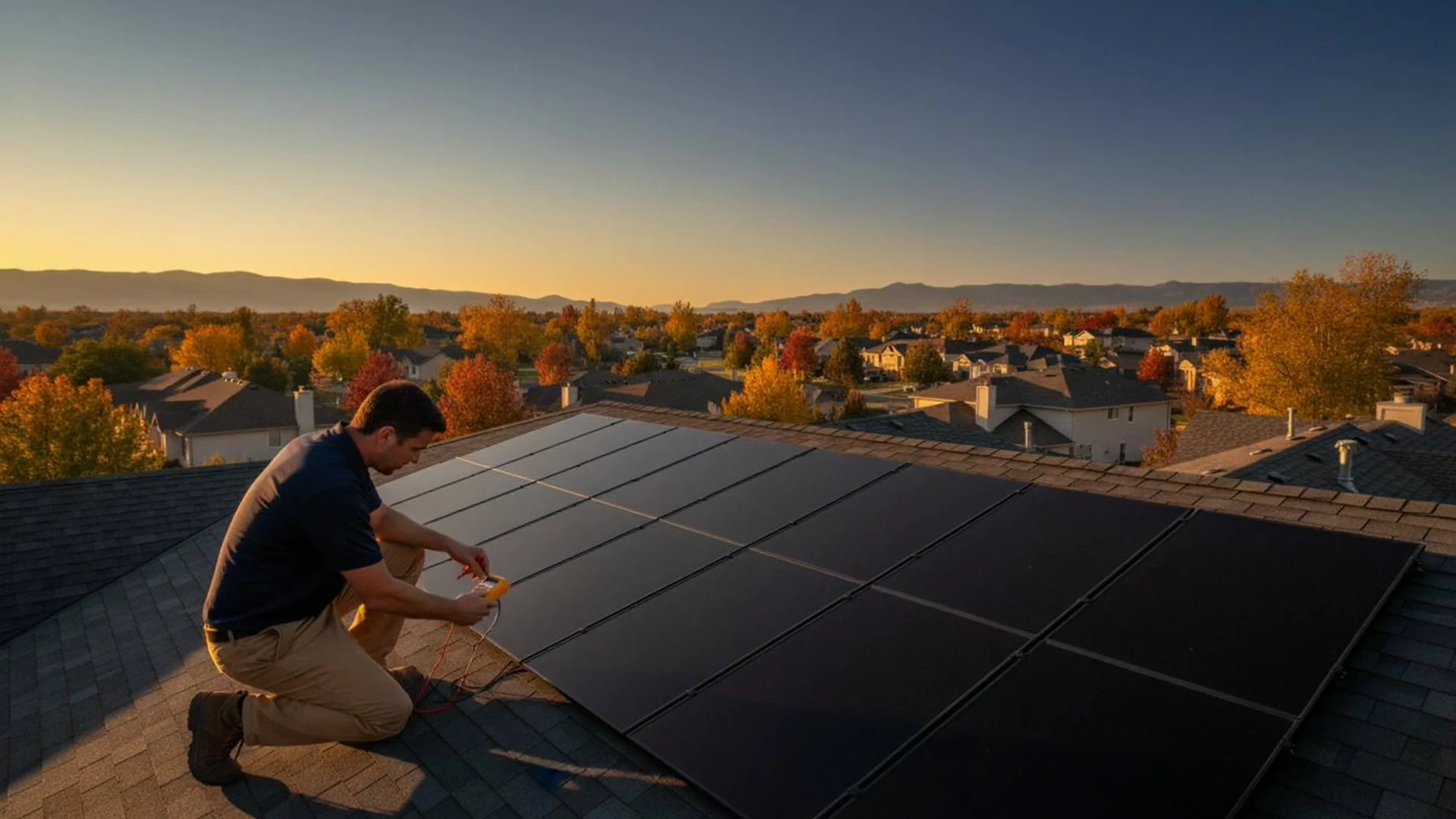
Solar Panel Repair & Maintenance in Plantation, FL
America’s #1 Choice for Energy Independence
Crews in Orlando and Tampa covering Broward County. Free inspection, no obligation.
By submitting or calling, you consent to receive calls and SMS from The Light Group USA at the number provided, including via auto-dialer or pre-recorded messages. Consent is not required for purchase. Msg/data rates may apply. Reply STOP to opt out. See our Privacy Policy.
Solar service in Plantation
A question we get from Plantation homeowners every summer: why does July produce less than March? Longer days, brighter sun, lower numbers on the app. The answer is temperature. Silicon loses voltage as it heats, and a module rated in a laboratory at mild conditions spends a Florida July far above that rating, hour after hour. The panel is not broken. It is hot, and hot panels make less power.
That heat loss is expected and it is printed on the module's own datasheet. The problem is that it makes a real fault easy to hide. A failing connector, a newly shaded module, a soiled array: all of them look like summer, and summer is a convincing excuse for a bad month. Separating the normal seasonal loss from the actual fault takes measurement rather than intuition.
Plantation sits about five and a half miles inland, near Broward Mall at University Drive and Broward Boulevard. Far enough west that salt corrosion drops down the list of suspects. In 33317, 33324 and 33322 the recurring causes are dust, pollen, biological growth along the lower edge of the glass, and shade that has grown in since the array went up.
Florida's market is regulated, so Florida Power & Light comes with the address rather than with a contract you negotiate. FPL credits exports at the retail rate, one for one, which makes every recovered percentage point worth full price rather than a wholesale fraction. We cover Plantation from the Orlando and Tampa bases, we service arrays other companies installed, and we measure before recommending anything at all.
On a Plantation system we look at these
We keep your solar system running at peak performance
From expert repairs to proactive maintenance, our team helps keep your solar system efficient, protected, and hassle-free. Whether you need a quick fix or ongoing support, we make it easy to restore performance and prevent future issues.

Simple, stress-free service process
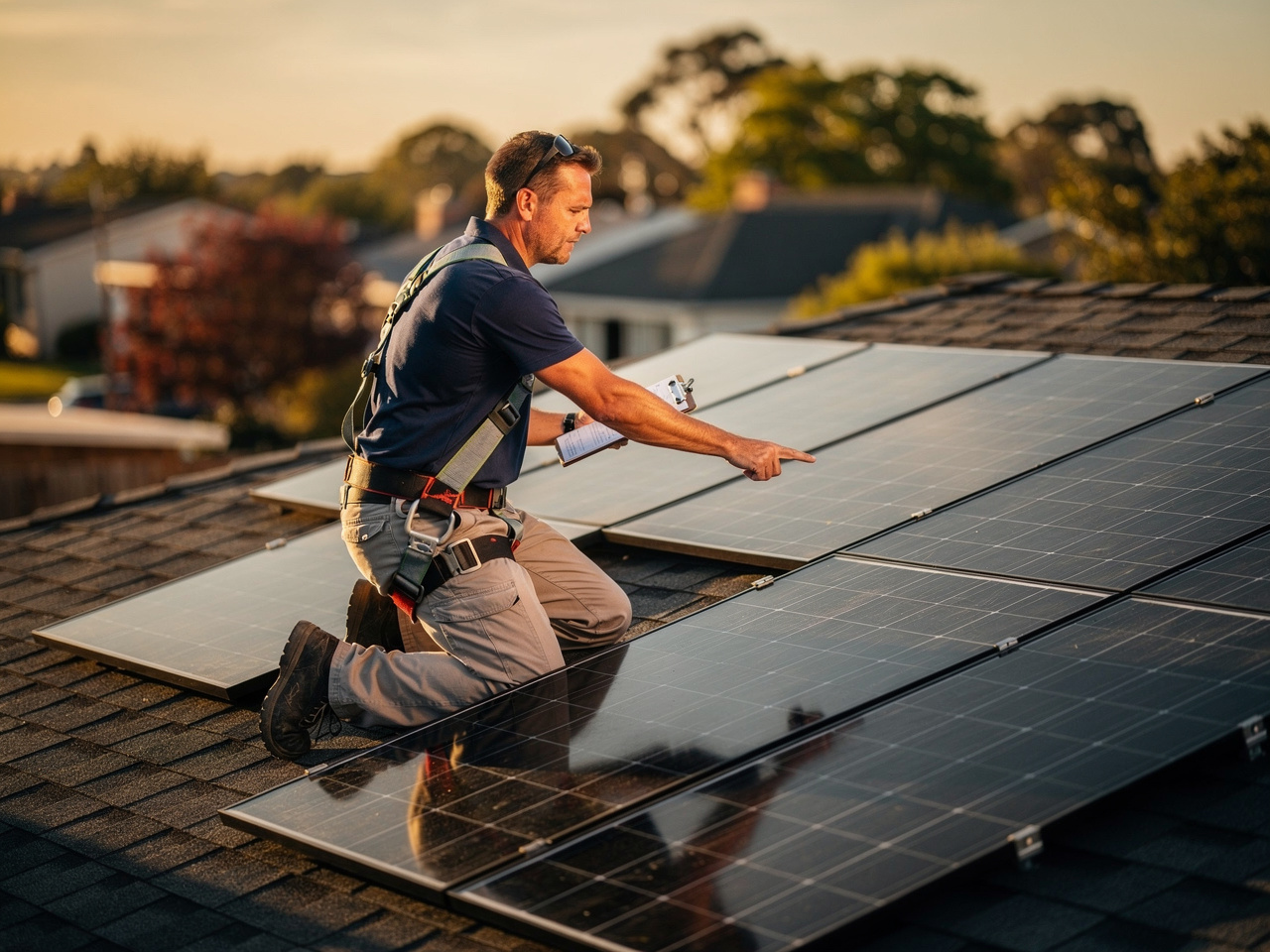
Free Inspection
We assess your system, identify issues, and check overall performance.

Clear Recommendations
You get a simple action plan with clear next steps and no confusion.
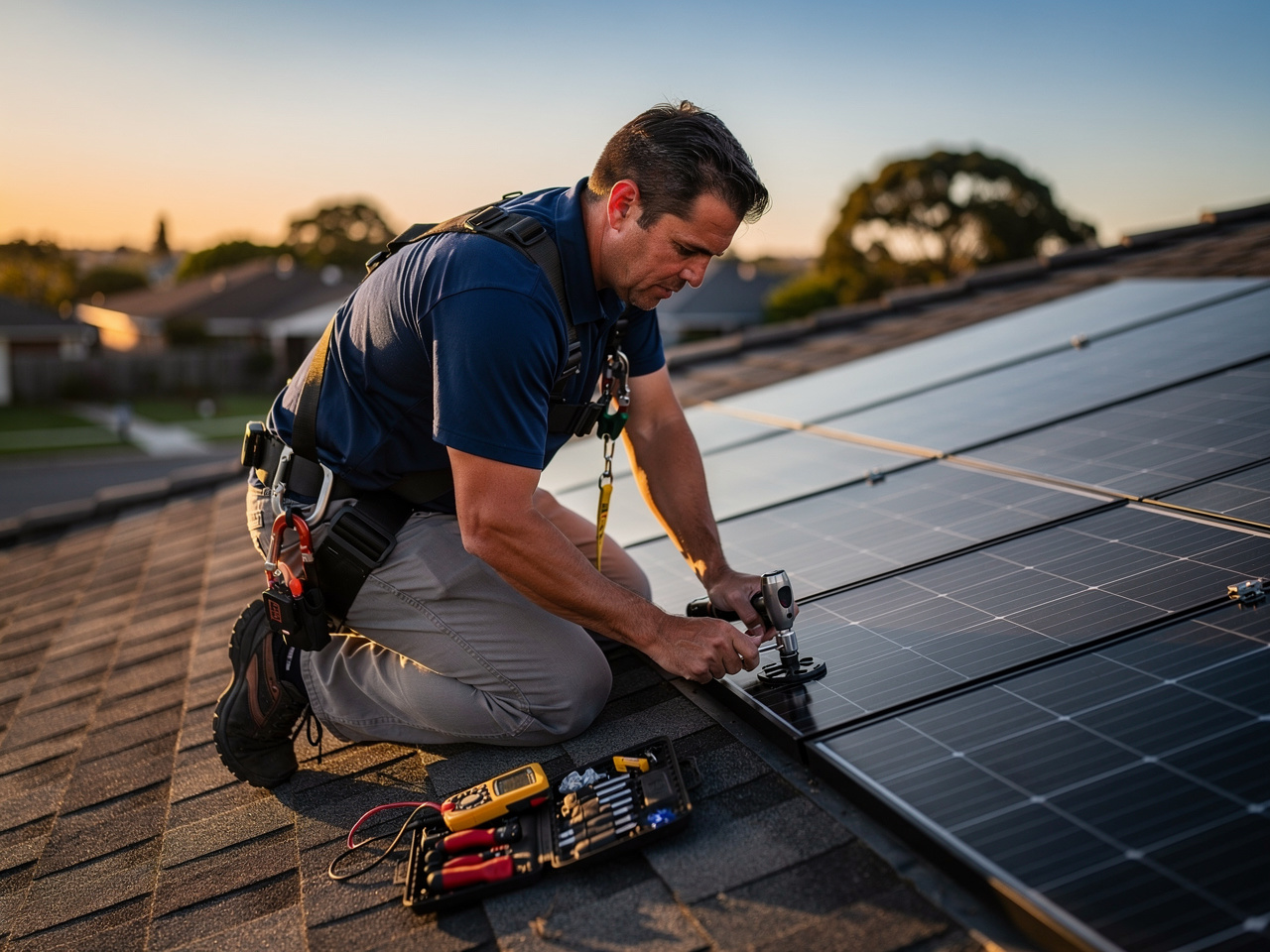
Expert Repair or Maintenance
Our technicians complete the work needed to restore and optimize your system.
Ongoing Performance
We help you keep everything running efficiently with continued support and monitoring options.
Common questions about solar service in Plantation
Some drop is normal in Florida. Module output falls as the cells heat, and July roofs get very hot. What is not normal is a summer clearly worse than the previous one at the same house. We compare your array against its own history, which takes weather out of the argument.
Sometimes, partly. Soiling in Plantation tends to concentrate in a band along the bottom edge, and that band can shade whole cells. But cleaning will not recover a dead string or a failing connector. We measure first and tell you what cleaning is worth before you pay for it.
Not necessarily. Roof pitch, orientation, shading, module model, inverter type and installation year all change the expected number, so two houses on the same street can differ legitimately. The comparison that means something is your array against its own earlier performance, adjusted for the season.
Your rate structure comes from FPL and from state regulation, not from us, so check your statement for the specifics. What holds generally is that FPL credits exported energy at the retail rate, one to one. The value of a repaired system is measured in kilowatt-hours you no longer buy back.
Plan on a few hours for a typical residential array: data review, string testing, a thermal pass, hardware checks and photographs. Repairs needing parts may require a second visit, since our crews travel to Broward from Orlando and Tampa and carry common components rather than every part.
Get your solar system back to full performance
Don't let hidden issues cost you money. Let's fix it fast.
By submitting or calling, you consent to receive calls and SMS from The Light Group USA at the number provided, including via auto-dialer or pre-recorded messages. Consent is not required for purchase. Msg/data rates may apply. Reply STOP to opt out. See our Privacy Policy.
Solar Service & Repair near Plantation
Crews based in Orlando and Tampa, covering 217 cities statewide.
South Florida
- Aventura
- Belle Glade
- Boca Raton
- Boynton Beach
- Coconut Creek
- Cooper City
- Coral Gables
- Coral Springs
- Cutler Bay
- Dania Beach
- Davie
- Deerfield Beach
- Delray Beach
- Doral
- Fort Lauderdale
- Greenacres
- Hallandale Beach
- Hialeah
- Hialeah Gardens
- Hollywood
- Homestead
- Jupiter
- Lake Worth Beach
- Lauderdale Lakes
- Lauderhill
- Margate
- Miami
- Miami Beach
- Miami Gardens
- Miami Lakes
- Miramar
- North Lauderdale
- North Miami
- North Miami Beach
- Oakland Park
- Opa-locka
- Palm Beach Gardens
- Palm Springs
- Palmetto Bay
- Parkland
- Pembroke Pines
- Pinecrest
- Plantation
- Pompano Beach
- Riviera Beach
- Royal Palm Beach
- Sunny Isles Beach
- Sunrise
- Sweetwater
- Tamarac
- Wellington
- West Palm Beach
- West Park
- Weston
We also cover Florida Panhandle, North Florida, Northeast Florida, Central Florida, Space Coast, Tampa Bay, Southwest Florida, Treasure Coast. See every Florida city we service.