Solar Panel Repair & Maintenance in Miami Beach, FL
America’s #1 Choice for Energy Independence
Crews in Orlando and Tampa covering Miami-Dade County. Free inspection, no obligation.
By submitting or calling, you consent to receive calls and SMS from The Light Group USA at the number provided, including via auto-dialer or pre-recorded messages. Consent is not required for purchase. Msg/data rates may apply. Reply STOP to opt out. See our Privacy Policy.
Solar service in Miami Beach
Miami Beach is a barrier island, which means there is no inland side to it. The Atlantic sits east, Biscayne Bay sits west, and salt aerosol arrives from whichever direction the wind happens to be running that week. A home in 33139, 33140 or 33141 never gets the break an inland roof gets when the breeze turns around. For a solar array, that makes salt a continuous exposure problem rather than a seasonal one.
The panels themselves are usually the last thing to go. Modules are laminated glass and they tolerate marine air well. What corrodes first is the aluminum racking, the fasteners at every clamp, the grounding lugs, and the MC4 connectors joining the strings together. Most of that damage happens inside a housing or under a clamp, out of sight from the ground, so a system can look immaculate from Ocean Drive and still be failing electrically.
Roof geometry adds to it. Low-slope roofs are common through the Art Deco district and the blocks around it, and a low slope does not rinse itself. On a steep roof, rain sheets off and carries most of the salt film with it. On a flat one, water pools, evaporates, and leaves the salt behind. Rooftop mechanical equipment and parapet walls also throw shade that travels across a string hour by hour.
Every address here is served by Florida Power and Light, and in Florida's regulated market that is set by geography, not by choice. FPL credits exported energy at the retail rate, one kilowatt-hour for one kilowatt-hour. That symmetry cuts both ways: production lost to a corroded lug or a hazed panel is production you buy back at full retail price. On an island, the inspection interval is most of the conversation.
On a Miami Beach system we look at these
We keep your solar system running at peak performance
From expert repairs to proactive maintenance, our team helps keep your solar system efficient, protected, and hassle-free. Whether you need a quick fix or ongoing support, we make it easy to restore performance and prevent future issues.

Simple, stress-free service process
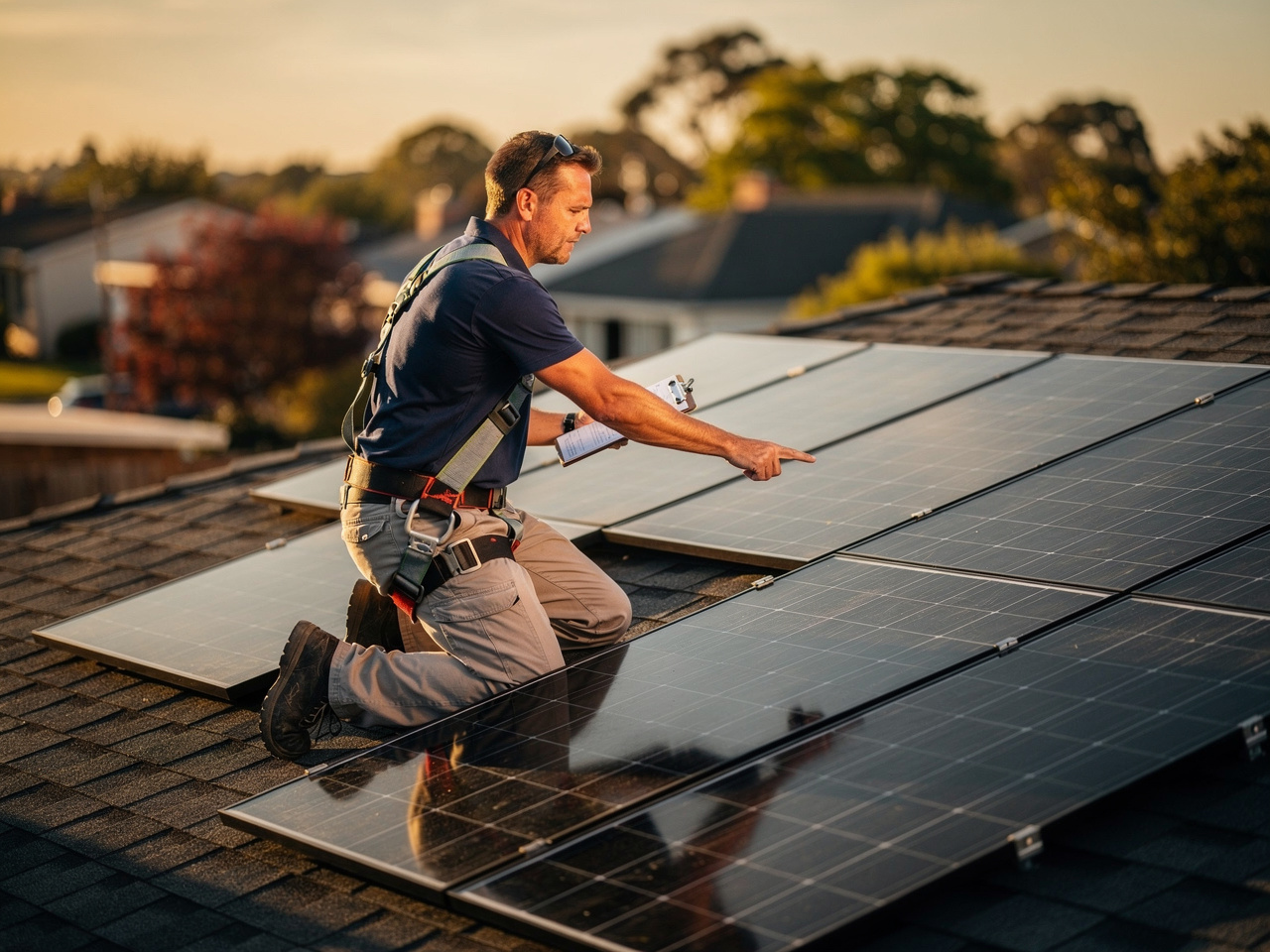
Free Inspection
We assess your system, identify issues, and check overall performance.

Clear Recommendations
You get a simple action plan with clear next steps and no confusion.
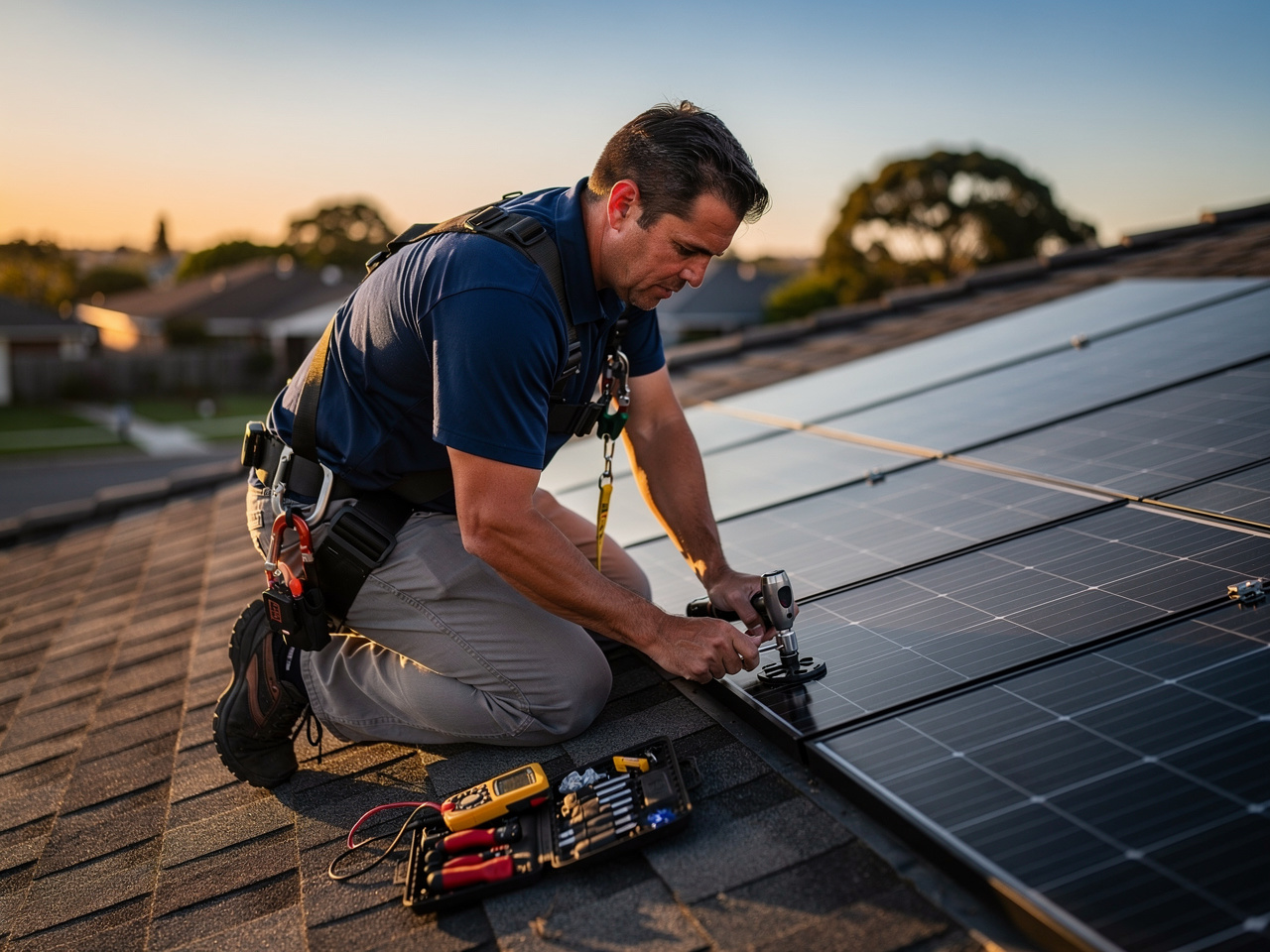
Expert Repair or Maintenance
Our technicians complete the work needed to restore and optimize your system.
Ongoing Performance
We help you keep everything running efficiently with continued support and monitoring options.
Common questions about solar service in Miami Beach
Not the panels, usually. Laminated glass modules handle marine air well. What ages early here is the metal around them: rails, clamps, fasteners, grounding lugs and connector housings. Those are serviceable parts. Caught while the corrosion is still surface-level, they get cleaned, treated or replaced. Caught after the bonding path is gone, the job is much larger.
More often than one four or five miles inland, because the exposure here never pauses. Rather than a fixed number, the interval should follow the evidence: how the hardware looked last visit, how old the system is, and whether the roof is low-slope. Once the first pitting shows up on fasteners, the interval shortens.
It means nothing has failed outright. Salt film, a slowly rising contact resistance, and a shadow that only lands at four in the afternoon all reduce output without tripping anything. Monitoring reports what the inverter measures, not what the roof looks like. The gap between those two is where most of the lost money sits.
FPL is an investor-owned utility and credits exported kilowatt-hours at the full retail rate, one for one. In Florida you do not select a provider; the address determines it. Because the credit is retail, underproduction costs you directly: every kilowatt-hour the array fails to make is one you buy back at the same price.
No. Our installation and service teams work out of Orlando and Tampa and cover the rest of the state from there. That shapes how we schedule: a Miami Beach visit is planned as a full inspection rather than a quick look, so hardware checks, electrical testing and any roof work happen in one trip.
Get your solar system back to full performance
Don't let hidden issues cost you money. Let's fix it fast.
By submitting or calling, you consent to receive calls and SMS from The Light Group USA at the number provided, including via auto-dialer or pre-recorded messages. Consent is not required for purchase. Msg/data rates may apply. Reply STOP to opt out. See our Privacy Policy.
Solar Service & Repair near Miami Beach
Crews based in Orlando and Tampa, covering 217 cities statewide.
South Florida
- Aventura
- Belle Glade
- Boca Raton
- Boynton Beach
- Coconut Creek
- Cooper City
- Coral Gables
- Coral Springs
- Cutler Bay
- Dania Beach
- Davie
- Deerfield Beach
- Delray Beach
- Doral
- Fort Lauderdale
- Greenacres
- Hallandale Beach
- Hialeah
- Hialeah Gardens
- Hollywood
- Homestead
- Jupiter
- Lake Worth Beach
- Lauderdale Lakes
- Lauderhill
- Margate
- Miami
- Miami Beach
- Miami Gardens
- Miami Lakes
- Miramar
- North Lauderdale
- North Miami
- North Miami Beach
- Oakland Park
- Opa-locka
- Palm Beach Gardens
- Palm Springs
- Palmetto Bay
- Parkland
- Pembroke Pines
- Pinecrest
- Plantation
- Pompano Beach
- Riviera Beach
- Royal Palm Beach
- Sunny Isles Beach
- Sunrise
- Sweetwater
- Tamarac
- Wellington
- West Palm Beach
- West Park
- Weston
We also cover Florida Panhandle, North Florida, Northeast Florida, Central Florida, Space Coast, Tampa Bay, Southwest Florida, Treasure Coast. See every Florida city we service.