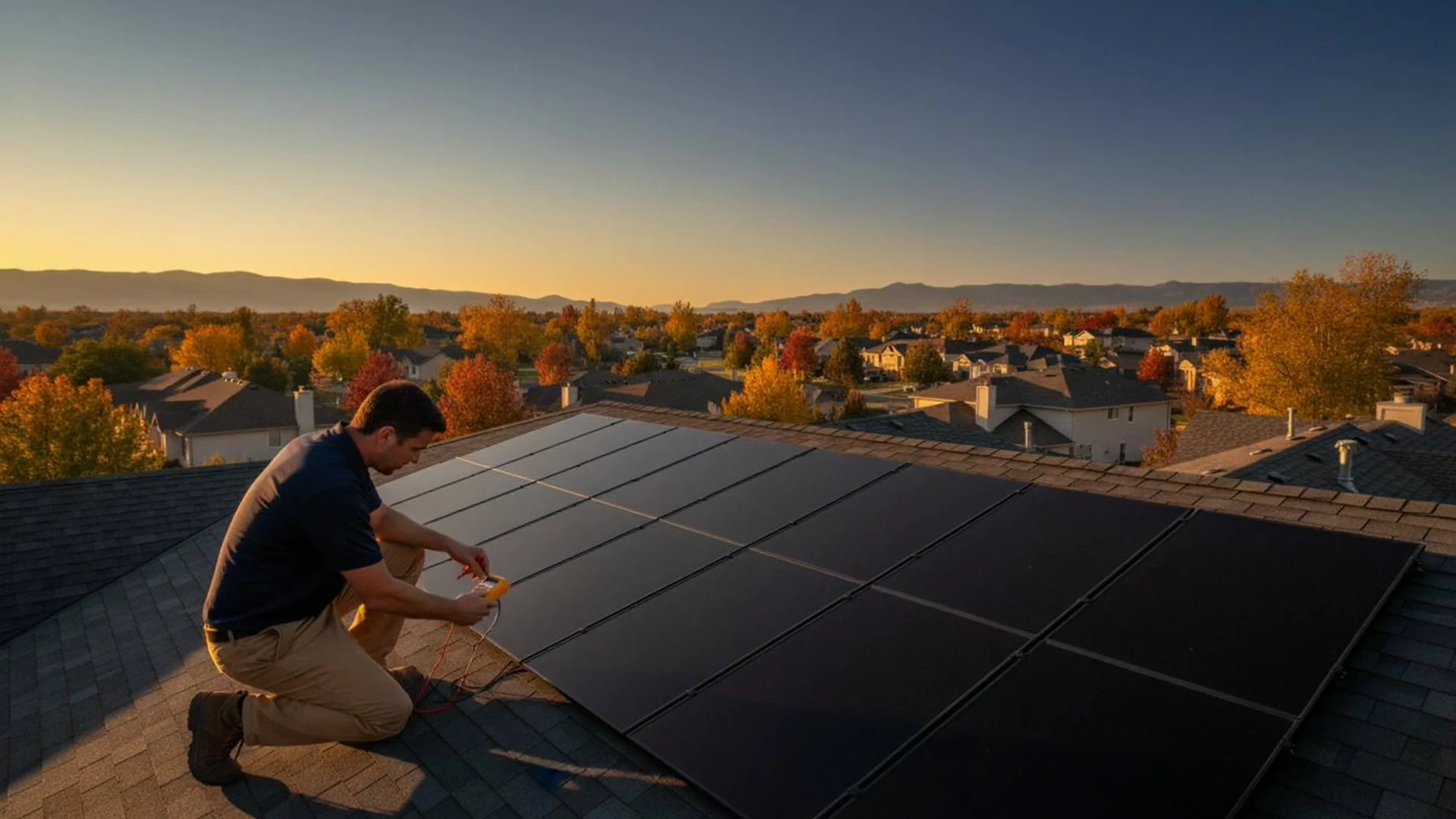
Solar Panel Repair & Maintenance in North Miami Beach, FL
America’s #1 Choice for Energy Independence
Crews in Orlando and Tampa covering Miami-Dade County. Free inspection, no obligation.
By submitting or calling, you consent to receive calls and SMS from The Light Group USA at the number provided, including via auto-dialer or pre-recorded messages. Consent is not required for purchase. Msg/data rates may apply. Reply STOP to opt out. See our Privacy Policy.
Solar service in North Miami Beach
One kilometer is an awkward distance. It is far enough from the water that North Miami Beach homeowners routinely describe themselves as inland, and close enough that every piece of metal on the roof is living in a marine environment. The prevailing breeze comes off the Atlantic and carries salt aerosol well past the beachfront, over Biscayne Boulevard, and across the 33162, 33160 and 33179 blocks where 46,000 people live.
Salt deposition does not stop at a line on a map. It thins with distance, which is precisely what makes a city like this one tricky. Oceanfront corrosion is fast, obvious, and gets attention. Corrosion a kilometer back is slow, so nobody attends to it, and the array is often eight or ten years old before anyone opens a connector and finds what has been quietly happening inside it.
The east side of the city, along US 1, sits closest to the water and shows it first. Move west toward 33179 and the same hardware ages measurably slower. That gradient is real, and it means two systems in the same city with the same equipment can be in very different condition. Distance from the coast is not a category. It is a dial.
Layer heat on top of that. A Miami-Dade roof in summer runs far above the temperature at which modules are rated, so a North Miami Beach system fights corrosion and derate at the same time. Our teams reach the city from Orlando and Tampa, and the visit is built around measuring both: what the hardware condition is, and what the array is actually delivering.
On a North Miami Beach system we look at these
We keep your solar system running at peak performance
From expert repairs to proactive maintenance, our team helps keep your solar system efficient, protected, and hassle-free. Whether you need a quick fix or ongoing support, we make it easy to restore performance and prevent future issues.

Simple, stress-free service process
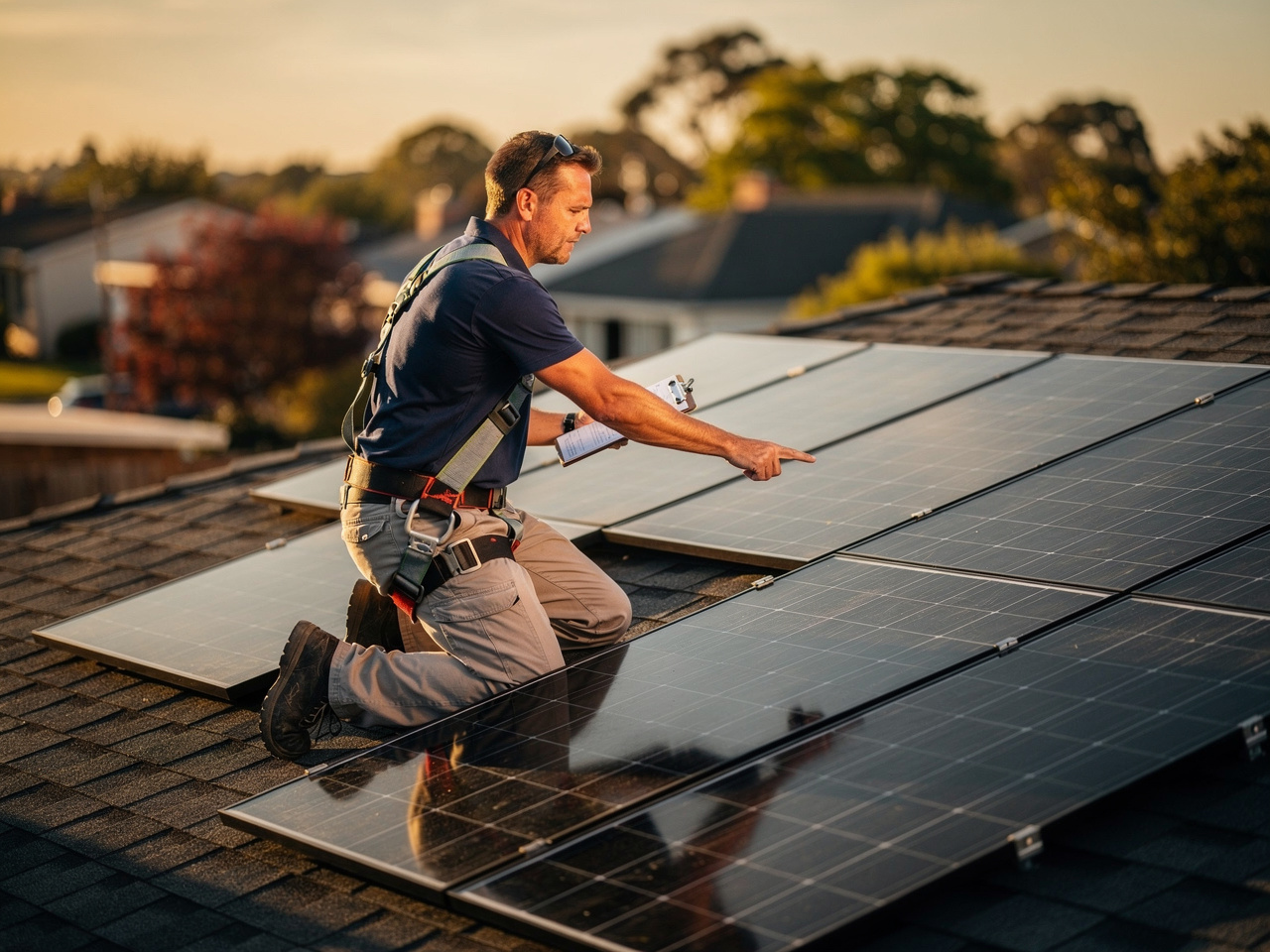
Free Inspection
We assess your system, identify issues, and check overall performance.

Clear Recommendations
You get a simple action plan with clear next steps and no confusion.
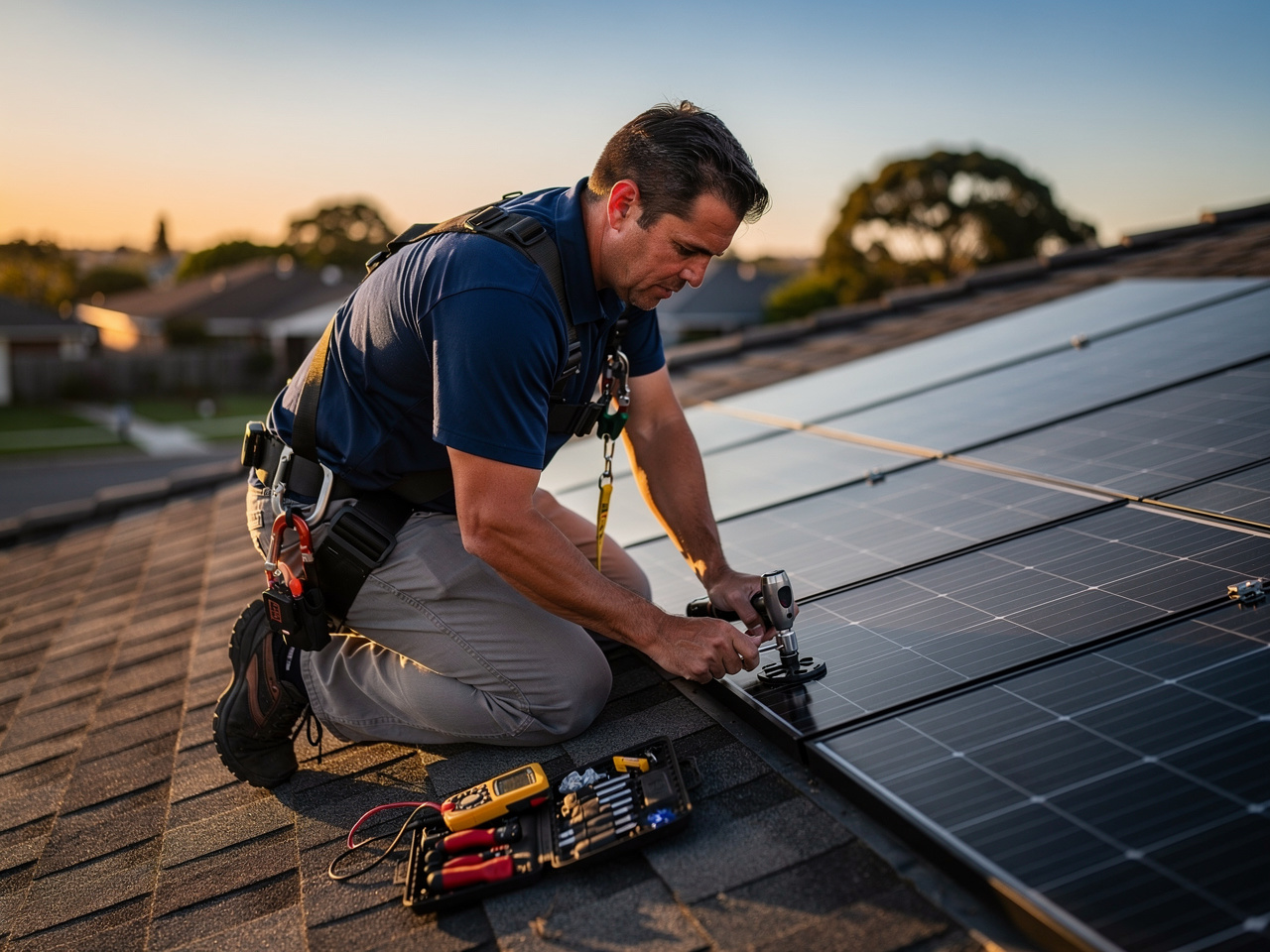
Expert Repair or Maintenance
Our technicians complete the work needed to restore and optimize your system.

Ongoing Performance
We help you keep everything running efficiently with continued support and monitoring options.
Common questions about solar service in North Miami Beach
For solar hardware, yes. Salt aerosol carries well inland on the sea breeze, and at a kilometer the deposition rate is lower than at the beach but nowhere near zero. The practical difference is timing rather than outcome: the same corrosion happens, more slowly, which usually means it is discovered later and after more damage has accumulated.
Connections, not panels. MC4 connectors between modules, grounding lugs, fasteners at the rails, and terminations inside enclosures. Salt-laden humidity gets into places that never fully dry, resistance rises at the joint, the joint heats under load, and the heat speeds up the corrosion. Modules themselves generally outlast the hardware holding and connecting them.
Washing addresses soiling, which is a real but modest loss here. It does nothing about what is happening inside the connectors and around the fasteners, and that is where a near-coastal system in North Miami Beach loses its life. Clean glass on corroded hardware is a system that looks maintained and is not.
The season runs June 1 through November 30 across all of Florida, and on this side of Miami-Dade the practical effect is that spring becomes your maintenance window. Mounting hardware and seals should be verified before it opens, and the array should be inspected after any named storm passes close, even when nothing looks damaged from the ground.
Florida Power and Light serves this address, and Florida is a regulated market, so the provider is determined by where you live rather than selected. The relevant part for solar owners is that FPL credits exported energy at the retail rate, one to one, which makes every kilowatt-hour your array loses a kilowatt-hour you repurchase at full price.

Get your solar system back to full performance
Don't let hidden issues cost you money. Let's fix it fast.
By submitting or calling, you consent to receive calls and SMS from The Light Group USA at the number provided, including via auto-dialer or pre-recorded messages. Consent is not required for purchase. Msg/data rates may apply. Reply STOP to opt out. See our Privacy Policy.
Solar Service & Repair near North Miami Beach
Crews based in Orlando and Tampa, covering 217 cities statewide.
South Florida
- Aventura
- Belle Glade
- Boca Raton
- Boynton Beach
- Coconut Creek
- Cooper City
- Coral Gables
- Coral Springs
- Cutler Bay
- Dania Beach
- Davie
- Deerfield Beach
- Delray Beach
- Doral
- Fort Lauderdale
- Greenacres
- Hallandale Beach
- Hialeah
- Hialeah Gardens
- Hollywood
- Homestead
- Jupiter
- Lake Worth Beach
- Lauderdale Lakes
- Lauderhill
- Margate
- Miami
- Miami Beach
- Miami Gardens
- Miami Lakes
- Miramar
- North Lauderdale
- North Miami
- North Miami Beach
- Oakland Park
- Opa-locka
- Palm Beach Gardens
- Palm Springs
- Palmetto Bay
- Parkland
- Pembroke Pines
- Pinecrest
- Plantation
- Pompano Beach
- Riviera Beach
- Royal Palm Beach
- Sunny Isles Beach
- Sunrise
- Sweetwater
- Tamarac
- Wellington
- West Palm Beach
- West Park
- Weston
We also cover Florida Panhandle, North Florida, Northeast Florida, Central Florida, Space Coast, Tampa Bay, Southwest Florida, Treasure Coast. See every Florida city we service.