Solar Panel Repair & Maintenance in Cutler Bay, FL
America’s #1 Choice for Energy Independence
Crews in Orlando and Tampa covering Miami-Dade County. Free inspection, no obligation.
By submitting or calling, you consent to receive calls and SMS from The Light Group USA at the number provided, including via auto-dialer or pre-recorded messages. Consent is not required for purchase. Msg/data rates may apply. Reply STOP to opt out. See our Privacy Policy.
Solar service in Cutler Bay
Cutler Bay sits at the southern end of Miami-Dade, low and on the water, with US 1 running through past Southland Mall and the bay a short distance east of most of the 33189, 33157 and 33190 neighborhoods. Around 45,000 people live here, and the location makes one thing structurally different from an inland Broward suburb: the hurricane season calendar governs the maintenance year.
That season runs June 1 through November 30 across all of Florida. In practice it splits a Cutler Bay solar owner's year into two halves. Spring is when work gets done, hardware gets verified, and anything marginal gets replaced. Summer and fall are when you inspect after storms and hope you used the spring well. Booking a mounting repair in September means competing with the entire state for the same crews.
What wind actually does to an array is not usually what people expect. Broken glass makes the news, but the common damage is subtler: uplift at an attachment point that has loosened, a clamp backed off enough that a module shifted a few millimeters and now carries a stress point, a conductor that spent hours whipping against a rail edge. None of that shows from the driveway and none of it triggers an alarm.
There is also the coast itself. At effectively zero distance from the water, Cutler Bay hardware lives with continuous salt exposure, which is what makes the post-storm inspection different here than it would be in a dry inland county. Corroded fasteners have less margin when wind loads them. Our teams travel down from Orlando and Tampa rather than from a local branch, and after a system takes weather we examine fasteners, seals, and electrical connections in the same pass, because salt and wind compound each other.
On a Cutler Bay system we look at these
We keep your solar system running at peak performance
From expert repairs to proactive maintenance, our team helps keep your solar system efficient, protected, and hassle-free. Whether you need a quick fix or ongoing support, we make it easy to restore performance and prevent future issues.

Simple, stress-free service process
Free Inspection
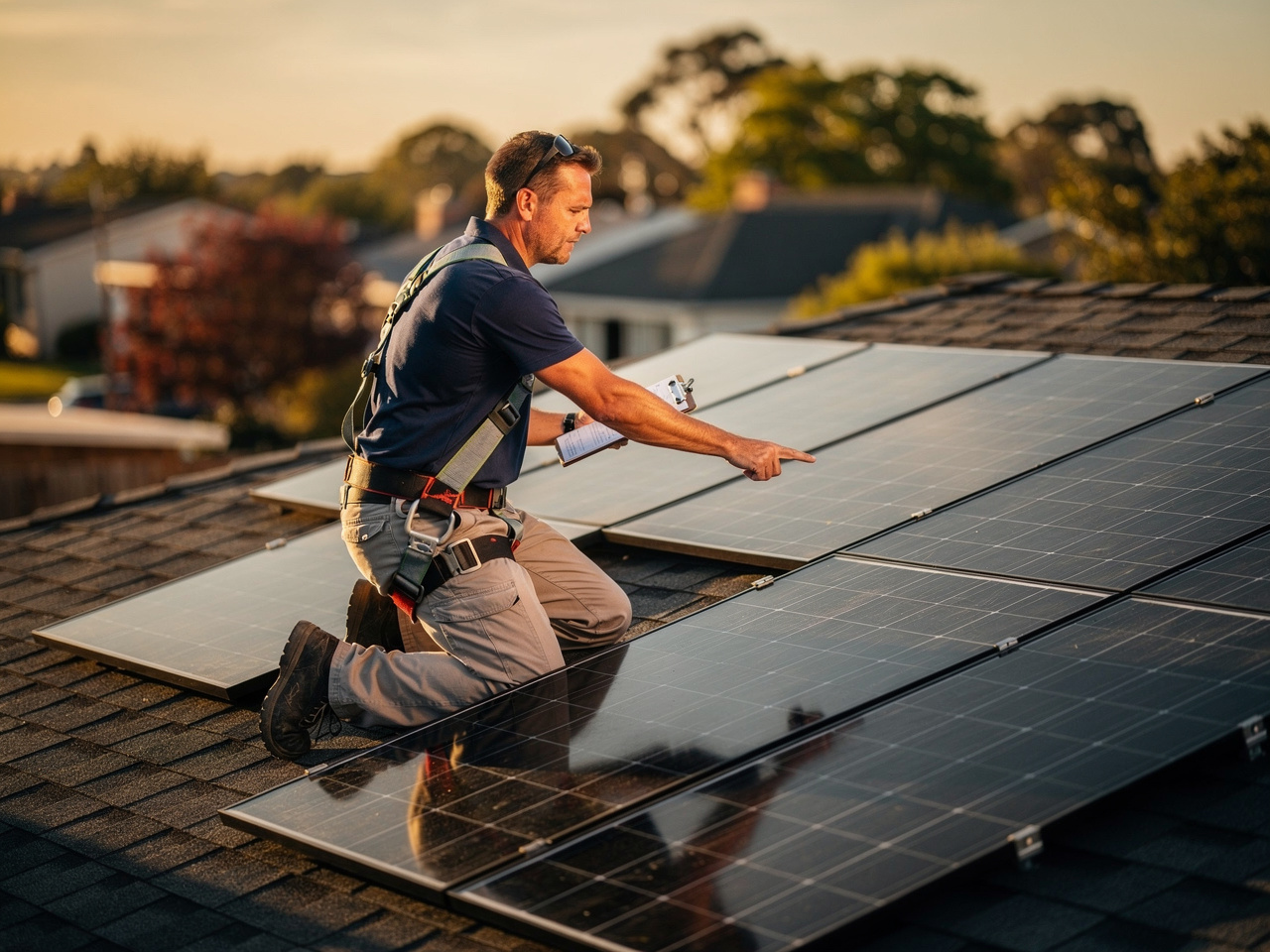
We assess your system, identify issues, and check overall performance.

Clear Recommendations
You get a simple action plan with clear next steps and no confusion.
Expert Repair or Maintenance
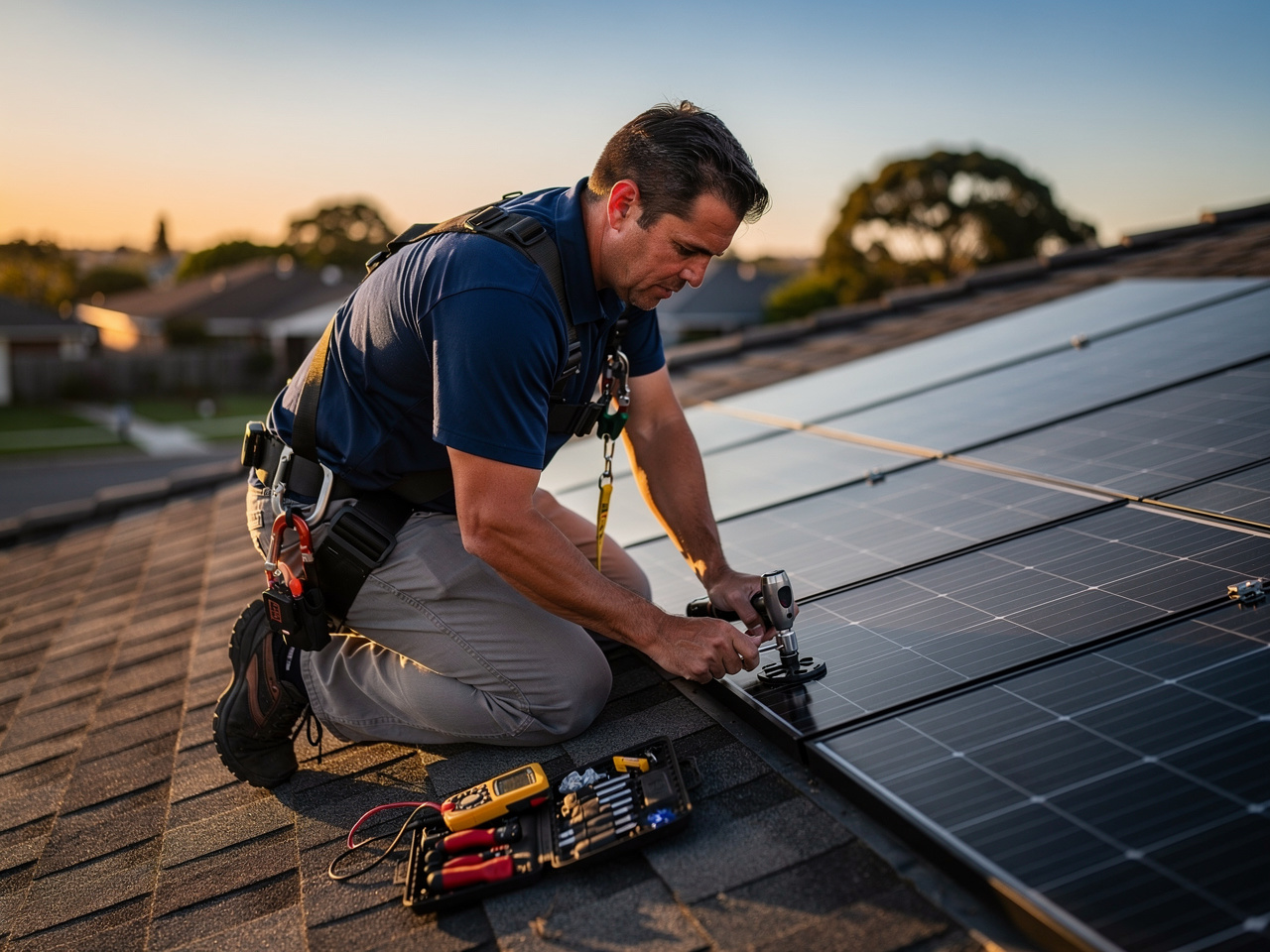
Our technicians complete the work needed to restore and optimize your system.

Ongoing Performance
We help you keep everything running efficiently with continued support and monitoring options.
Common questions about solar service in Cutler Bay
Yes, because the damage that matters after wind is rarely visible from the ground. Loosened clamps, a lag that has started to pull, chafed conductor insulation, and opened sealant all look like nothing and all get worse with the next storm. Checking after weather is how a small repair stays a small repair.
We would not recommend it. A solar array produces direct current voltage whenever there is daylight, and turning off the breaker does not de-energize the wiring on the roof. Add a wet roof surface and post-storm debris and it becomes a genuinely dangerous inspection. If something looks wrong from the ground, photograph it and call.
No. Removal means unbolting and reopening every roof penetration, which introduces exactly the leak risk you are trying to avoid, and there is almost never enough time to do it properly before a storm. The productive version of that instinct is verifying the mounting hardware in spring, while the weather and the schedule both cooperate.
Hurricane season runs June 1 through November 30 for the whole state. For Cutler Bay we suggest booking the main inspection in spring so any hardware work is finished before it opens, then a shorter check after any storm that passes close. Post-storm demand across South Florida makes September appointments much harder to obtain.
Both, and they reinforce each other. Cutler Bay is directly on the water, so rails, fasteners, grounding lugs, and connectors carry a continuous salt load, and corroded hardware has less margin when wind loads it. That is why the storm inspection and the corrosion inspection are the same visit rather than two separate services.

Get your solar system back to full performance
Don't let hidden issues cost you money. Let's fix it fast.
By submitting or calling, you consent to receive calls and SMS from The Light Group USA at the number provided, including via auto-dialer or pre-recorded messages. Consent is not required for purchase. Msg/data rates may apply. Reply STOP to opt out. See our Privacy Policy.
Solar Service & Repair near Cutler Bay
Crews based in Orlando and Tampa, covering 217 cities statewide.
South Florida
- Aventura
- Belle Glade
- Boca Raton
- Boynton Beach
- Coconut Creek
- Cooper City
- Coral Gables
- Coral Springs
- Cutler Bay
- Dania Beach
- Davie
- Deerfield Beach
- Delray Beach
- Doral
- Fort Lauderdale
- Greenacres
- Hallandale Beach
- Hialeah
- Hialeah Gardens
- Hollywood
- Homestead
- Jupiter
- Lake Worth Beach
- Lauderdale Lakes
- Lauderhill
- Margate
- Miami
- Miami Beach
- Miami Gardens
- Miami Lakes
- Miramar
- North Lauderdale
- North Miami
- North Miami Beach
- Oakland Park
- Opa-locka
- Palm Beach Gardens
- Palm Springs
- Palmetto Bay
- Parkland
- Pembroke Pines
- Pinecrest
- Plantation
- Pompano Beach
- Riviera Beach
- Royal Palm Beach
- Sunny Isles Beach
- Sunrise
- Sweetwater
- Tamarac
- Wellington
- West Palm Beach
- West Park
- Weston
We also cover Florida Panhandle, North Florida, Northeast Florida, Central Florida, Space Coast, Tampa Bay, Southwest Florida, Treasure Coast. See every Florida city we service.