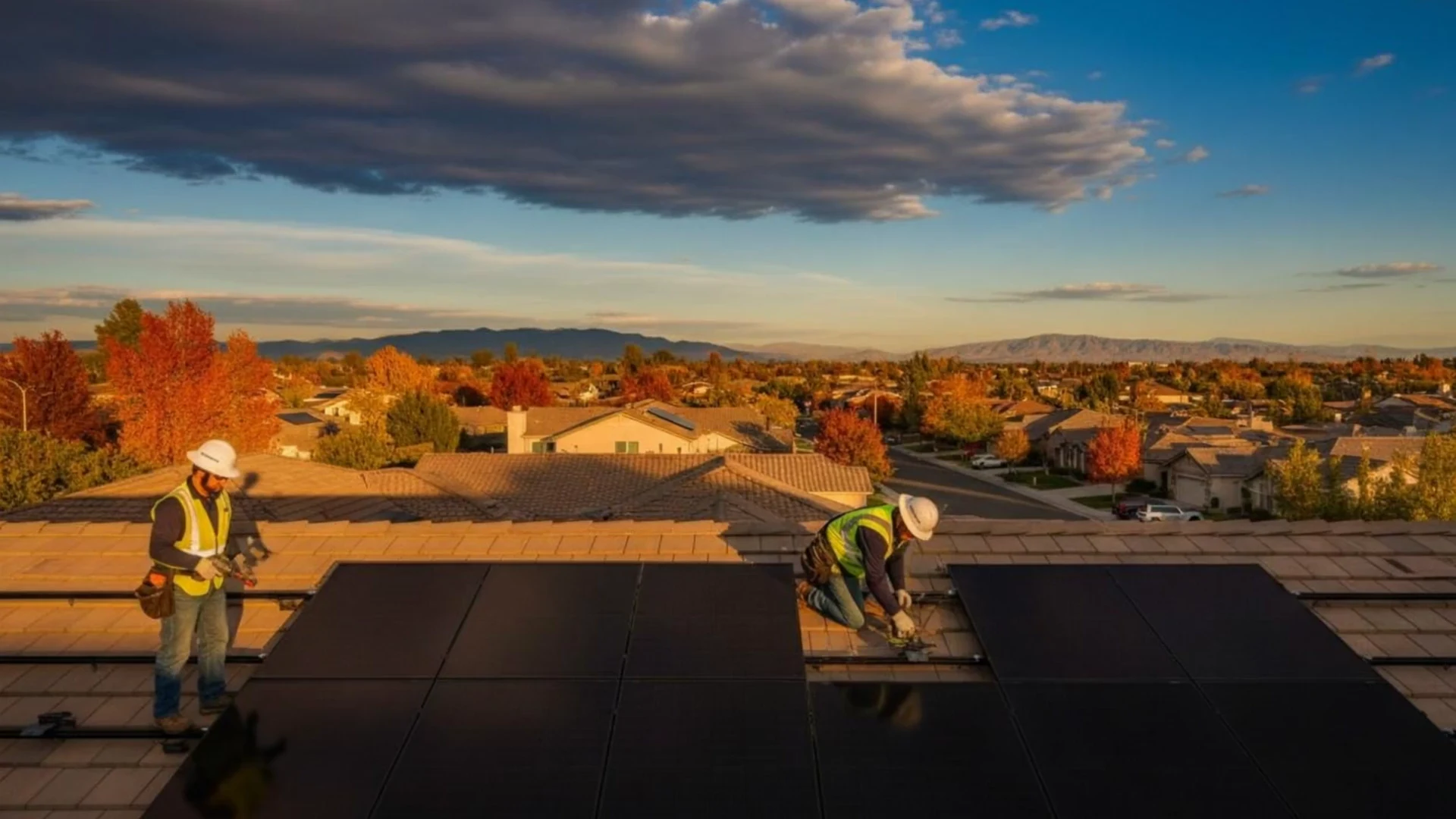
Solar Panel Removal & Reinstallation in St. Petersburg, FL
America’s #1 Choice for Energy Independence
We handle removal, storage, and reinstallation — coordinating with your roofer so your project runs smoothly from start to finish.
By submitting or calling, you consent to receive calls and SMS from The Light Group USA at the number provided, including via auto-dialer or pre-recorded messages. Consent is not required for purchase. Msg/data rates may apply. Reply STOP to opt out. See our Privacy Policy.

Protect your roof and your solar investment
Let professionals handle your solar panel removal the right way.
By submitting or calling, you consent to receive calls and SMS from The Light Group USA at the number provided, including via auto-dialer or pre-recorded messages. Consent is not required for purchase. Msg/data rates may apply. Reply STOP to opt out. See our Privacy Policy.
Panel removal and reinstall in St. Petersburg
After a roof is replaced, three warranties are in play and none of them overlap. The module manufacturer warrants the panel. The inverter manufacturer warrants the inverter. The roofer warrants the roof. Once a third party has drilled new penetrations through a brand new roof to hold somebody else's equipment, the question of who owns a leak has to be settled in writing rather than assumed by everyone involved.
In practice it comes down to the mount. If a penetration misses the rafter, or the flashing sits on top of the shingle course instead of under the one above it, the water gets in at a spot the roofer did not create and the solar company did. Getting that detail right is most of the job. Getting the responsibility for it in writing, before either crew mobilizes, is the rest.
St. Petersburg sits on Tampa Bay, and tidal salt reaches hardware on streets that feel nowhere near open water, from the Pier down through the neighborhoods off Central Avenue. The region also takes more lightning than anywhere else in the country. Between the two, a system that is already coming apart for a roof is one worth actually inspecting: connectors, lugs, bonding path and the inverter, rather than simply re-bolted.
Nothing about this is urgent, and treating it as urgent is how corners get cut. Panels come off on a scheduled date, live somewhere dry and flat while the deck is rebuilt, and go back with new flashing, correct torque and connectors from a single manufacturer. We cover St. Petersburg from Orlando and Tampa with a real window, which is what lets the sequence be followed instead of compressed.
On a St. Petersburg removal we get these right
Common questions about solar service in St. Petersburg
Generally whoever made the penetration. A roofer warrants the surface they installed, and a company that later drills through it owns those holes, the flashing at each one and any water that gets in there. Because the panel, inverter and roof warranties are three separate agreements, the division is worth settling in writing beforehand.
Removal itself is not usually the issue. Damage is. Module warranties generally depend on the panel not being physically harmed or improperly installed, so careful handling, clamp torque within the published range and matched connectors are what preserve coverage. Recording serials and condition before removal is what makes a later claim provable.
It is cleaner that way. Two trades, two scopes, two sets of warranties. A written scope for the solar side that names the sequence, the flashing method, the torque specification and who is responsible for each penetration removes exactly the ambiguity that surfaces the first time it rains hard after the job is done.
Not by itself. Duke Energy Florida credits exports at the retail rate, one to one, and that is tied to the interconnected system on record. Putting the same array back in the same configuration continues it unchanged. Changing module count, inverter or layout is something to submit before reconnection instead of after inspection.
The rails and clamps often can, if they are sound. The mounts themselves are new: the old roof and its penetrations are gone, so every attachment point gets drilled fresh into the structure with new flashing. Reusing rails is normal practice. Reusing a penetration is not, because the surface it went through no longer exists.
Other solar work we do here
Panel Removal & Reinstallation near St. Petersburg
Crews based in Orlando and Tampa, covering 217 cities statewide.
Tampa Bay
- Apollo Beach
- Auburndale
- Bartow
- Bayonet Point
- Bayshore Gardens
- Bloomingdale
- Bradenton
- Brandon
- Carrollwood
- Citrus Park
- Clearwater
- Davenport
- Dunedin
- East Lake
- East Lake-Orient Park
- Egypt Lake-Leto
- Elfers
- Englewood
- Fish Hawk
- Four Corners
- Fruitville
- Gibsonton
- Haines City
- Holiday
- Jasmine Estates
- Keystone
- Lake Magdalene
- Lake Wales
- Lakeland
- Lakewood Ranch
- Land O' Lakes
- Largo
- Lealman
- Lutz
- New Port Richey
- North Port
- Northdale
- Palm Harbor
- Palm River-Clair Mel
- Palmer Ranch
- Pinellas Park
- Plant City
- Poinciana
- Riverview
- Ruskin
- Safety Harbor
- Sarasota
- Seminole
- South Bradenton
- South Venice
- St. Petersburg
- Sun City Center
- Tampa
- Tarpon Springs
- Temple Terrace
- Thonotosassa
- Town 'n' Country
- Trinity
- University
- Valrico
- Venice
- Wesley Chapel
- Westchase
- Wimauma
- Winter Haven
- Zephyrhills
We also cover Florida Panhandle, North Florida, Northeast Florida, Central Florida, Space Coast, Southwest Florida, Treasure Coast, South Florida. See every Florida city we service.