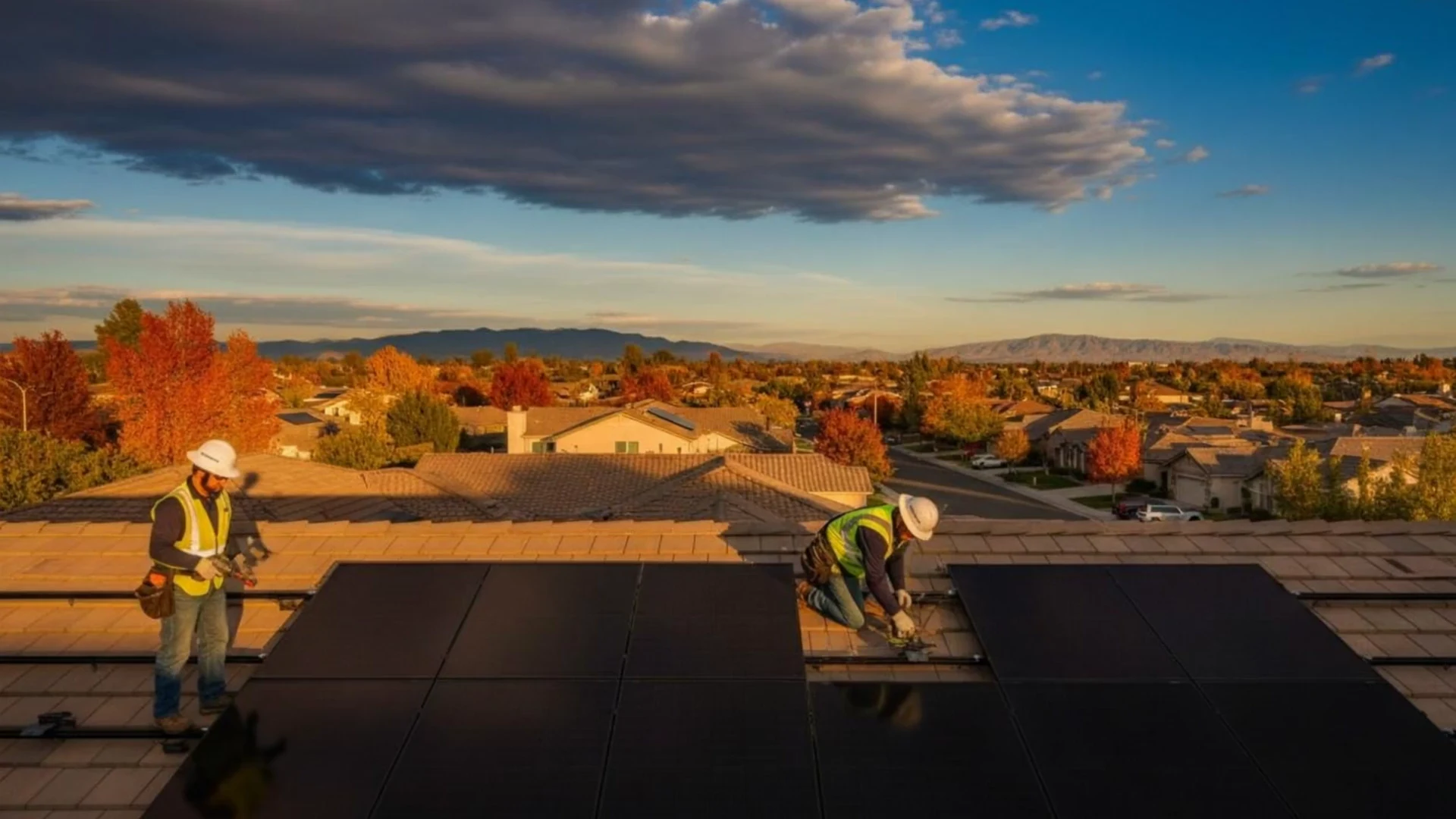
Solar Panel Removal & Reinstallation in University, FL
America’s #1 Choice for Energy Independence
We handle removal, storage, and reinstallation — coordinating with your roofer so your project runs smoothly from start to finish.
By submitting or calling, you consent to receive calls and SMS from The Light Group USA at the number provided, including via auto-dialer or pre-recorded messages. Consent is not required for purchase. Msg/data rates may apply. Reply STOP to opt out. See our Privacy Policy.

Protect your roof and your solar investment
Let professionals handle your solar panel removal the right way.
By submitting or calling, you consent to receive calls and SMS from The Light Group USA at the number provided, including via auto-dialer or pre-recorded messages. Consent is not required for purchase. Msg/data rates may apply. Reply STOP to opt out. See our Privacy Policy.
Panel removal and reinstall in University
The area around the USF Tampa campus at Fowler Avenue and Bruce B. Downs Boulevard turns over more than most Florida neighborhoods. Properties change hands, some are held as rentals, and solar arrays get inherited along with the deed. When the roof finally needs replacing, the owner often knows almost nothing about the system on it: no installer, no as-built drawing, no string map, no monitoring login. The array is simply there.
That is the defining problem here, and it is solvable. An orphaned system can still be removed, stored and reinstalled correctly, but the documentation has to be rebuilt as part of the work. During teardown we record module and inverter models, serials tied to their positions, the string configuration and photographs of every row. The owner finishes the project with a record the property has never had, independent of any single contractor.
This is unincorporated Hillsborough County, so the permit and reinspection go to the county rather than to a city building department, and the address rather than the mailing city decides it. Where a property is tenanted, the schedule has a second constraint: two site visits, roof access, and days when the system is offline. All of that is far easier to arrange when it is booked around the roofer weeks ahead.
Electric service is Tampa Electric, an investor-owned utility that credits exported energy at retail rate, which keeps the reconnection side straightforward. The site sits about eleven kilometers from open water, so this is not a salt-corrosion story. It is heat, lightning exposure typical of the Tampa Bay area, and the accumulated neglect of a system nobody has ever had the paperwork for.
On a University removal we get these right
Common questions about solar service in University
Yes, and it is one of the most common situations in this area. During removal we record inverter and module models, serial numbers against their positions, and the string configuration, then photograph every row. You end the project with documentation the property never had, which matters for future service, warranty claims and resale.
No. This area is unincorporated Hillsborough County, so the permit and reinspection go through the county even though the mailing address says Tampa. Florida generally requires a permit for solar removal and reinstallation, and we confirm the correct authority from the parcel before filing rather than assuming from the address.
It adds notice and access planning, not difficulty. There are two site visits, one before the roofer and one after, plus a period when the system is offline. Because the work is scheduled rather than urgent, dates are agreed well ahead with the roofing calendar, which gives tenants and property managers time to plan around them.
Through commissioning checks at the remount and through monitoring, which is why restoring portal access matters on inherited systems. Strings are verified, connectors checked, and output confirmed against what the array produced before removal. Without monitoring, a system can underperform for months before anyone notices, which is a real risk on a property nobody is watching daily.
Not meaningfully. The area sits roughly eleven kilometers from open water, so salt corrosion is not the failure mode driving hardware replacement here. Heat, lightning exposure typical of the Tampa Bay area, and hardware that has never been inspected since installation are the realistic concerns, and all three are assessable with the array off the roof.
Other solar work we do here
Panel Removal & Reinstallation near University
Crews based in Orlando and Tampa, covering 217 cities statewide.
Tampa Bay
- Apollo Beach
- Auburndale
- Bartow
- Bayonet Point
- Bayshore Gardens
- Bloomingdale
- Bradenton
- Brandon
- Carrollwood
- Citrus Park
- Clearwater
- Davenport
- Dunedin
- East Lake
- East Lake-Orient Park
- Egypt Lake-Leto
- Elfers
- Englewood
- Fish Hawk
- Four Corners
- Fruitville
- Gibsonton
- Haines City
- Holiday
- Jasmine Estates
- Keystone
- Lake Magdalene
- Lake Wales
- Lakeland
- Lakewood Ranch
- Land O' Lakes
- Largo
- Lealman
- Lutz
- New Port Richey
- North Port
- Northdale
- Palm Harbor
- Palm River-Clair Mel
- Palmer Ranch
- Pinellas Park
- Plant City
- Poinciana
- Riverview
- Ruskin
- Safety Harbor
- Sarasota
- Seminole
- South Bradenton
- South Venice
- St. Petersburg
- Sun City Center
- Tampa
- Tarpon Springs
- Temple Terrace
- Thonotosassa
- Town 'n' Country
- Trinity
- University
- Valrico
- Venice
- Wesley Chapel
- Westchase
- Wimauma
- Winter Haven
- Zephyrhills
We also cover Florida Panhandle, North Florida, Northeast Florida, Central Florida, Space Coast, Southwest Florida, Treasure Coast, South Florida. See every Florida city we service.