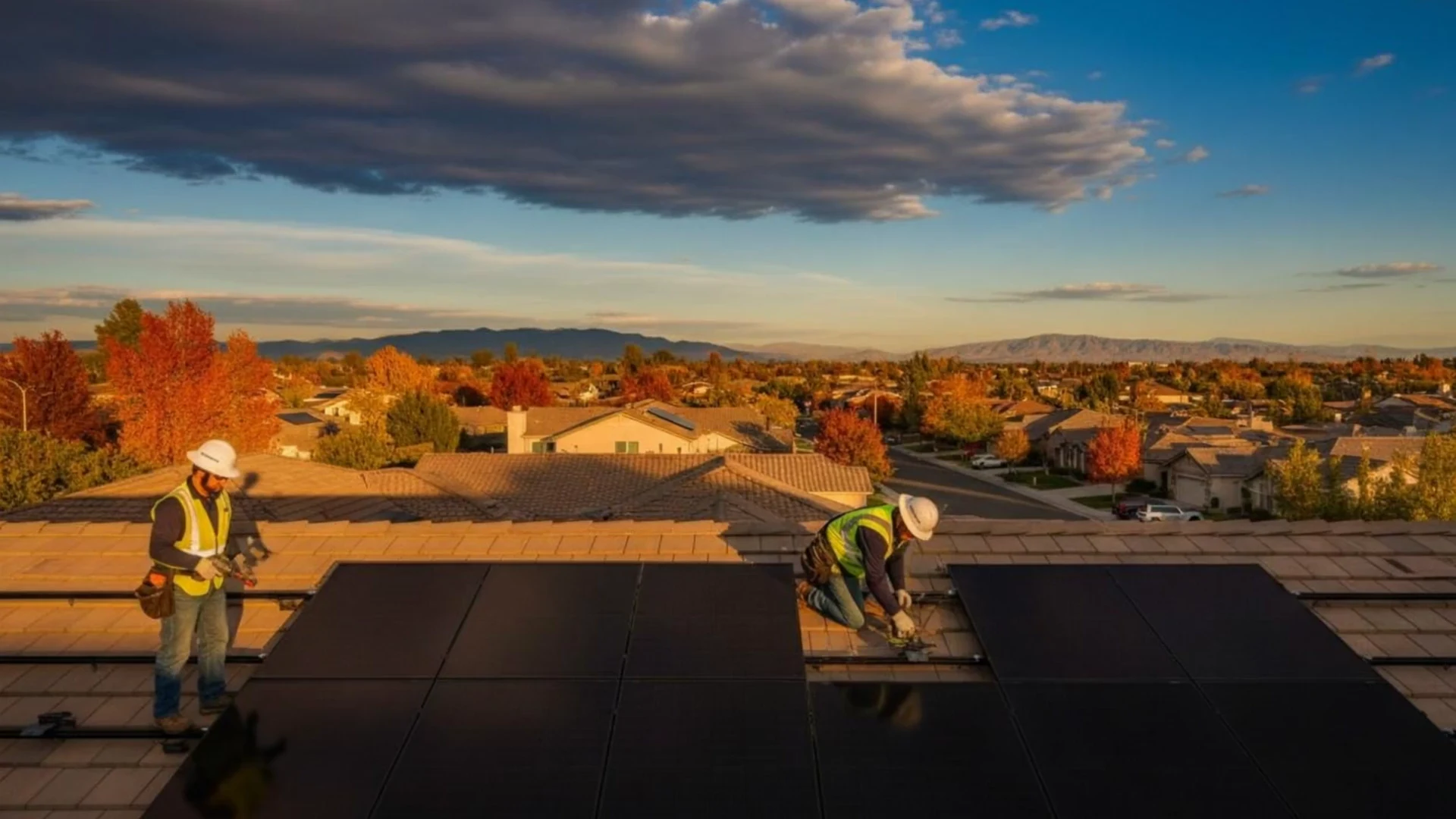
Solar Panel Removal & Reinstallation in Venice, FL
America’s #1 Choice for Energy Independence
We handle removal, storage, and reinstallation — coordinating with your roofer so your project runs smoothly from start to finish.
By submitting or calling, you consent to receive calls and SMS from The Light Group USA at the number provided, including via auto-dialer or pre-recorded messages. Consent is not required for purchase. Msg/data rates may apply. Reply STOP to opt out. See our Privacy Policy.

Protect your roof and your solar investment
Let professionals handle your solar panel removal the right way.
By submitting or calling, you consent to receive calls and SMS from The Light Group USA at the number provided, including via auto-dialer or pre-recorded messages. Consent is not required for purchase. Msg/data rates may apply. Reply STOP to opt out. See our Privacy Policy.
Panel removal and reinstall in Venice
Venice sits on the Gulf in Sarasota County, with Venice Beach at one end of West Venice Avenue and the historic downtown at the other. Around 29,902 residents live across 34285 and 34275, in a housing stock that leans toward older single-story homes, many of them under tile. That combination, salt air and tile roofs, makes a solar removal here a different job than the same work twenty miles inland.
Corrosion is the reason. This close to the water, salt attacks rails, clamp bolts, grounding lugs and MC4 connector shells long before it touches the modules, and it does most of that work inside housings where nothing is visible from the ground. Taking the array down for a roof is the only moment those parts are reachable, which turns a scheduling inconvenience into the one real inspection opportunity the system gets.
Timing carries weight too. Hurricane season runs from June 1 through November 30, and an open roof is the exposure during those months, not the stored panels. Removal, tear-off and reinstallation are best booked as one calendar rather than three separate errands, so the roof is never sitting incomplete waiting for a solar crew to become available in the middle of the season.
Florida Power and Light serves Venice and credits exported power at the retail rate, so the account arrangement carries through the project untouched. Production is the thing at stake, since a stored array earns nothing. This is planned work with clear boundaries, which is exactly the sort of job that suits a booked window covered from Tampa rather than an urgent call-out.
On a Venice removal we get these right
Common questions about solar service in Venice
Not necessarily, but the schedule should be tight. Season runs June 1 through November 30, and the exposure during that period is an open roof rather than stored panels. Booking removal, tear-off and reinstallation as one continuous calendar matters more than the month, because a roof left incomplete is the real risk.
Usually not. Near the Gulf the mounting hardware corrodes long before the modules do, and rails, lugs, clamp bolts and connectors can be replaced individually while the array is on the ground. Modules with intact glass and sound backsheets are normally reinstalled as they are, which makes the removal the moment to assess each part.
It attacks the metal first. Frames, grounding lugs, clamp bolts and MC4 connector shells corrode inside their housings where nothing is visible from the ground, while the glass and laminate hold up comparatively well. That is why an array coming off a coastal roof gets inspected at the connections rather than judged by how the panels look.
The City of Venice for addresses inside city limits, since it is incorporated with its own building department, and Sarasota County for addresses just outside. Removal and reinstallation typically require a permit and close with an electrical reinspection. The jurisdiction is verified by street address before dates are committed to the roofer.
Modules stored indoors are out of the wind, but that is not the main consideration. The exposure during a storm is the roof itself, and worst of all is a system left partially reinstalled with mounts placed and modules not yet secured. That is the argument for treating this as scheduled work with a firm finish date.
Other solar work we do here
Panel Removal & Reinstallation near Venice
Crews based in Orlando and Tampa, covering 217 cities statewide.
Tampa Bay
- Apollo Beach
- Auburndale
- Bartow
- Bayonet Point
- Bayshore Gardens
- Bloomingdale
- Bradenton
- Brandon
- Carrollwood
- Citrus Park
- Clearwater
- Davenport
- Dunedin
- East Lake
- East Lake-Orient Park
- Egypt Lake-Leto
- Elfers
- Englewood
- Fish Hawk
- Four Corners
- Fruitville
- Gibsonton
- Haines City
- Holiday
- Jasmine Estates
- Keystone
- Lake Magdalene
- Lake Wales
- Lakeland
- Lakewood Ranch
- Land O' Lakes
- Largo
- Lealman
- Lutz
- New Port Richey
- North Port
- Northdale
- Palm Harbor
- Palm River-Clair Mel
- Palmer Ranch
- Pinellas Park
- Plant City
- Poinciana
- Riverview
- Ruskin
- Safety Harbor
- Sarasota
- Seminole
- South Bradenton
- South Venice
- St. Petersburg
- Sun City Center
- Tampa
- Tarpon Springs
- Temple Terrace
- Thonotosassa
- Town 'n' Country
- Trinity
- University
- Valrico
- Venice
- Wesley Chapel
- Westchase
- Wimauma
- Winter Haven
- Zephyrhills
We also cover Florida Panhandle, North Florida, Northeast Florida, Central Florida, Space Coast, Southwest Florida, Treasure Coast, South Florida. See every Florida city we service.