Solar Panel Removal & Reinstallation in Davie, FL
America’s #1 Choice for Energy Independence
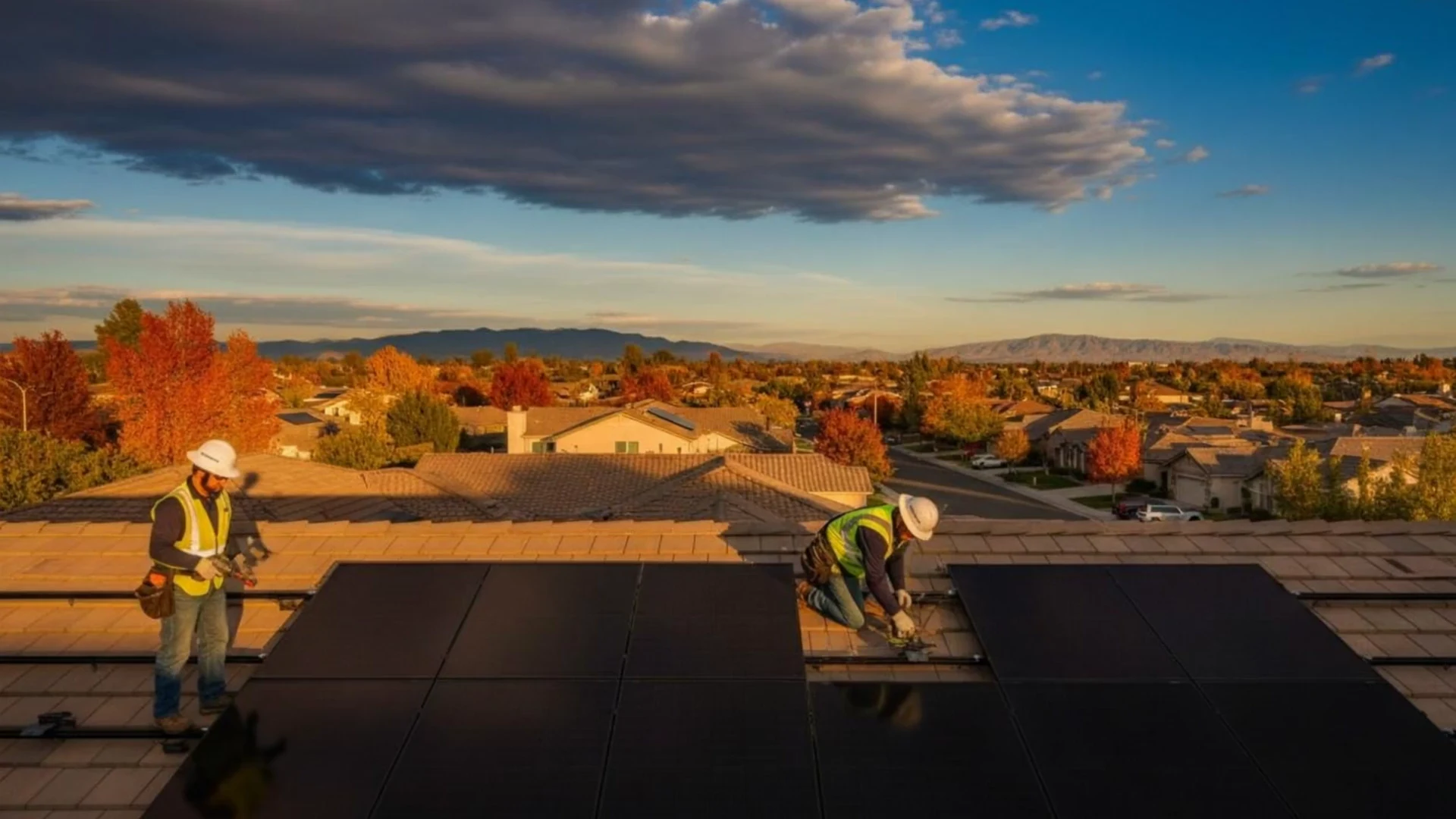
We handle removal, storage, and reinstallation — coordinating with your roofer so your project runs smoothly from start to finish.
By submitting or calling, you consent to receive calls and SMS from The Light Group USA at the number provided, including via auto-dialer or pre-recorded messages. Consent is not required for purchase. Msg/data rates may apply. Reply STOP to opt out. See our Privacy Policy.

Protect your roof and your solar investment
Let professionals handle your solar panel removal the right way.
By submitting or calling, you consent to receive calls and SMS from The Light Group USA at the number provided, including via auto-dialer or pre-recorded messages. Consent is not required for purchase. Msg/data rates may apply. Reply STOP to opt out. See our Privacy Policy.
Panel removal and reinstall in Davie
Davie runs west from the Nova Southeastern campus on College Avenue into low-density blocks where single-story houses carry long, uninterrupted roof planes. A wide plane is a straightforward roof to replace and an awkward one to strip when an array is bolted across the middle of it. Across 33314, 33325, 33328 and 33330, a good number of those roofs are now old enough that the covering gives out well before the panels do.
That is where most of these calls start. A roofing date exists, the roofer will not touch the solar, and the company that installed the array has closed or been absorbed by someone else. Two trades now have to meet on one roof in a specific order, and somebody has to be clearly responsible for the racking, the wiring and the flashing when all of it goes back down onto new material.
Roughly seven kilometers in from the shoreline, the hardware here ages differently than it does on the beach. Heat is the constant: attic temperatures push module and connector components through daily expansion cycles for years, and dust and pollen build on glass with no warning light attached. What actually breaks panels, though, is people. Nearly every microcrack in a reused array is created in the twenty minutes it spends being carried.
So the handling protocol matters more than the muscle. Panels are never set face down, never stacked without separators, never lifted by a single long frame rail. FPL serves these addresses and credits exports at the retail rate, so the account survives the project untouched. Davie is booked as scheduled work from Orlando or Tampa, sequenced around the roofer rather than squeezed in beside him.
On a Davie removal we get these right
Common questions about solar service in Davie
In most cases the same modules go back up. Panels are typically the longest-lived part of the system and a roof replacement does not shorten that. The parts that get scrutinized are the mounting hardware, the wire management and the connectors, since those age faster than the glass and are cheap to replace while everything is already down.
All of it, for as long as the system is down. There is no partial production during a removal, which is why the roofing window is the number that matters rather than the removal itself. Scheduling both crews tightly against each other keeps that gap to the length of the roof job and nothing more.
They are separate permits. The roofing contractor permits the roof, and the removal and reinstallation of the array is permitted as electrical work with its own inspection before the system is energized again. Confirming both are open and in the right order avoids a finished roof with an array that cannot legally be turned back on.
It goes offline with the inverter, and it needs to be verified working again after reinstallation, not assumed. If the original installer set up the monitoring account and that company is gone, the login is often lost too. Rebuilding access is part of the job, because a system nobody can see is a system nobody notices failing.
The two solar visits are short compared to the roof. Removal is typically a single day on a residential array, and reinstallation with reconnection and inspection takes a similar amount of time. Everything in between is the roofing schedule, which is why the total duration is set by the roofer and not by the panels.
Other solar work we do here
Panel Removal & Reinstallation near Davie
Crews based in Orlando and Tampa, covering 217 cities statewide.
South Florida
- Aventura
- Belle Glade
- Boca Raton
- Boynton Beach
- Coconut Creek
- Cooper City
- Coral Gables
- Coral Springs
- Cutler Bay
- Dania Beach
- Davie
- Deerfield Beach
- Delray Beach
- Doral
- Fort Lauderdale
- Greenacres
- Hallandale Beach
- Hialeah
- Hialeah Gardens
- Hollywood
- Homestead
- Jupiter
- Lake Worth Beach
- Lauderdale Lakes
- Lauderhill
- Margate
- Miami
- Miami Beach
- Miami Gardens
- Miami Lakes
- Miramar
- North Lauderdale
- North Miami
- North Miami Beach
- Oakland Park
- Opa-locka
- Palm Beach Gardens
- Palm Springs
- Palmetto Bay
- Parkland
- Pembroke Pines
- Pinecrest
- Plantation
- Pompano Beach
- Riviera Beach
- Royal Palm Beach
- Sunny Isles Beach
- Sunrise
- Sweetwater
- Tamarac
- Wellington
- West Palm Beach
- West Park
- Weston
We also cover Florida Panhandle, North Florida, Northeast Florida, Central Florida, Space Coast, Tampa Bay, Southwest Florida, Treasure Coast. See every Florida city we service.